Most dishwasher problems come down to a handful of parts: the drain pump, the door gasket, the spray arms, the heating element, or the control board. Knowing which one you're dealing with is the difference between a quick fix and an unnecessary replacement.
Dishwasher Not Draining, The Most Common Call
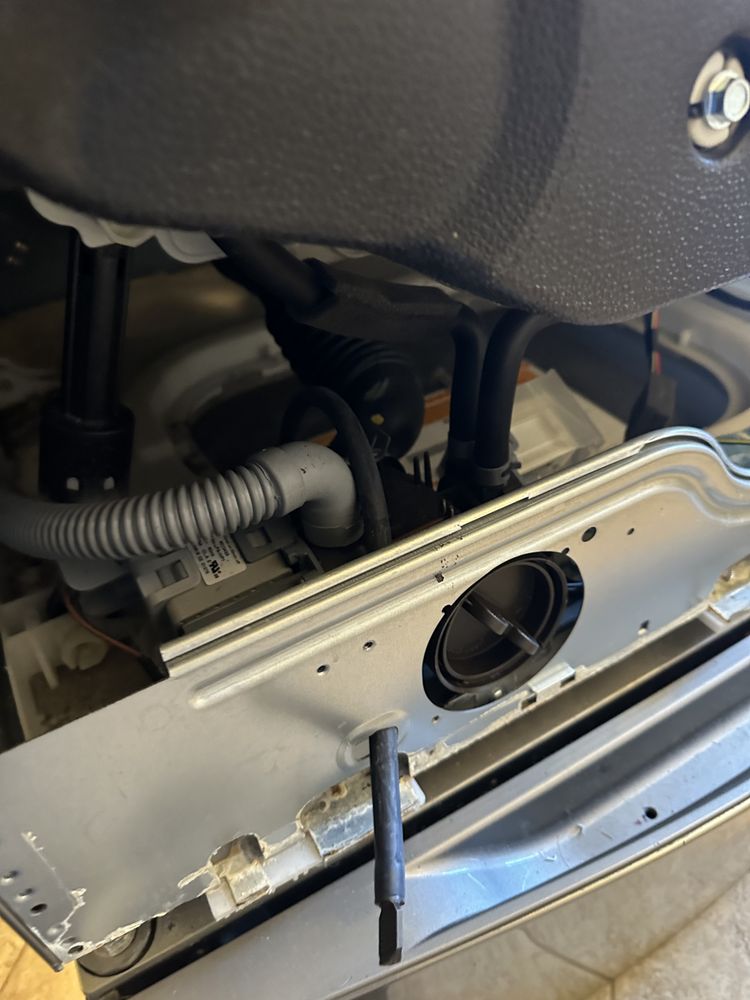
Water sitting at the bottom of the tub after a cycle is the number one dishwasher complaint. It almost always points to one of three things: a clogged filter, a blocked drain hose, or a failed drain pump.
Start with the filter. It's the cylindrical or flat screen at the bottom of the tub, remove it, rinse it under the faucet, and check for grease buildup or food debris. Many Orange homeowners find that's all it takes. If the filter is clean and water still won't drain, the hose or pump needs attention. A kinked or blocked drain hose is a quick fix; a failed drain pump is a part-and-labor repair that takes about an hour.
Dishwasher Leaking From the Door
Water on the kitchen floor in front of the dishwasher almost always traces back to the door gasket, the rubber seal that runs around the inside edge of the door frame. It's designed to compress and form a watertight seal when the door closes. Over years of opening and closing, it stiffens, cracks, or pulls away from the frame.
You can often spot a failing gasket just by looking. Pull the door open and run your fingers along the gasket: feel for sections that are rigid instead of pliable, cracks, or areas that have separated from the channel. Replacing it is straightforward, a new gasket typically snaps or presses into the channel, and most technicians finish the job in under 30 minutes.
One other cause worth ruling out: too much detergent. Excess suds can push past the door seal even when the gasket is intact. If the leak is recent and you've switched detergent brands, try cutting back on the amount first.
Dishes Coming Out Dirty or Spotted
When the dishwasher runs a full cycle but the dishes don't come clean, the spray arms are usually the first thing to check. Each arm has small holes that jet water across the dishes, mineral deposits and food particles gradually clog them. Remove the arms (they typically unscrew counter-clockwise), soak them in white vinegar for 20 minutes, and clear any blocked holes with a toothpick.
If the spray arms are clear and dishes are still coming out dirty or spotty, the water isn't getting hot enough. The heating element brings wash water to around 120–140°F, that temperature is what activates the detergent and sanitizes the dishes. A failed heating element needs replacement by a technician.
Dishwasher Won't Start or Stops Mid-Cycle
A dishwasher that refuses to start or quits partway through a cycle usually has one of two problems: a door latch failure or a control board issue. The door latch signals the machine that it's safe to run, if it's not engaging properly, the dishwasher won't start at all as a safety measure. A worn latch is an inexpensive fix.
A control board failure is more involved. Symptoms include cycles that stop unexpectedly, error codes on the display that don't clear, or a unit that powers on but won't respond to any button input. In Orange, we see control board failures most often on machines that are 7–10 years old. Depending on the model and age of the unit, a technician will weigh whether repair or replacement makes more sense before ordering the part.
Unusual Noises During the Wash Cycle
Dishwashers aren't silent, but certain sounds signal trouble. A grinding noise usually means something, a piece of glass, a label, a small utensil, has gotten past the filter and into the pump housing. A high-pitched squealing often points to a worn wash motor bearing. Banging or rattling that wasn't there before is usually a spray arm striking dishes that weren't loaded correctly, or an arm that's come loose from its mount.
Investigate anything that's new, loud, or getting worse over time. Debris in the pump can damage the impeller quickly if left alone.
What a Dishwasher Repair Visit Looks Like
When a technician arrives at your Orange home, the visit typically starts with a short conversation about what you've noticed, when the problem started, whether it's intermittent or constant, any error codes the machine has shown. From there, they'll run a diagnostic cycle while checking the filter, spray arms, door seal, and pump before pulling any panels.
Most common repairs, drain pump, door gasket, spray arm, heating element, take 45 minutes to 90 minutes and are completed in one visit. Technicians typically carry the most commonly failed parts on the truck. Control board replacements may require a follow-up visit if the part needs to be ordered for your specific model.
- Bring your dishwasher model number (usually inside the door frame) when you call, it speeds up parts lookup
- Clear out under the sink so the tech can access the drain hose and supply line easily
- Run the dishwasher immediately before the appointment if possible, so the tech can see the problem in action