The Most Common Reasons a Dryer Takes Too Long
A dryer works by circulating heated air through the drum and exhausting humid air out through the vent. When anything disrupts that airflow, or reduces the heat, drying time goes up. Here are the causes we see most often.
Clogged vent duct is by far the most common culprit. Lint builds up along the entire duct run, not just in the screen you clean after every load, but inside the metal duct that runs from the back of the dryer to the exterior vent. A packed lint screen cuts airflow by up to 75% on its own. A partially clogged duct is worse: the dryer keeps running, the drum stays hot, but damp air has nowhere to go and moisture stays in the clothes. The dryer runs longer and longer to compensate.
A failing heating element is the second most common cause on electric dryers. The heating element is a coil of resistance wire that heats up when current flows through it. When part of the coil breaks, the element still works, but at reduced heat output. The drum tumbles, the air is warm but not hot enough, and a 45-minute load takes 90 minutes or more. Testing the element with a multimeter confirms whether it's partially or fully failed.
A weak cycling thermostat can also be responsible. This thermostat monitors drum temperature and cycles the heating element on and off to maintain the right heat range. A thermostat that runs cold lets the element stay on, but if it's stuck or reading inaccurately, it may actually be cutting the heat cycle too early, leaving the dryer running on cool air for much of the cycle.
Other causes include an overloaded drum (the most overlooked cause, packing in too many clothes blocks airflow between items and extends drying time regardless of how well the dryer is working), a kinked or crushed exhaust hose behind the unit, and on gas dryers, a weak flame from a partially failing gas valve coil.
How to Check Your Dryer Vent, and Why It Matters for Fire Safety
A clogged vent is both the most common cause of slow drying and a genuine fire hazard. Lint is highly flammable. When it accumulates near a hot heating element with restricted airflow, the conditions for a dryer fire exist. The U.S. Fire Administration identifies failure to clean the dryer vent as the leading cause of residential dryer fires.
Here's how to check your vent right now:
- Start the dryer on a heat cycle and go outside to where the vent exits the house.
- You should feel a strong, warm stream of air coming out of the vent flap. If the flap barely opens, or if airflow feels weak or cool, the duct is restricted.
- Back inside: check the exhaust hose behind the dryer. It should be a rigid or semi-rigid metal duct. Flexible plastic or foil hoses are common in Yorba Linda homes built in the 80s and 90s, these accordion-style hoses catch lint at every fold and should be replaced with smooth-wall metal duct.
- If the duct run is longer than 25 feet, or if it has multiple 90-degree bends, lint accumulation is faster. Add up roughly 5 feet per elbow when calculating effective duct length.
What You Can Do Yourself
Some maintenance steps are straightforward and worth doing before calling anyone.
- Clean the lint screen every load. This takes 10 seconds and has a measurable effect on airflow. A packed screen cuts performance immediately.
- Check and straighten the exhaust hose. Pull the dryer away from the wall and inspect the hose for kinks, crushing, or disconnected sections. A hose that's been pushed flat against the wall for years may need to be replaced entirely.
- Don't overload the drum. A dryer drum should be no more than ¾ full. Leave enough space for clothes to tumble freely. Heavier items, jeans, towels, sweatshirts, dry significantly better in smaller loads.
- Run the washer's spin cycle fully. A washer that isn't spinning at full speed leaves clothes wetter than they should be going into the dryer. If you consistently need two dryer cycles, check your washer too, a worn drive belt or pump issue can cut spin speed.
- Vacuum the vent opening. Use a vacuum with a hose attachment to clear lint from the vent opening at the back of the dryer and from the exterior vent hood. This is the easy part of vent maintenance.
When to Call a Technician
Some dryer problems need more than maintenance.
- Duct cleaning beyond 15 feet. For longer duct runs or ducts with multiple bends, a professional with a rotary brush system does a more thorough job and reduces the risk of accidentally disconnecting sections inside the wall.
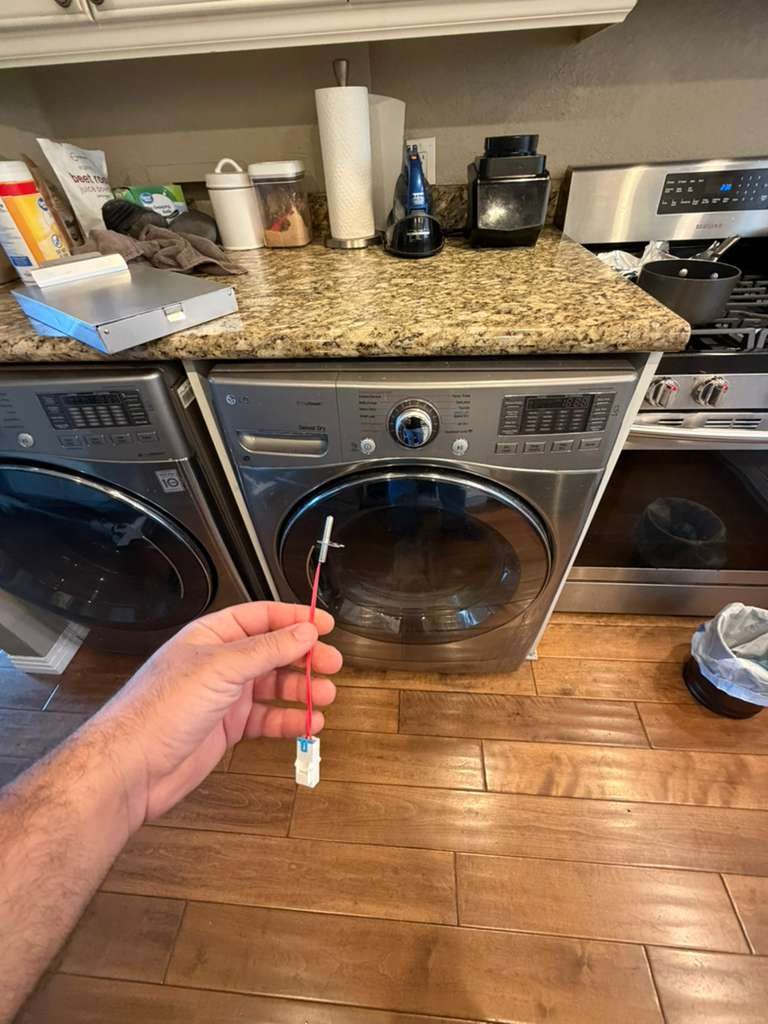
- Clothes still damp after a clean vent. If you've confirmed the vent is clear and loads still take 90+ minutes, the heating element or cycling thermostat needs testing. These require a meter to diagnose and parts to replace.
- Gas dryer runs but barely gets warm. Gas valve coils weaken over time and produce a smaller, cooler flame. This is a component-level repair, not something to troubleshoot without gas appliance experience.
- Drum doesn't tumble but heat works. If you hear heat but the drum isn't spinning, the drive belt has snapped. Belt replacement is a common repair on machines over five years old.
- Any burning smell. Stop the dryer immediately and unplug it. A burning smell means lint has accumulated near the heating element or a motor is failing. Don't run it again until it's been inspected.
What a Dryer Repair Visit in Yorba Linda Looks Like
When you call for dryer service, a technician typically arrives the same day or the following morning. Diagnostics take 20–30 minutes.
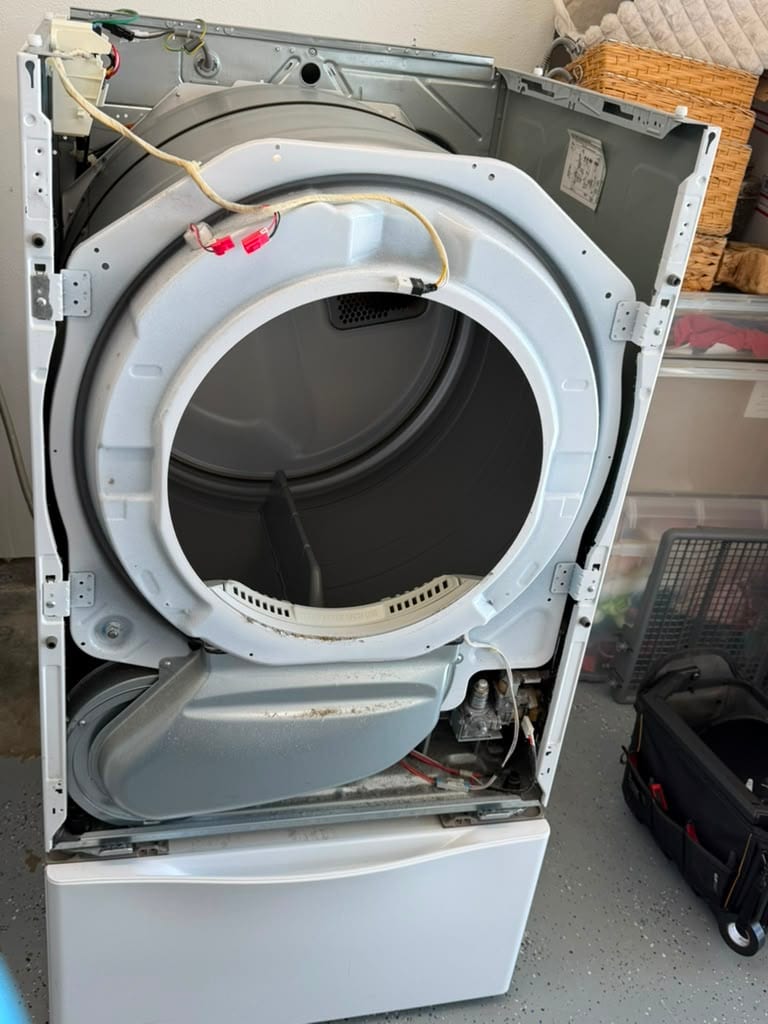
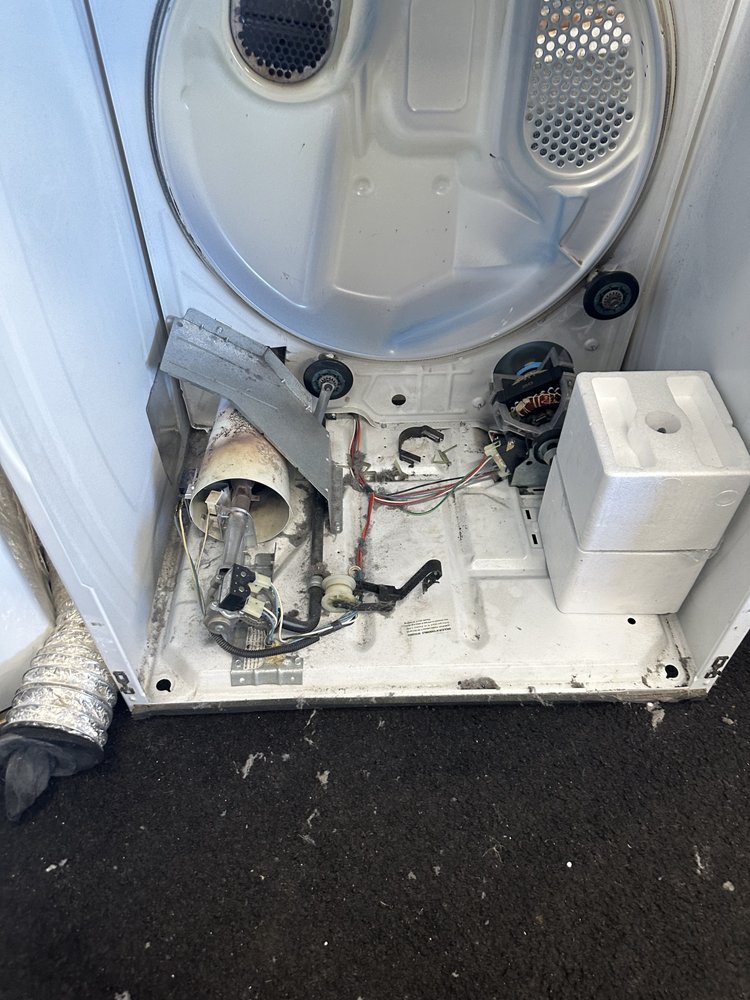
They'll test the heating element for continuity, check the cycling thermostat and high-limit thermostat with a meter, inspect the blower wheel for lint buildup, and verify the exhaust duct is clear. On gas dryers, they'll check the igniter, flame sensor, and gas valve coils.
Common parts, heating elements, thermostats, belts, idler pulleys, are standard enough that technicians carry them for the major brands: Whirlpool, LG, Samsung, GE, Maytag, Kenmore, and Speed Queen. Most standard repairs finish in a single visit. After the repair, the technician will run a drying cycle to confirm the dryer reaches the correct temperature and cycle time before leaving.