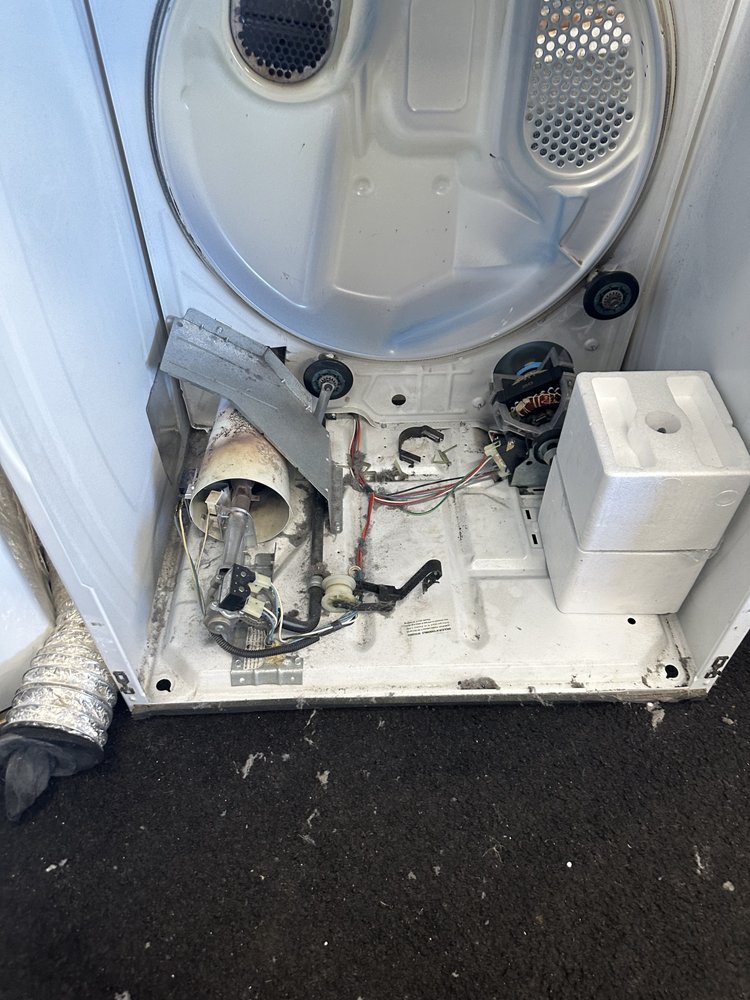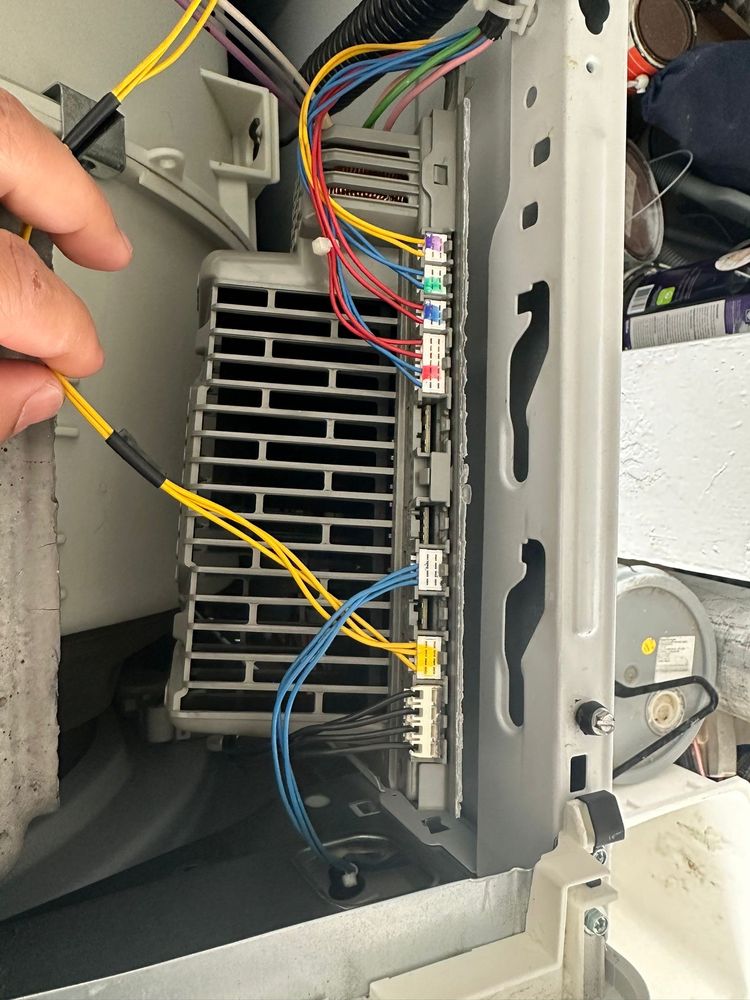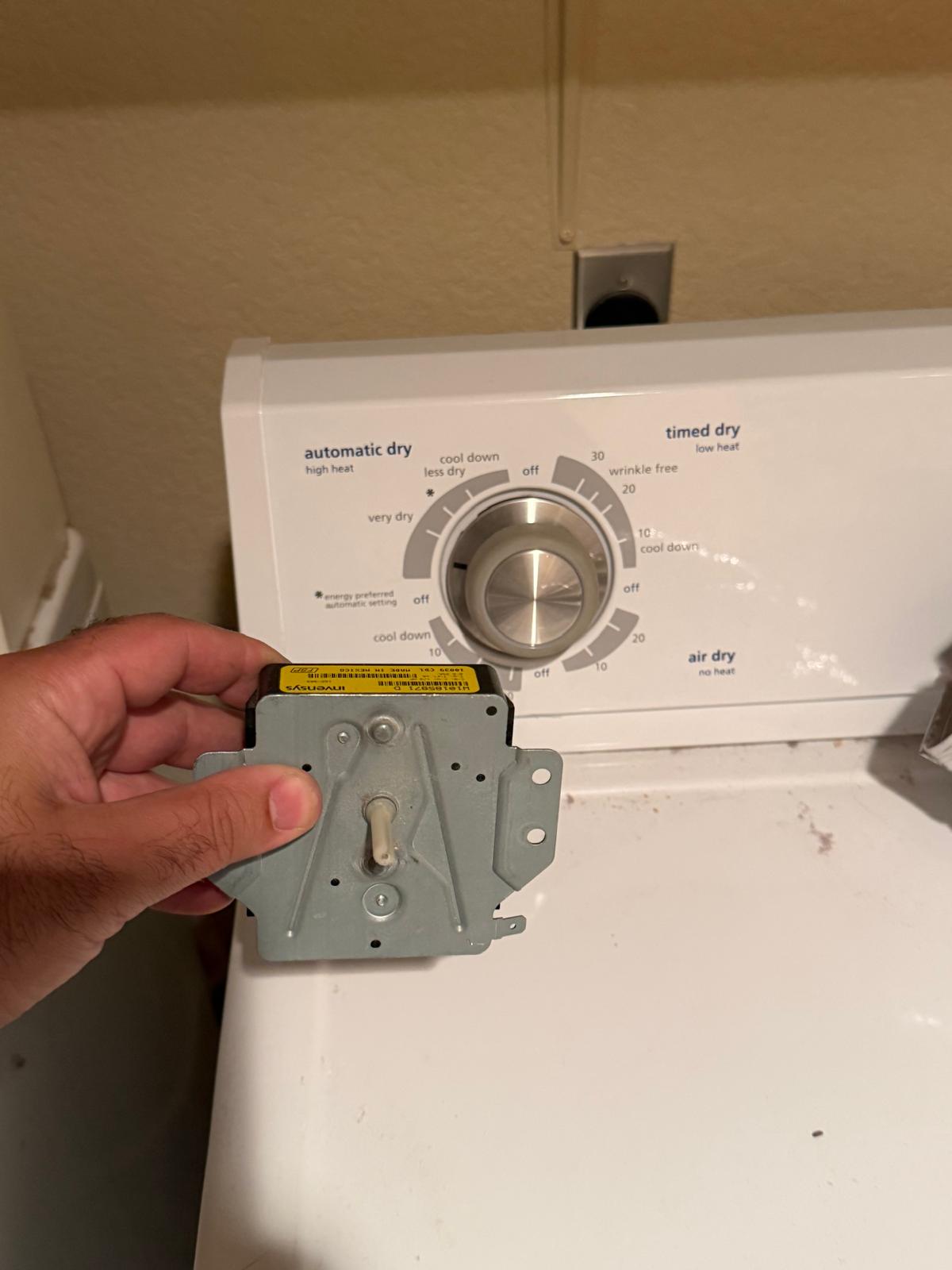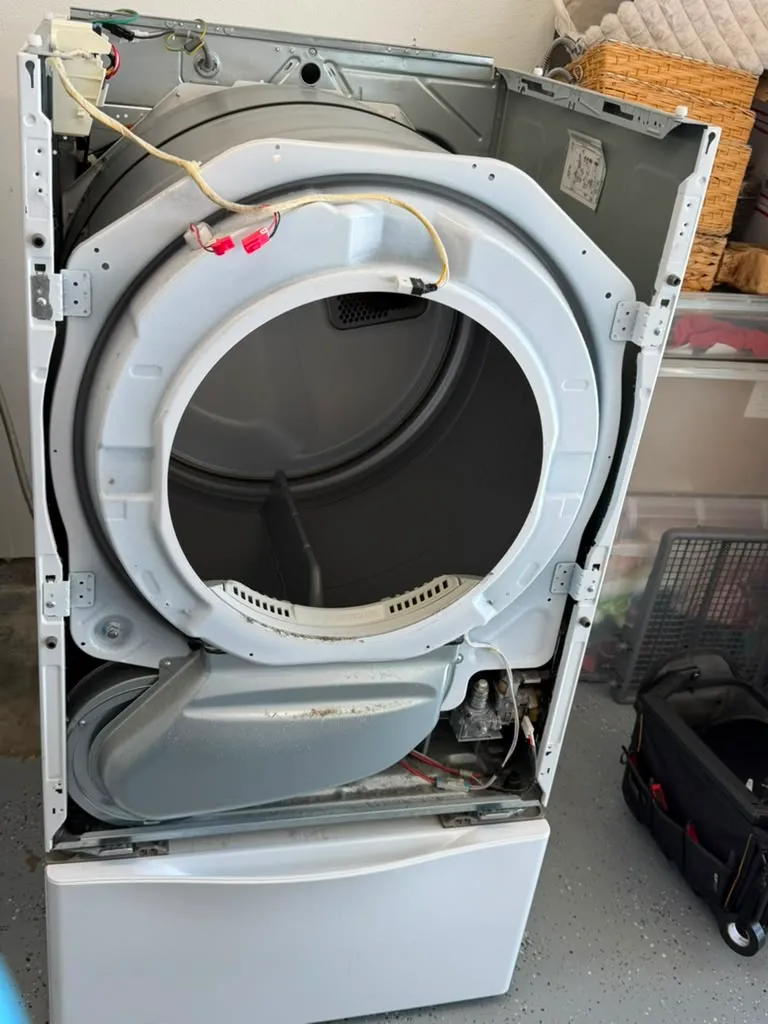
Before booking a technician, there are a couple of things worth checking yourself. The fix is sometimes free. This guide walks through the full diagnosis path, starting with what you can handle at home, and explaining what a professional repair involves when it's needed.
Start Here: Clean the Vent Before Anything Else
A clogged dryer exhaust vent is the most overlooked cause of no-heat failures, and a fire hazard on top of it. When the vent is blocked, hot air can't escape, the dryer overheats, and a safety thermostat cuts the heat to prevent a fire. The dryer keeps tumbling, but without heat.
Pull the dryer away from the wall, disconnect the duct, and check for lint buildup inside the duct and at the exterior vent cap. In Santa Ana apartments and older homes with long vent runs, this duct can accumulate serious blockages in under a year. Clean it out first, if the vent was the problem, you've just saved yourself a service call.
Electric Dryer Not Heating: Common Causes
Electric dryers require two things to heat: airflow (covered above) and working electrical components. Here's the diagnostic path:
Blown thermal fuse. This is the single most common electric dryer repair. The thermal fuse is a one-shot safety device on the exhaust duct, it blows when the dryer overheats and permanently cuts power to the heating element. The dryer keeps running, but cold. Testing requires a multimeter (continuity mode); a blown fuse reads as open. Replacement is inexpensive and usually takes under 30 minutes, but always clean the vent before replacing the fuse, otherwise the new one will blow again.
Failed heating element. The heating element is a coil of resistance wire that produces heat inside the drum. When it breaks, the circuit opens and you get no heat. Visible signs: a broken coil visible through the element housing, or a continuity test showing open. Replacing an element is a pro-level repair on most machines, it involves partial disassembly, but it's a standard, same-visit job.
Cycling thermostat failure. The cycling thermostat regulates temperature during normal operation. When it fails open, the heating element never turns on. When it fails closed, the dryer overheats (which then blows the thermal fuse). Testing with a multimeter is the reliable way to diagnose this.
Second breaker leg tripped. Electric dryers use two 120V legs of power, one for the motor and one for the heat. If one breaker leg trips (or a leg fails at the panel), the motor runs but the heater has no power. Check your breaker panel: the dryer breaker is a double-pole breaker. Reset it fully by switching it to off, then back to on. If it trips again immediately, you have an electrical issue that needs an electrician, not an appliance tech.
Gas Dryer Not Heating: Common Causes
Gas dryers use an igniter and gas valve system to produce heat. The failure points are different from electric dryers:
Weak or failed igniter. The igniter glows to light the gas burner. Over time it weakens, it glows, but not hot enough to open the gas valve. You may see the igniter glow briefly and then go out without the burner lighting. This is a very common gas dryer repair and a straightforward part swap.
Gas valve coils (solenoids). Two or three coil-wrapped solenoids open the gas valve when the igniter is hot enough. When one fails, the valve doesn't open and you get no flame. Symptoms are almost identical to igniter failure, the igniter glows but no heat follows. A technician can distinguish between the two with a resistance test.
Thermal fuse. Gas dryers also have a thermal fuse, and it fails for the same reasons as on electric models, blocked vent causing overheating. Check and clean the vent as the first step here too.
What a Dryer Repair Visit Looks Like in Santa Ana
When you book dryer repair in Santa Ana with Universal Appliances Repair, the technician will:
- Check the vent path first, a blocked vent found during diagnosis gets cleaned as part of the visit
- Test the thermal fuse, heating element or igniter, and thermostats with diagnostic tools
- Give you a clear repair estimate before any parts are replaced
- Complete the repair same-day in most cases, thermal fuses, heating elements, igniters, and coils are stocked for the most common brands
Most dryer heating repairs in Santa Ana wrap up in 1–2 hours. Brands serviced include Whirlpool, Maytag, Samsung, LG, GE, Kenmore, Bosch, and Electrolux. For Kenmore dryers specifically, our Kenmore appliance repair service in Orange County covers matching the model number to the right OEM parts before the technician arrives.