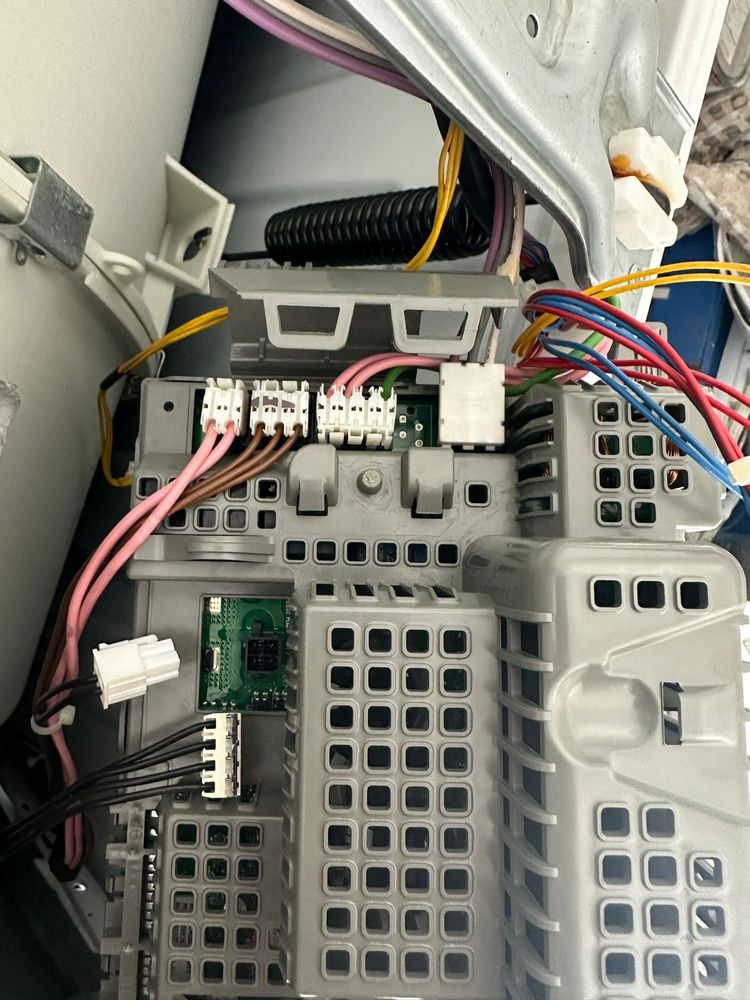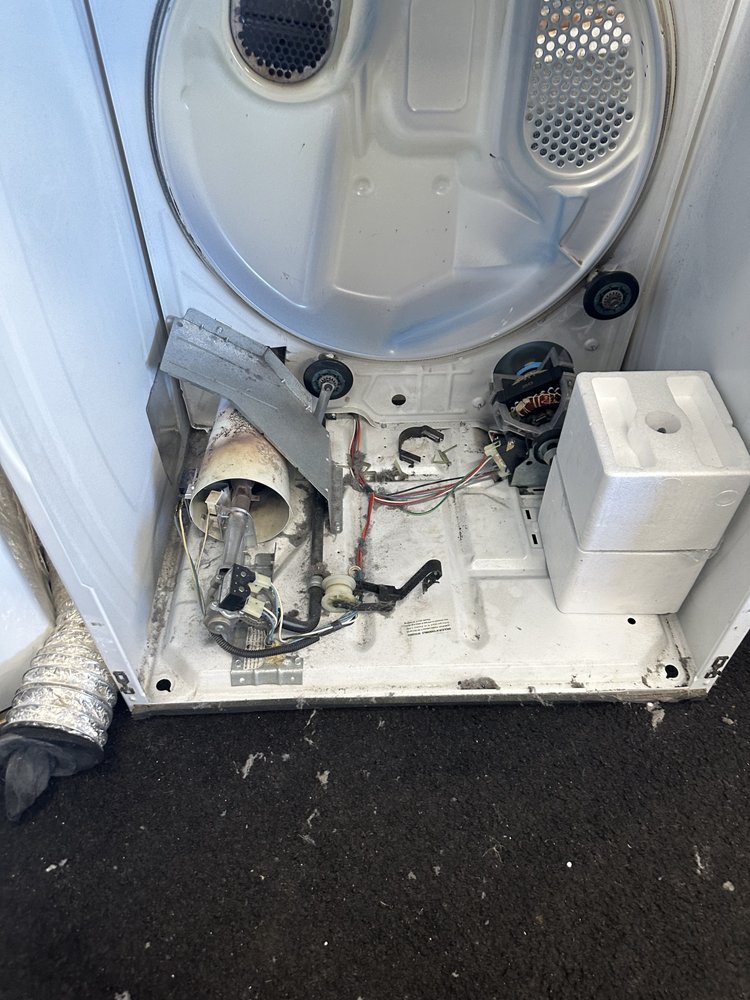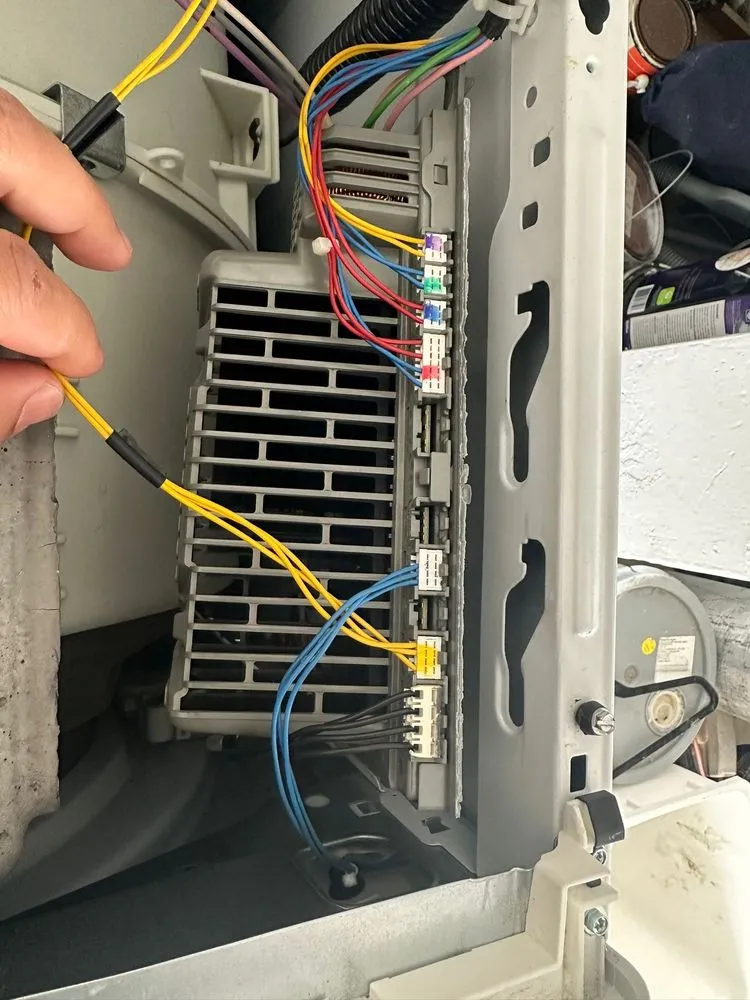
Our techs cover Huntington Beach and the surrounding Orange County coast, and spin failures are one of the most common service calls we get. Before you start shopping for a new washer, work through these five causes in order, the first two you can check and fix yourself in minutes.
5 Reasons Your Washer Won't Spin
Unbalanced or Overloaded Drum
Modern washers, both front-load and top-load, use vibration sensors that automatically abort the spin cycle when the load is too unbalanced to spin safely. A single heavy item (a soaking wet comforter, a pair of jeans bunched to one side) is enough to trigger it. Open the lid, redistribute the laundry evenly by hand, and restart the spin cycle.
DIY FixDrain Issue, Clogged Filter or Kinked Hose
Most washers won't enter the spin cycle if they can't first drain the wash water, spinning a drum full of water risks overflow and motor overload. If the machine fills and agitates but stops before spinning, check the drain hose at the back for kinks, and clean the pump filter (on front-loaders, it's behind the small access panel at the bottom front). A clogged filter is extremely common in Huntington Beach homes with sandy laundry from beach days.
DIY FixLid Switch or Door Latch Failure
On top-load washers, a small plastic lid switch tells the control board that the lid is closed and it's safe to spin. When that switch fails, which it commonly does on machines 5+ years old, the washer thinks the lid is open and refuses to spin even though it's shut tight. Front-loaders have an equivalent: a door latch with an electronic lock. You can test the lid switch by pressing its plunger manually with the lid open and listening for a click; no click typically means failure.
Pro RepairWorn or Broken Drive Belt
Belt-driven washers (common in older top-loaders and some front-loaders) use a rubber drive belt to transfer motor power to the drum. Over time, the belt stretches, frays, or snaps entirely. Symptoms: you can hear the motor running but the drum doesn't move or barely turns. A broken belt often makes a burning rubber smell during a cycle. Diagnosis requires removing the back or bottom panel; replacement is a standard repair that typically takes under an hour.
Pro RepairFailed Motor Coupler or Worn Motor Brushes
Direct-drive washers (most Whirlpool and Maytag top-loaders) skip the belt entirely and use a plastic motor coupler that connects the motor shaft directly to the transmission. This coupler is designed to fail before the motor does, it's a built-in sacrificial part. When it breaks, the motor runs but the drum doesn't turn. On front-loaders with brushed motors, worn carbon brushes produce a similar symptom. Both are pro-level repairs but very straightforward once diagnosed.
Pro RepairTop-Load vs. Front-Load: Does the Type Matter?
The five causes above apply to both types, but their relative frequency differs:
- Top-loaders are more prone to lid switch failures and motor coupler issues, both are inexpensive, high-frequency repairs
- Front-loaders more commonly develop drain pump failures, door latch problems, and control board errors that mimic spin failure
- HE (high-efficiency) top-loaders are more sensitive to load balance and more likely to abort spin cycles due to vibration detection
What Happens If You Ignore a Washer That Won't Spin?
Leaving wet laundry in a washer that can't spin creates a secondary problem quickly: mold and mildew on your clothes and inside the drum. In the humid coastal air of Huntington Beach, this happens faster than inland. A load left overnight in a stalled washer often needs to be rewashed, sometimes more than once to remove the smell.
On the mechanical side, a washer running through cycles without completing the spin puts extra wear on the pump and motor. A cheap lid switch repair left unaddressed can eventually lead to a motor failure that costs significantly more to fix.
Washer Brands We Repair in Huntington Beach
Universal Appliances Repair services all major washer brands serving Huntington Beach homeowners, including Samsung, LG, Whirlpool, Maytag, GE, Bosch, Kenmore, Speed Queen, and Electrolux. We stock common parts for high-volume models on our service vehicles to keep first-visit fix rates high.