Most freezer problems are not mysterious. Whether you have an upright freezer in the garage, a chest freezer in the laundry area, or a bottom-freezer refrigerator in the kitchen, the system still depends on the same pieces working together: the sealed system has to move refrigerant, the fan has to circulate cold air, the controls have to cycle correctly, and warm air has to stay out. When one of those pieces slips, the first symptom in Brea is usually softer food and frost in the wrong places.
What to Do First When the Freezer Starts Warming Up
Start with food safety, not diagnostics. Keep the door shut as much as possible. If you keep opening it to check, the temperature rises faster and you lose the chance to preserve what is still solid. If the freezer is packed, it will hold temperature longer than a mostly empty one.
- Move meat, seafood, and expensive frozen items to another freezer or a cooler with dry ice if you have one
- Do not refreeze food that has fully thawed and reached 40°F
- Put a thermometer inside if available so you know whether the problem is mild drift or full cooling loss
5 Common Freezer Problems We See in Brea
1. Defrost System Failure
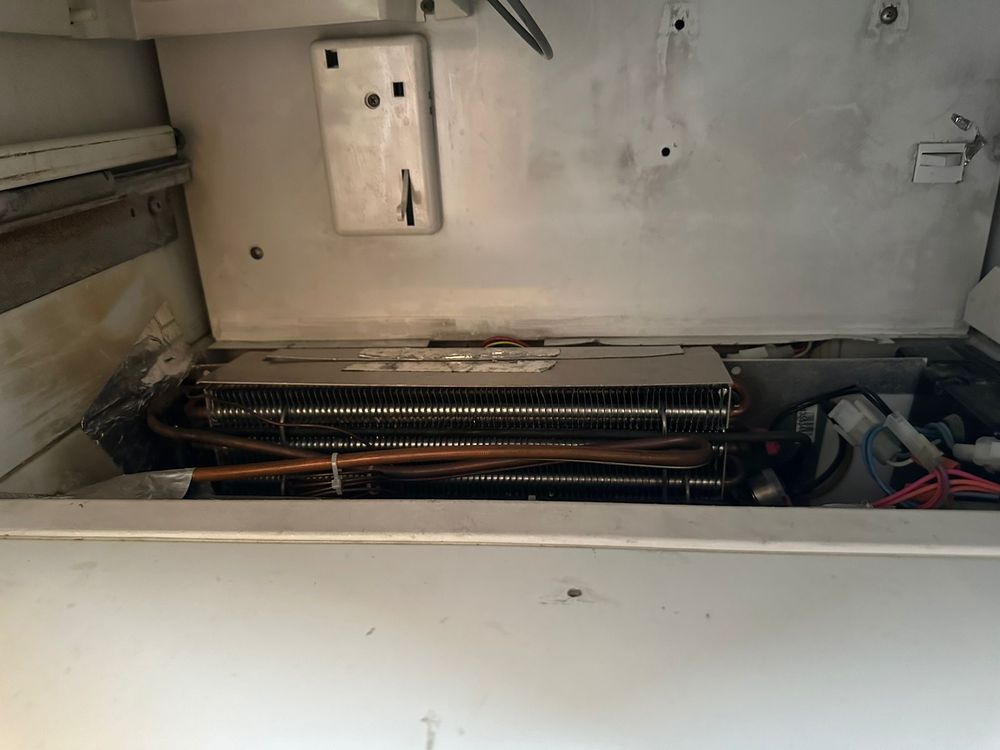
In frost-free units, the coils behind the rear panel gradually ice over if the defrost heater, defrost thermostat, or control board stops doing its job. Air cannot move across a block of ice, so the freezer warms even though the compressor still runs. Homeowners in Brea often notice thicker frost on the back wall before they notice soft food.
If the unit cools normally again after a full manual defrost and then fails a day or two later, the defrost system is the first place to look.
Typical repair: $160-$3202. Evaporator Fan Motor Wearing Out
The evaporator fan pulls cold air off the coils and circulates it through the compartment. When that fan slows down or stops, the freezer may still sound alive, but the cold stays trapped in the wrong spot. You might find ice near the back panel while food near the door softens first.
A weak fan is common on older upright freezers and bottom-freezer refrigerators. It is also one of the cleaner repairs because the diagnosis is usually straightforward.
Typical repair: $180-$3403. Door Gasket Leaking Warm Air
A torn or flattened door gasket lets warm, humid air into the freezer every minute of the day. That creates extra frost, longer run times, and a compartment that struggles in the afternoon heat. Garage freezers in Brea get hit especially hard because ambient temperatures fluctuate more than indoor kitchen units.
Slide your hand around the door perimeter and look for sections that feel loose, warped, or no longer grip the frame evenly.
Typical repair: $140-$2404. Thermostat or Control Failure
A thermostat that reads the wrong temperature can shut the cooling cycle off too soon or keep it from starting at the right time. On newer electronic units, the fault may live in the control board instead. This kind of problem often looks random: the freezer works fine overnight, then drifts warm by afternoon, then recovers later.
Intermittent behavior is what makes this one tricky without proper testing. It is also why replacing parts by guesswork usually costs more than a real diagnosis.
Typical repair: $150-$3605. Sealed-System or Refrigerant Issue
If the compressor runs but the freezer barely cools, or only one small section of the evaporator frosts, the issue may be a refrigerant leak, restriction, or weak compressor. This is the expensive end of freezer repair. It requires specialized tools and certification, and it is the point where repair-versus-replace math matters most.
For a newer or higher-end freezer, the repair can still be worth doing. For an older budget unit, replacement may be the better call.
Typical repair: $320-$650+What Freezer Repair Usually Costs in Brea
The numbers below are a practical range for common freezer repair calls in Brea. Exact price depends on model, part access, and whether the unit is a stand-alone freezer or part of a refrigerator.
| Repair | Typical Total |
|---|---|
| Door gasket replacement | $140-$240 |
| Thermostat or sensor replacement | $150-$280 |
| Evaporator fan motor | $180-$340 |
| Defrost heater or defrost thermostat | $160-$320 |
| Control board replacement | $220-$420 |
| Sealed-system or refrigerant repair | $320-$650+ |
Checks You Can Do Before Booking Service
You do not need to take the machine apart to narrow the problem down. A few simple checks help separate a minor airflow issue from a real component failure.
- Make sure the temperature dial was not bumped warmer during loading or cleaning
- Look for heavy frost on the back interior panel, which points toward defrost trouble
- Clean exposed condenser dust if your model has accessible coils
- Inspect the gasket for gaps, tears, or spots that do not seal tightly
- Listen for the evaporator fan after pressing the door switch
If those quick checks do not explain it, freezer repair in Brea is worth scheduling fast. The longer a weak cooling problem runs, the more strain it puts on the compressor, and that is when a modest repair turns into a much larger bill.
Frequently Asked Questions
Why is my freezer cold but not freezing hard enough?
That usually points to weak airflow, frost blocking the evaporator, dirty coils, or a door gasket leak. The unit is still producing some cold air, but not enough to hold 0°F throughout the compartment.
How much does freezer repair cost in Brea, CA?
Most freezer repairs land between $140 and $420. Sealed-system work is the exception and can exceed that range. The cheapest fixes are usually gaskets, thermostats, and some defrost components.
Can I save the food if my freezer starts warming up?
Yes, if you keep the door closed and move critical items quickly. A full freezer can often hold safe temperatures for up to 48 hours if left unopened, but once thawed food reaches 40°F, it should not be refrozen.
Is it worth repairing an older freezer?
Often yes for fan, thermostat, and defrost repairs. It is less attractive when the compressor or sealed system fails on an older, lower-value unit.
What should I check before calling for freezer repair in Brea?
Check the setting, door seal, visible frost pattern, condenser dust, and whether the evaporator fan is running. Those observations make diagnosis faster and help rule out the easy stuff.