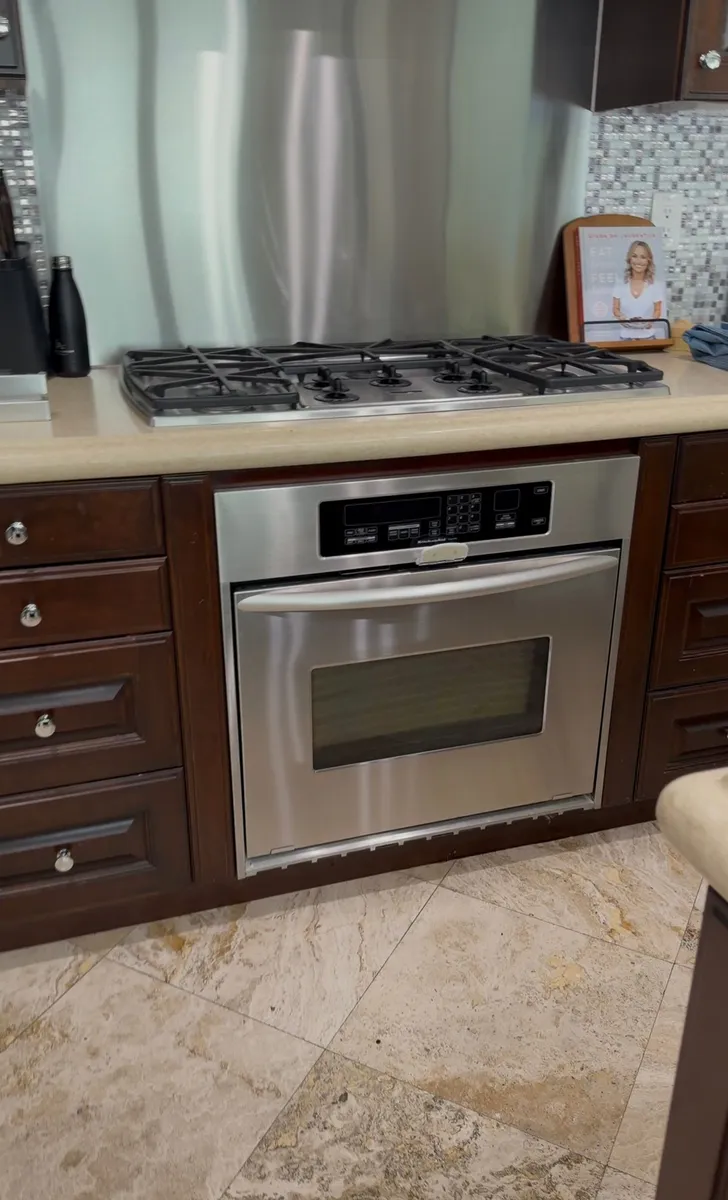
Santa Ana homeowners rely on their ovens and ranges every day, and when something breaks, it disrupts the entire household routine. Whether your oven won't heat up, a burner stopped igniting, or the temperature is wildly off, most problems have straightforward fixes when diagnosed correctly. Here's what our technicians see most often on oven repair calls across Santa Ana.
Most Common Oven Repair Problems in Santa Ana
After years of service calls across Orange County, these are the oven issues we encounter week after week:
- Oven not heating to set temperature, often a worn bake element (electric) or a failing igniter (gas)
- Broiler not working, the broil element is a separate component from the bake element and fails independently
- Surface burner won't ignite, on gas ranges, usually a clogged igniter port or faulty spark module
- Oven temperature running hot or cold, typically a bad temperature sensor or a calibration issue
- Oven door won't close properly, worn door gaskets or broken hinge springs let heat escape and waste energy
- Control panel not responding, faulty control board or ribbon cable connection
- Oven light not working, a minor issue, but worth fixing; can also indicate an electrical problem if other symptoms exist
Oven Not Heating? These Are the Most Likely Causes
An oven that won't heat is the most common service call we receive from Santa Ana homes. The root cause depends on whether you have a gas or electric range.
Electric ovens: The bake element, the coil at the bottom of the oven cavity, is the first thing to inspect. When it fails, it often shows visible signs: a burn mark, a break in the coil, or blistering. If it looks intact but the oven still won't heat, the next suspects are the thermal fuse and the temperature sensor. A failed thermal fuse is a one-time safety device that cuts power to the heating elements when the oven overheats, once it blows, it must be replaced.
Gas ovens: Most modern gas ovens use an electronic igniter instead of a standing pilot light. When the igniter weakens, it glows but can't reach the threshold needed to open the gas valve, so the burner never lights. A slow-igniting oven (one that takes longer than 90 seconds to light) is a classic sign that the igniter is wearing out before it fails completely. Replacing the igniter is typically a straightforward repair for a trained technician.
Range Burner Not Working: Gas vs. Electric
Surface burner problems are different from oven problems, even on the same appliance. Here's how they break down by fuel type:
Gas range burner won't ignite: The two most common causes are a clogged burner port and a faulty spark igniter. Burner ports can be cleared of food debris with a straightened paper clip or fine wire, this is one of the few fixes homeowners can safely attempt. If cleaning the ports doesn't help, the igniter switch or spark module may need replacement.
Electric range burner not heating: Coil-style electric burners can be unplugged from the drip bowl and replaced as a unit, if you have a spare burner of the same wattage and diameter, you can swap it in to confirm the diagnosis before ordering a part. Smooth-top (glass ceramic) ranges require a different approach: the radiant element beneath the glass is replaced as a professional repair, since disassembly involves removing the cooktop.
Oven Temperature Running Hot or Cold
If your oven is cooking unevenly, burning the tops of dishes while leaving the bottoms underdone, or requiring significantly more time than recipes call for, a temperature problem is the likely culprit.
The oven temperature sensor (also called a resistance temperature detector or RTD) monitors the internal temperature and feeds data back to the control board. When it drifts or fails, the control board can't regulate heat correctly. Sensors can be tested with a multimeter, at room temperature, a working sensor reads around 1,080 ohms and increases with temperature. A reading that's far outside that range confirms the sensor is the problem.
Some ovens also have a calibration offset built into the control board settings, consult your owner's manual to check if your oven model allows a manual temperature adjustment before calling for service.
When to DIY vs. Call a Pro for Oven Repair in Santa Ana
Some oven repairs are genuinely within reach of a handy homeowner; others carry real safety risks. Here's a honest breakdown:
- OK to DIY: Cleaning igniter ports, replacing a coil burner on an electric range, replacing an oven light bulb, recalibrating oven temperature if your model supports it
- Call a pro: Any gas valve or supply line work, replacing a bake/broil element on a gas oven, repairing smooth-top cooktops, replacing control boards, diagnosing intermittent faults
What to Expect from a Professional Oven Repair Visit
When you book an oven repair in Santa Ana with Universal Appliances Repair, here's how a typical service visit goes:
- Diagnosis (15–30 min): The technician inspects the oven, tests components with diagnostic tools, and identifies the root cause, not just the symptom
- Estimate: Before any repair begins, you receive a clear breakdown of what needs to be fixed and what parts are required
- Same-visit repair: Most common parts, elements, igniters, sensors, door gaskets, are stocked on the service vehicle. The majority of Santa Ana repairs are completed in a single 1–2 hour visit
- Parts ordered: For less common components (specialty control boards, brand-specific parts), a follow-up appointment is typically scheduled within 2–5 business days
- Warranty: Our repairs carry a parts and labor warranty, if the same issue recurs, we come back at no additional charge
Oven Brands We Repair in Santa Ana
Our technicians are factory-trained and work on all major brands sold in Orange County homes, including GE, Whirlpool, Samsung, LG, Bosch, KitchenAid, Frigidaire, Maytag, Viking, Wolf, and Thermador. Santa Ana homeowners with both budget-range and premium appliances get the same level of service.