A warm freezer isn't always a broken freezer. Several of the most common causes are straightforward repairs, and one of them you can often fix yourself in 20 minutes. The key is knowing which problem you're dealing with before assuming the worst.
1. Dirty or Blocked Condenser Coils
The condenser coils release heat that the freezer pulls from inside the unit. When they're caked with dust, lint, or pet hair, they can't shed heat efficiently, so the compressor runs continuously but the temperature inside never drops low enough to freeze food.
The coils are usually on the back of the unit or underneath it behind a kick plate. Unplug the freezer, pull it away from the wall, and clean the coils with a vacuum brush attachment. In many Anaheim homes, especially those with pets or carpet near the appliance, this one step solves the problem entirely. It costs nothing and takes under half an hour.
2. A Worn or Cracked Door Gasket
The rubber seal around the freezer door creates an airtight barrier. When it wears out, shrinks, or cracks, warm air seeps in continuously, and the freezer can't maintain temperature no matter how hard it tries.
Test it yourself: close the door on a dollar bill and try to pull it out. If it slides free with no resistance, the gasket isn't sealing. Look for visible cracks, areas that feel stiff instead of pliable, or sections that have pulled away from the door frame. Gasket replacement is a straightforward repair, most technicians finish it in under 30 minutes.
3. The Evaporator Fan Has Stopped
The evaporator fan pushes cold air from the coils through the freezer compartment. When it stops, the coils may be working perfectly, but the cold air stays near the back instead of circulating through the unit. The freezer feels warm even though the compressor is running.
You can often hear this one: open the freezer and listen. In a working unit, there's a soft whirring sound from the fan. Silence, or a grinding noise, means trouble. In frost-free models, the fan runs in cycles, so listen for a few seconds rather than just a moment. A failed evaporator fan motor requires disassembly of the freezer interior to replace, which is a job for a technician.
4. Frost Buildup Blocking Airflow
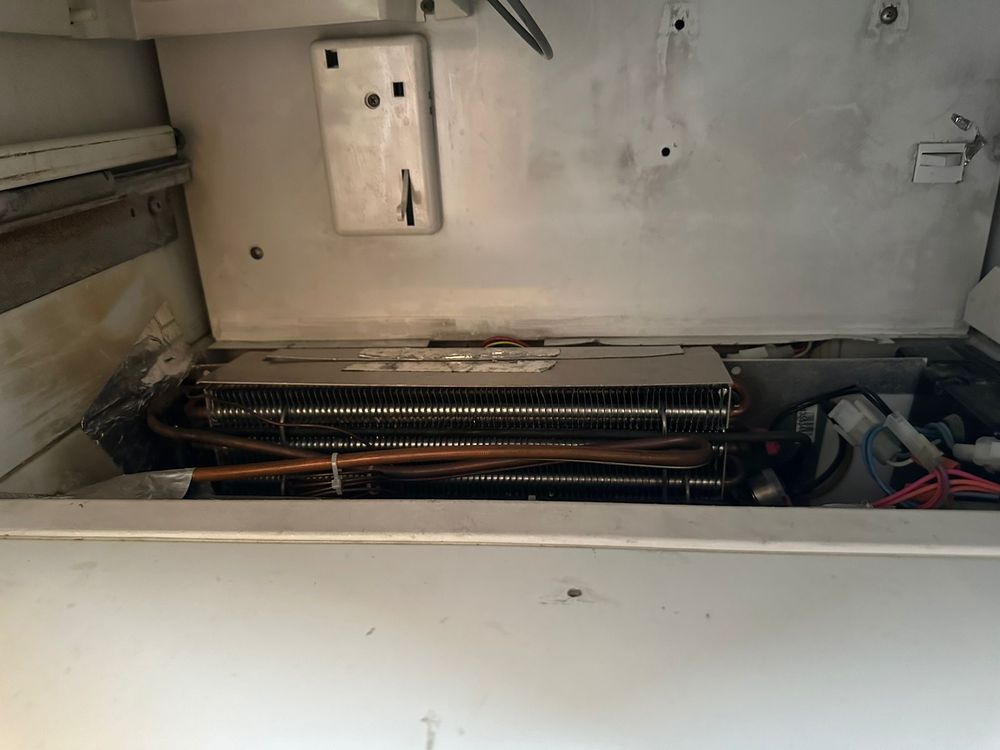
Every frost-free freezer has a defrost system: a heater that periodically melts ice off the evaporator coils, a thermostat that controls when it fires, and a timer or control board that runs the cycle. When any of these components fails, frost accumulates on the coils over days or weeks and eventually forms a solid block. That ice insulates the coils and prevents them from cooling the air inside.
Signs of this problem: heavy frost or ice visible on the back wall of the freezer interior, uneven cooling (back items get freezer burn while front items stay soft), or a freezer that seems to cool and then gradually warm over a week or two. A technician will identify which defrost component failed and replace it.
5. A Failing Start Relay or Compressor
The compressor is the heart of the cooling system. The start relay is a small component that helps the compressor kick on each cooling cycle. When the relay fails, the compressor can't start consistently, the freezer runs in short bursts, never builds enough cold, and stays warm.
The classic sign: a clicking sound from the back of the unit, followed by the motor running briefly and then shutting off. You can test the relay yourself, it's a small box that plugs into the side of the compressor. Remove it and shake it. A rattling sound inside means it's failed. Relays are inexpensive parts that a technician can swap quickly.
A true compressor failure is different. The compressor may run continuously but produce no cooling, or it may not run at all despite the relay being fine. Compressor replacement is a more involved repair. On an older Anaheim unit, say, 12 years or more, it's worth discussing with your technician whether repair or replacement makes more financial sense.
When to Call a Technician
Clean the condenser coils and check the door gasket yourself first. Both are free diagnostics you can do in minutes. If the freezer still isn't freezing after that, the problem is inside the unit, evaporator fan, defrost system, relay, or compressor, and it needs a proper diagnosis before you start replacing parts.
- Freezer motor runs but interior stays above 10°F (-12°C)
- Clicking sound from the back every few minutes
- Heavy frost visible on the back interior wall
- No fan sound when you open the door
- Food has thawed completely despite the unit running
Any of the above warrants a same-day call. The longer a freezer runs without reaching temperature, the harder the compressor works, and that accelerates wear on the most expensive component in the unit. For a full breakdown of what we cover across Orange County, see our freezer repair service page.