A fridge that runs but won't cool has a handful of known causes, and the good news is most of them are diagnosable in under 10 minutes. Work through these six in order, the first two are things anyone can check without tools.
6 Reasons Your Fridge Stopped Cooling
Temperature Settings or Demo Mode
Before anything else: check that the temperature dial hasn't been nudged to "off" or the warmest setting. Also check for demo or showroom mode, many Samsung, LG, and GE fridges have a mode that runs the lights and display but disables cooling entirely. It gets accidentally activated during power outages or button combinations. Check your manual for how to exit it on your model.
DIY CheckDirty Condenser Coils
Condenser coils release heat from the refrigeration system. When they're coated in dust, the system can't shed heat, so it runs constantly but can't get cold. Pull the fridge out, locate the coils (back of the unit or behind the kick plate at the bottom), and vacuum them clean. In Huntington Beach homes with dogs or cats, coils can get badly clogged in just a few months. This alone fixes more "not cooling" calls than you'd expect.
DIY FixEvaporator Fan Motor Failed
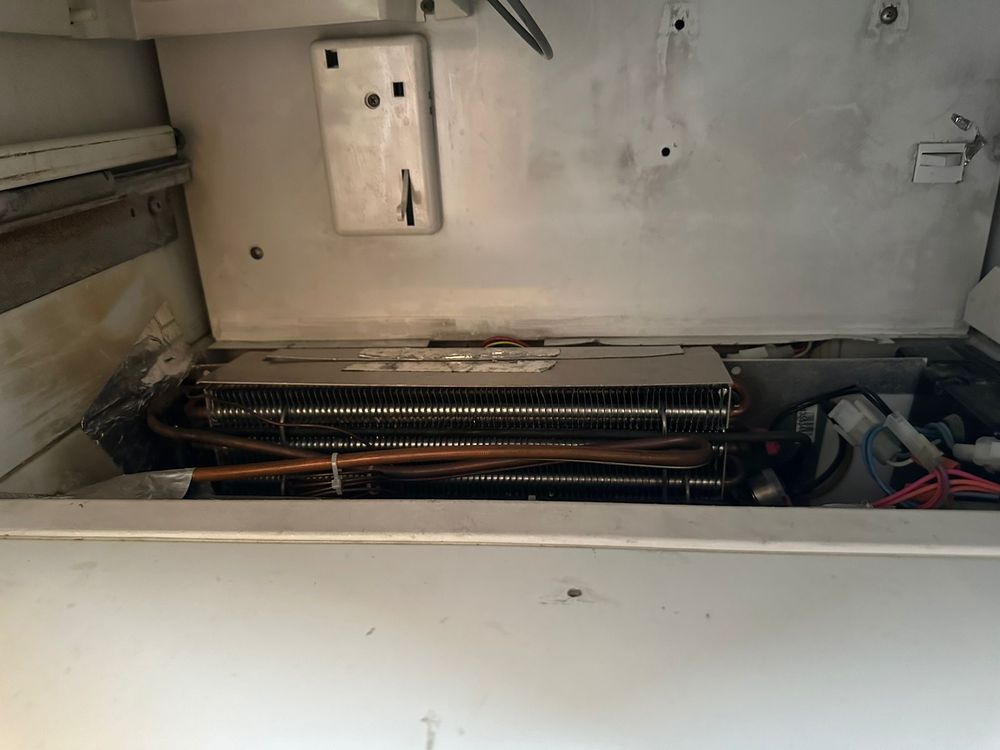
If your freezer is still cold but the fridge section is warm, this is the most likely cause. The evaporator fan pulls air across the cold evaporator coils and pushes it through a duct into the fridge compartment. When the motor dies, the freezer stays cold while the fridge warms up. Open the freezer and listen, you should hear the fan running. Silence confirms the diagnosis. This is a pro repair but a straightforward one, usually done in a single visit. Our guide to a fridge that's warm while the freezer works walks through all six causes.
Pro RepairDefrost System Failure
Modern fridges run automatic defrost cycles to prevent frost from building up on the evaporator coils. When the defrost heater, defrost thermostat, or defrost timer fails, frost accumulates until it blocks airflow entirely, and the fridge stops cooling. Signs: everything in the fridge is warm, but the freezer still works; you may see heavy frost on the freezer back wall. A technician will thaw the coils, identify which defrost component failed, and replace it.
Pro RepairCondenser Fan Motor Failed
The condenser fan draws air over the condenser coils at the back of the fridge to help release heat. When it fails, the compressor overheats and the entire cooling system shuts down, both fridge and freezer warm up. You'll usually hear the compressor clicking on and then off repeatedly as it overheats and trips its overload protector. Replacing the condenser fan motor is a pro repair that typically resolves this within a single service visit.
Pro RepairFailed Start Relay or Compressor Issue
The start relay is a small component that helps the compressor start its cooling cycle. When it fails, the compressor tries to start, can't, and clicks off, repeating every few minutes. Shake the start relay: a rattle means it's bad. Replacing it is a quick, inexpensive fix. If a new relay doesn't solve it, the compressor itself may have failed, a more significant repair that warrants a repair-vs-replace conversation based on the fridge's age and condition.
Pro RepairFreezer Cold, Fridge Warm: The Most Common Pattern
This specific symptom, cold freezer, warm fridge, is one of the most frequent repair calls we receive. It almost always comes down to cause #3 or #4: evaporator fan failure or defrost system failure. Both are repairable. Both are completed in a single visit in most cases.
The diagnostic tells them apart: if frost is visibly built up on the freezer back wall, it's a defrost system issue. If the back wall looks normal but the fan is silent, it's the fan motor.
What to Expect From a Repair Visit in Huntington Beach
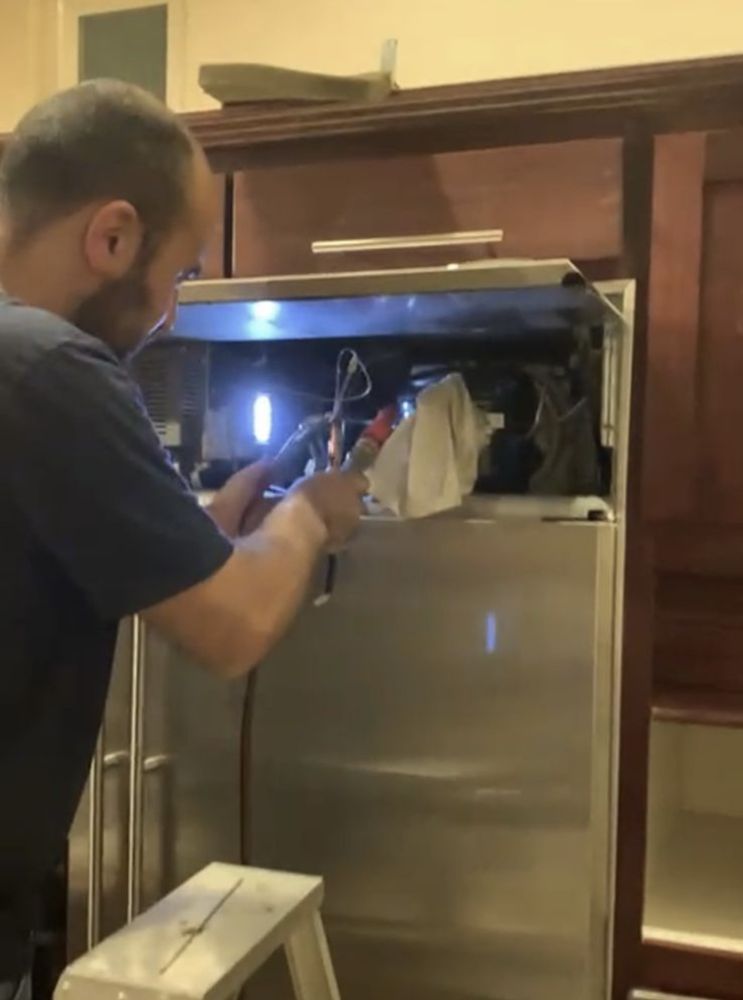
We prioritize same-day service for fridge calls across Huntington Beach because of how quickly food spoils. When a technician arrives, the diagnostic typically takes 15–20 minutes. For the most common causes, fan motors, start relays, defrost components, parts are stocked on the service vehicle and most repairs are completed the same day.