Most refrigerators fail quietly. There's no dramatic noise or warning light, just food that starts spoiling faster than it should. The root cause is almost always one of six things, and most of them are fixable without replacing the fridge. Understanding which one you're dealing with saves you time and money.
How Your Refrigerator Actually Keeps Things Cold
Before diving into causes, a quick orientation helps. Your refrigerator cools by cycling refrigerant through a closed loop: the compressor pressurizes it, the condenser coils release heat, and the evaporator coils inside the fridge absorb heat from the food compartment. A fan circulates that cold air through the cabinet. Any break in that chain, and the interior warms up.
6 Reasons Your Fridge Stopped Cooling
1. Dirty Condenser Coils
The condenser coils (usually at the back or beneath the unit) radiate heat out of the refrigeration system. When they're coated in dust, pet hair, and debris, they can't shed heat efficiently. The compressor overworks trying to compensate, and the interior temperature creeps upward. This is the most common, and most overlooked, cause of a fridge running warm.
DIY fix: Unplug the fridge, locate the coils, and vacuum them with a brush attachment. Most homeowners can do this themselves in 20 minutes.
Repair cost: $0 DIY, $75–$120 if a technician cleans them2. Evaporator Fan Motor Failure
The evaporator fan pulls air across the cold evaporator coils and pushes it into the fridge and freezer compartments. When the fan motor fails, the coils still get cold, but that cold air stays stuck around the coils instead of circulating. A telltale sign: your freezer may still be somewhat cold while the refrigerator section is clearly warm.
How to check: Open the freezer and listen. If you don't hear a fan running when the door is held open, the motor is likely dead or seized.
Repair cost: $150–$300 parts and labor3. Defrost System Failure
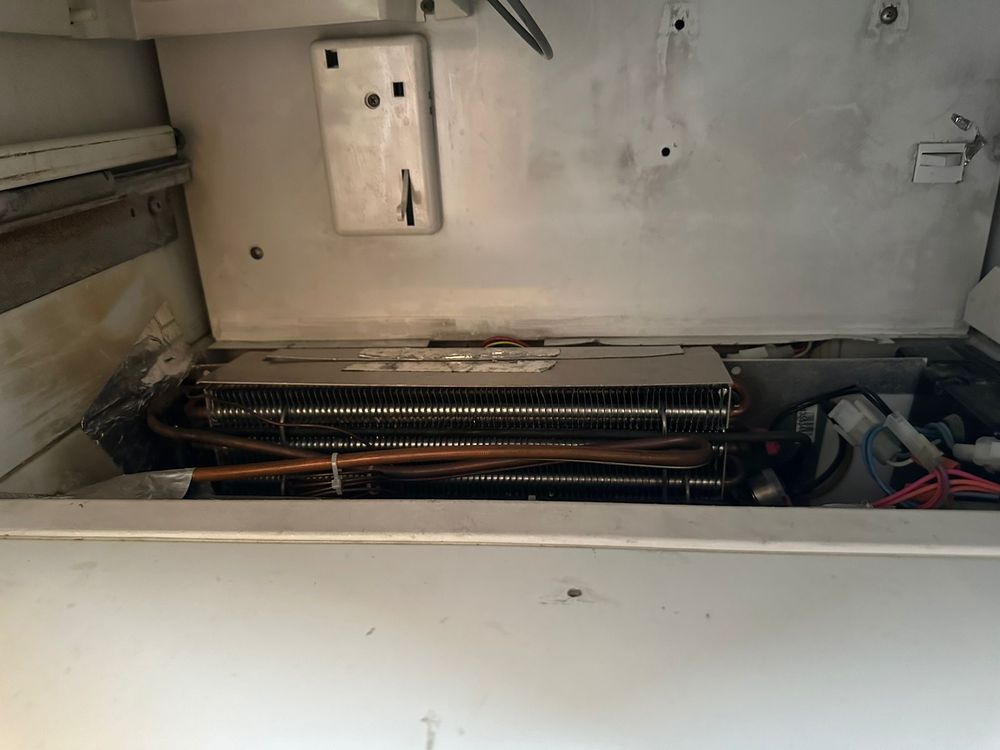
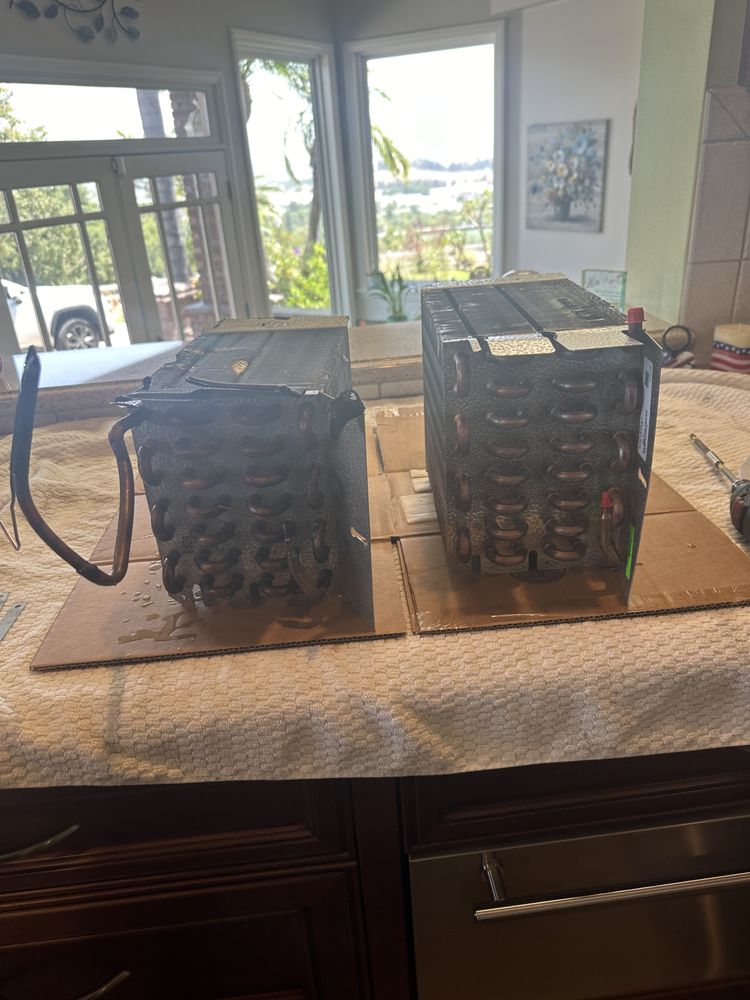
Modern frost-free refrigerators run a defrost cycle every 8–12 hours to prevent ice from building up on the evaporator coils. When the defrost heater, thermostat, or timer fails, ice accumulates until it completely blocks airflow. It looks like the fridge stopped cooling, but the real problem is a frozen-solid evaporator coil hidden behind a back panel.
A temporary test: unplug the fridge for 24–48 hours with the doors open to let it defrost manually. If cooling returns briefly before failing again, you've found your answer.
Repair cost: $100–$250 depending on which component failed4. Worn or Damaged Door Seal
The rubber gasket around your fridge door creates an airtight seal. When it cracks, tears, or simply loses its grip, warm air leaks in constantly. Your compressor runs nonstop trying to compensate, and the interior never quite reaches temperature. Check the seal by closing the door on a piece of paper, if you can pull the paper out without resistance, the seal has failed.
Gaskets are one of the cheaper repairs, and a worn one is often responsible for fridge problems that seem much more serious than they are.
Repair cost: $100–$180 parts and labor5. Faulty Temperature Control Thermostat
The thermostat tells the compressor when to cycle on and off. When it fails, the compressor may run too infrequently, or stop running altogether, leaving the fridge to slowly warm up. You might notice the fridge temperature swinging wildly or simply never reaching the set point even with the dial turned all the way up.
Repair cost: $150–$270 parts and labor6. Refrigerant Leak
Refrigerant doesn't get "used up", it circulates indefinitely in a sealed system. If your fridge is low on refrigerant, it means there's a leak somewhere in the circuit. Symptoms include the fridge gradually losing cooling capacity over weeks, frost patterns that look unusual, or an oily residue near the compressor. Refrigerant handling requires EPA certification and special equipment, this is not a DIY repair.
A refrigerant recharge without fixing the underlying leak is a temporary fix that buys time while you decide whether to repair or replace.
Repair cost: $200–$450+ depending on leak locationRepair Costs at a Glance
Here's a quick reference for what these repairs typically run in the Fountain Valley and Orange County area:
| Problem | Typical Repair Cost | DIY Possible? |
|---|---|---|
| Dirty condenser coils | $0–$120 | Yes |
| Evaporator fan motor | $150–$300 | Sometimes |
| Defrost system component | $100–$250 | Sometimes |
| Door seal / gasket | $100–$180 | Yes |
| Temperature thermostat | $150–$270 | No |
| Refrigerant leak repair | $200–$450+ | No |
| Compressor replacement | $300–$600+ | No |
What to Do Right Now
If your refrigerator stopped cooling, do these things in order while you figure out the cause:
- Move perishables to a cooler with ice, food safety is the immediate priority
- Check the thermostat setting, someone may have accidentally bumped the dial
- Pull the fridge away from the wall and inspect the condenser coils; vacuum them if dusty
- Check the door seals on all compartments
- Listen for the fans and compressor, silence when it should be running is a diagnostic clue
When to Call a Technician in Fountain Valley
If the condenser coils are clean and the door seals look intact, the issue is almost certainly inside the refrigeration system, something that requires test equipment, refrigerant handling credentials, or sealed-system access. At that point, it's time to call a professional. Most reputable Orange County appliance technicians can diagnose a non-cooling fridge in under an hour, and many carry common parts in their service vans for same-day repairs.
Frequently Asked Questions
Why is my fridge compressor running but not cooling?
If you can hear the compressor running but the fridge isn't getting cold, the most common culprits are a frozen evaporator coil blocking airflow, a failed evaporator fan motor, or a refrigerant leak. A running compressor that can't cool often means the refrigerant circuit is compromised or the cold air isn't being circulated, both require a technician to diagnose and fix safely.
How do I know if my refrigerator compressor is failing?
Signs of a failing compressor include the fridge not reaching temperature, the compressor running constantly without cycling off, clicking sounds when it tries to start, or the compressor being hot to the touch on the exterior. Compressor failure is one of the more expensive refrigerator repairs, $300–$600 or more, so it's worth having a technician assess whether repair or replacement makes more sense given the fridge's age.
How long does refrigerator repair take in Fountain Valley?
Most repairs can be completed in a single visit of 1–2 hours. Common fixes like a faulty thermostat, door seal replacement, or evaporator fan motor are typically done same-day if the technician carries the part. Refrigerant recharges or compressor replacements may require a follow-up visit if a part needs to be ordered.
Can dirty condenser coils really make a fridge stop cooling?
Yes. Condenser coils release the heat your refrigerator pulls out of the food compartment. When they're coated in dust and debris, they can't dissipate heat efficiently, the compressor overworks, the interior temperature climbs, and food starts to warm. Cleaning the coils is one of the few refrigerator fixes homeowners can do themselves, and it costs nothing if you do it with a vacuum and coil brush.
Is it worth repairing a refrigerator that's 10 years old?
The general rule: if the repair cost is less than 50% of a comparable new unit's price, repair is usually the smarter choice. A 10-year-old fridge likely has 5–8 years of life left if well-maintained. Minor repairs like a fan motor or thermostat are almost always worth it. A compressor replacement on a very old fridge is trickier, get a technician's opinion on the overall condition first.