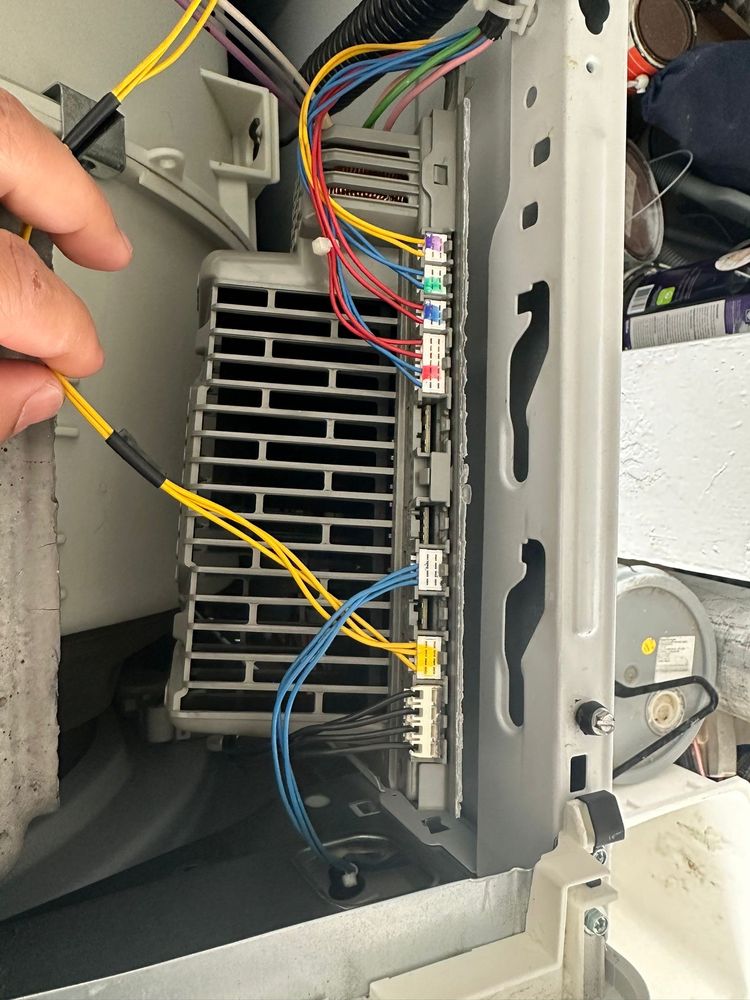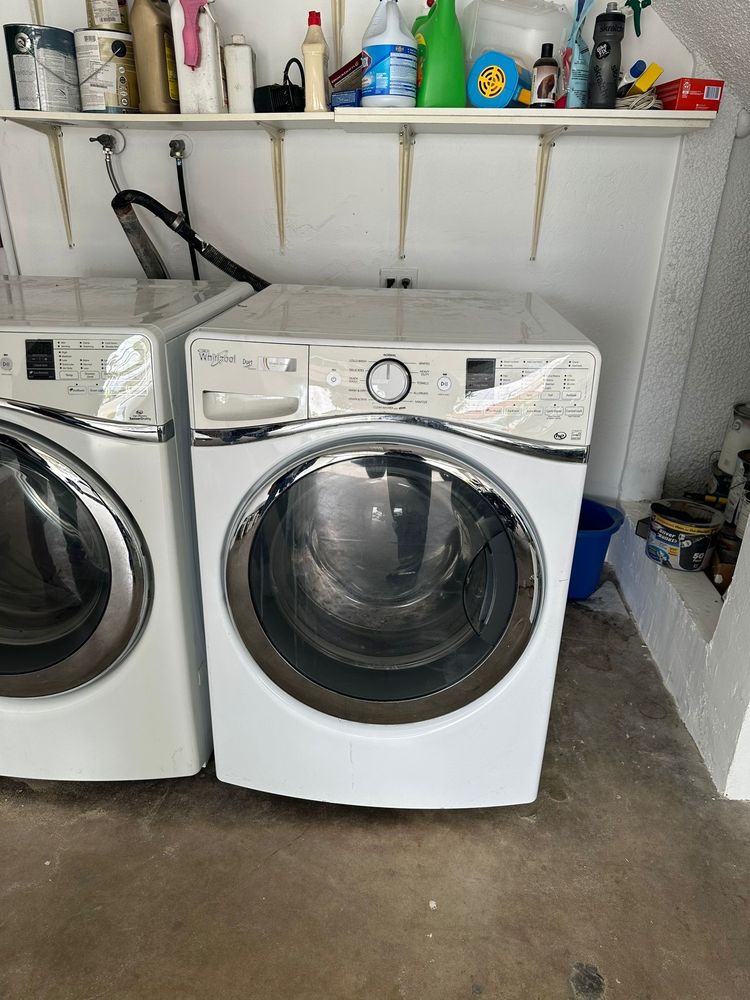
The first thing to figure out is where the water is actually coming from. Leaks from the front, back, bottom, and top of the machine each point to different parts. Watching where water first appears, rather than where it pools, makes diagnosis much faster.
Front-Loader Door Boot Seal
The most common source of leaks in front-loading washing machines is the door boot seal, the thick rubber gasket that forms a waterproof tunnel between the door and the drum. It's built to last, but over time it can develop small tears, mold buildup that degrades the rubber, or debris caught in its folds that prevents it from seating properly.
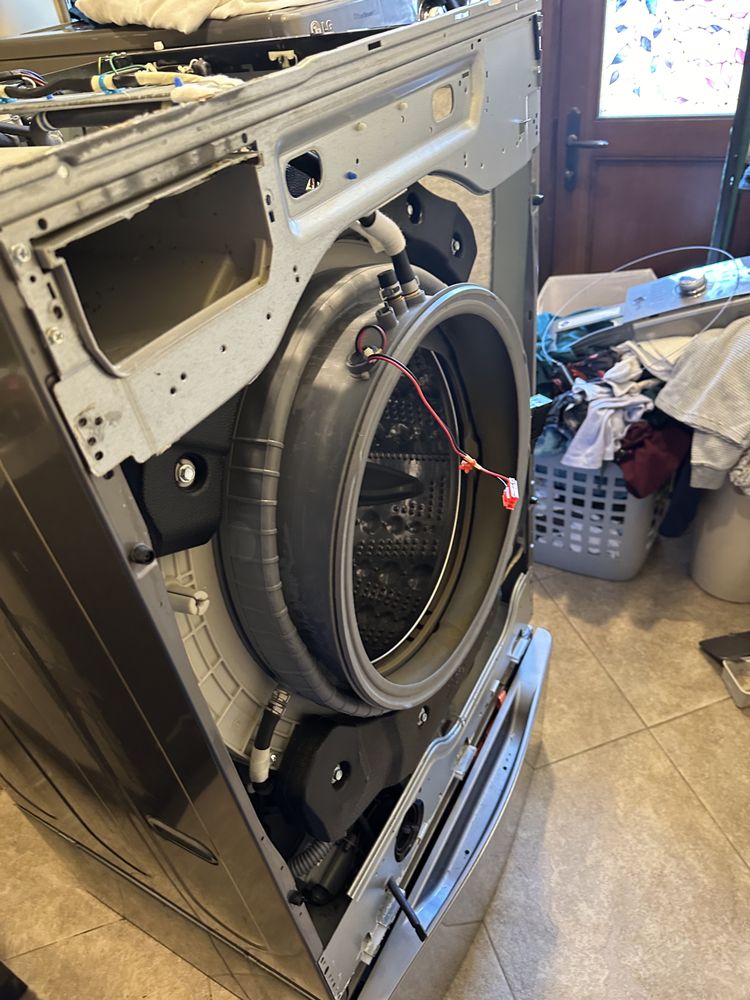
Check it while the machine is idle: open the door and pull back the folds of the gasket. Look for visible tears, holes, or objects caught inside. Water sitting in the folds between cycles is normal; an actual tear or crack is not. A failed door boot on a front-loader requires removing the front panel and door trim to access, a technician job that typically takes 90 minutes to two hours.
Inlet Hoses and Supply Line Connections
Two hoses connect the back of your washing machine to the hot and cold water supply valves, one for each. These hoses take constant water pressure and vibration, and they wear out over time. A slow drip from a loose connection or a crack in the hose wall is easy to miss until there's enough water on the floor to notice.
Turn the machine off and pull it away from the wall. Check both hoses from end to end: look for bulging, cracks, corrosion at the connectors, or moisture around the coupling threads. Hand-tighten any loose connections carefully (over-tightening strips the threads). Braided stainless steel hoses are significantly more durable than rubber ones, if yours are the original rubber hoses and the machine is more than 5 years old, replacing them is cheap insurance regardless of whether they're leaking yet.
Drain Pump or Drain Hose
Water leaking from the bottom of the machine, especially during or just after the spin cycle, often points to the drain pump or the hose that connects it to the tub. The drain pump pushes water out of the machine at the end of the wash cycle. When the pump housing cracks, its seal fails, or debris punches through the impeller, water leaks directly onto the floor.
The drain hose runs from the pump to the standpipe or utility sink where the washer drains. If it's cracked, kinked, or has a loose clamp where it connects to the pump, that's another clean source of bottom leaks. In Buena Park homes with older machines, the hose clamps are often the culprit, they loosen with vibration over years of use.
Tub Seal and Bearing Failure
The tub seal sits where the drum shaft exits the outer tub. When it fails, water from inside the drum escapes down the shaft and drips under the machine. This one typically announces itself: the bearing failure that often accompanies a worn tub seal causes a loud grinding or rumbling noise during the spin cycle, sometimes weeks before the leak appears.
A tub seal and bearing replacement is one of the more labor-intensive washer repairs. The machine has to be mostly disassembled to access the bearing. On an older unit, especially one already showing other wear, it's worth discussing with your technician whether the repair cost makes sense relative to the machine's remaining useful life.
Too Much Detergent
It sounds too simple, but excess detergent is one of the more common causes of washing machine leaks that homeowners miss. High-efficiency (HE) washers use very little water compared to older top-loaders, so they need HE detergent, used sparingly. Regular detergent, or too much HE detergent, creates excess suds that the machine can't contain. Foam pushes out through the door seal, the dispensers, or the venting.
If the leak is specifically happening during the wash portion of the cycle (not drain or spin) and your machine has been otherwise problem-free, cut your detergent amount in half for two cycles and see if the leak stops. Run a drum-cleaning cycle to clear residual suds.
Dispenser Drawer Clog
On front-loaders and some top-loaders, the detergent dispenser drawer can overflow if it's partially clogged with detergent residue or fabric softener buildup. Water fills the drawer, overflows the tray behind it, and drips down the front or side of the machine. Pull out the drawer, soak it in warm water, and clean the cavity behind it with a small brush. This is a DIY fix that takes 10 minutes.
When to Call a Technician
Check the inlet hoses, dispenser drawer, and detergent amount yourself, these are quick and free to rule out. If the leak persists, it's time to call. Most washer leak repairs in Buena Park are completed in a single visit.
- Water pooling during any part of the cycle, wash, rinse, or spin
- Leak from the bottom combined with grinding during spin
- Visible crack or bulge in a supply hose
- Tear or hole in the door boot seal
- Leak persists after reducing detergent and cleaning the dispenser