The Most Common Reasons a Wine Cooler Stops Cooling
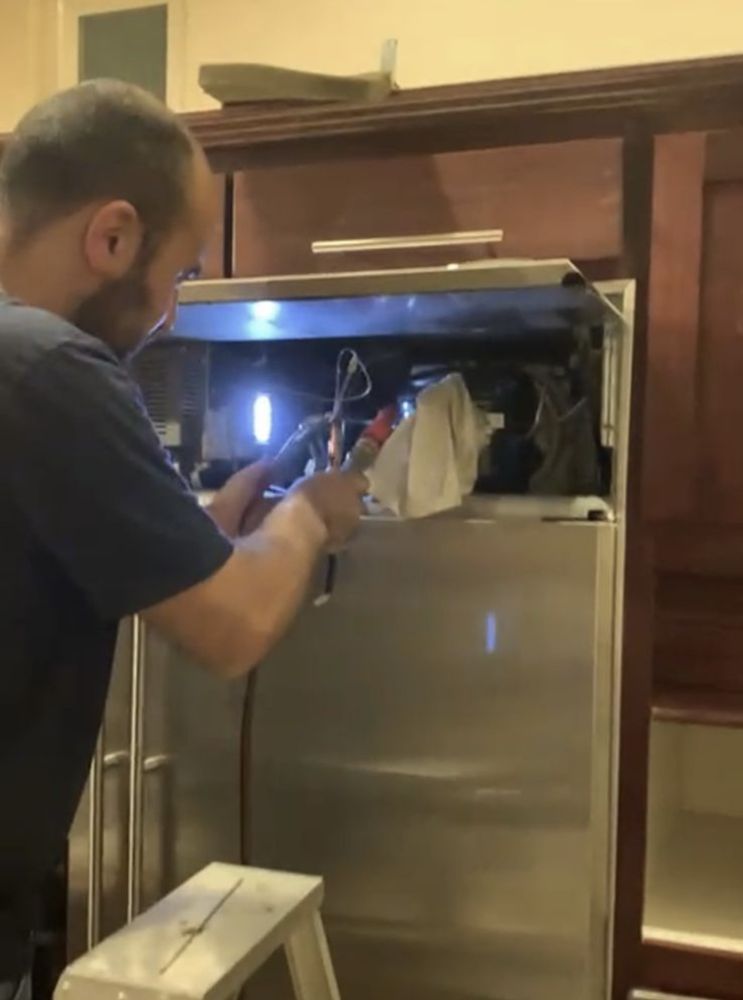
Most wine fridges fail because of one component, not the whole system. A technician can usually pinpoint it within 20 minutes on-site.
Dirty condenser coils top the list. Dust and debris build up on the coils at the back or bottom of the unit, insulating them so heat can't escape. The compressor ends up running overtime, and eventually can't keep up at all. Cleaning the coils is something you can handle yourself (more on that below), but if it's been years, the compressor may already be strained.
A failing thermostat is the second most common problem. It reads the internal temperature and tells the compressor when to cycle on and off. When it drifts or fails, you'll notice wild temperature swings, the display reads 55°F but the wine feels warmer. Thermostat replacement is a straightforward repair that takes under an hour.
Beyond those two, common causes include a worn door gasket letting warm air seep in continuously, a faulty evaporator fan that stops circulating cold air inside the cabinet, and, on compressor units, a weak start relay that prevents the compressor from firing up correctly.
Compressor Units vs. Thermoelectric Models, Why the Difference Matters
Not all wine coolers work the same way, and the type you own changes how it fails.
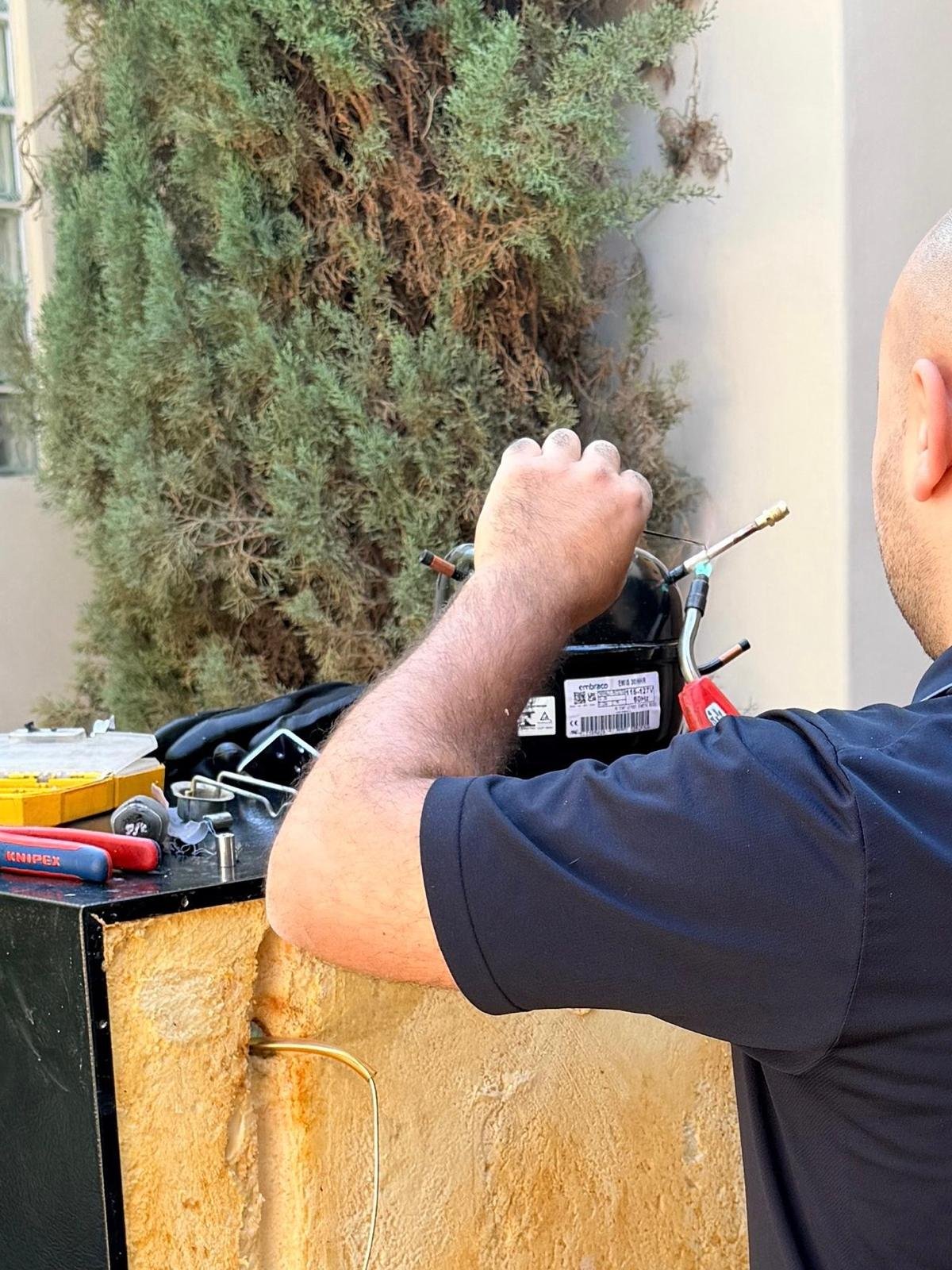
Compressor wine coolers work like a standard refrigerator, a refrigerant loop, a compressor, condenser coils, and an evaporator. They cool powerfully in any room temperature. The tradeoff is a slight vibration that can disturb sediment in aged wines over time. When a compressor unit fails, the repair options are similar to a fridge: thermostat swap, fan motor replacement, start relay, or, less commonly, a refrigerant recharge.
Thermoelectric wine coolers use a Peltier module instead of a compressor. No moving parts, no vibration, nearly silent. They're ideal for small collections in a climate-controlled home. The catch: they only cool effectively when room temperature stays below about 75°F. If your Newport Beach home heats up in summer and your thermoelectric fridge suddenly can't keep up, that may not be a malfunction, it may be physics. These units can't pull enough heat out of the cabinet when the room around them gets too warm.
Knowing which type you have cuts diagnostic time significantly.
What You Can Check Before Calling a Technician
A few quick checks can rule out the simple stuff before a tech comes out.
- Verify the temperature setting. Wine cooler controls are sensitive. Someone may have bumped the dial, confirm it's set to 50–65°F for reds or 45–50°F for whites.
- Check airflow around the unit. Freestanding wine coolers need 3–6 inches of clearance on the sides and back, and ideally 20 inches overhead. Pushing the unit flush against a wall is one of the most common causes of overheating we see.
- Clean the condenser coils. Unplug the unit, pull it away from the wall, and vacuum or brush the coils at the back or bottom. Five minutes. It can make an immediate difference.
- Test the door gasket. Close the door on a dollar bill and pull. If it slides out without resistance, warm air is getting in constantly and the fridge is working twice as hard to compensate.
- Check placement. Is the unit near an oven, in direct sunlight, or next to a heat vent? A few extra degrees of ambient heat can push a thermoelectric model past its limit.
Warning Signs That Mean You Need a Pro
Some symptoms are easy to rule out yourself. Others need a technician.
- Clicking every few minutes. The compressor is trying to start but failing, classic sign of a bad start relay or overload protector. Left alone, this eventually burns out the compressor.
- Unit runs continuously but never reaches temperature. The compressor never cycling off means it's either low on refrigerant, the thermostat has failed, or cold air is escaping through a bad gasket. Continuous running stresses every component.
- Visible ice on the back wall or evaporator coils. Ice signals compromised airflow, usually a defrost issue or a blocked evaporator fan. The ice is a symptom, not the cause.
- A burning or chemical smell. Unplug the unit immediately. Electrical smells point to a failing motor winding or damaged wiring, not something to diagnose yourself.
- Loud grinding or rattling. Fan blades can hit accumulated ice or debris; compressor mounts can vibrate loose over time. Both need hands-on diagnosis.
What a Wine Cooler Repair Visit in Newport Beach Looks Like
When you call, a technician typically arrives the same day or the following morning. Diagnostics take 20–30 minutes.
They'll check refrigerant pressure on compressor models, test the thermostat with a meter, inspect the door seal, listen to the compressor, and check fan motor operation. Most repairs, thermostat replacement, fan motor swap, start relay, gasket, can be done in that same visit if the part is on the truck.
Brands common in Newport Beach homes, Sub-Zero, Viking, U-Line, Perlick, EuroCave, Liebherr, have solid parts availability. Less common parts typically arrive within 1–2 business days.
After the repair, the technician verifies the unit reaches and holds the target temperature before leaving. Most standard wine cooler repairs wrap up in 1–2 hours total.