We repair microwaves across Costa Mesa and Orange County, and no-heat calls almost always come down to one of four components. Here's how to understand what's wrong, and a clear-eyed look at what's safe to check yourself versus what isn't. Calling from South County? Our Mission Viejo microwave guide covers the same failure.
What You Can Check Yourself
The door switches. Microwaves have two or three interlock switches that confirm the door is fully closed before allowing the heating circuit to operate. If one switch fails, the turntable and light may still work while the magnetron gets no power. You can test whether the door is engaging properly by listening for a firm click when closing the door. If the door feels loose or the latch doesn't click solidly, that's worth investigating. A technician can test the switches with a multimeter in minutes.
The thermal cutout (fuse). Microwaves have a thermal fuse that trips if the unit overheats, typically from running empty or from ventilation blockage. On some models, this fuse is accessible from outside the casing. Check your model's service manual. If it's accessible and tests as blown on a continuity meter, it can be replaced. But remember: a blown thermal fuse is usually a symptom of overheating, not just a random failure. Figure out why it overheated before replacing it.
What Requires a Technician
The diode. The high-voltage diode converts AC current to DC for the magnetron. When it fails, the microwave runs normally, light, turntable, fan, but the magnetron gets no power. Diagnosing a failed diode requires accessing the high-voltage circuit. This is a technician job, but it's one of the less expensive microwave repairs when the diode is the culprit.
The high-voltage capacitor. The capacitor works with the diode to double the voltage going to the magnetron. A failed capacitor produces the same symptom as a bad diode, running without heating. This is also a technician repair, and the capacitor must be safely discharged before any work begins, even with the unit unplugged.
The magnetron. The magnetron is the component that actually generates microwave radiation to heat food. When it fails, nothing heats. Magnetron replacement is the most involved microwave repair and may not make financial sense for a basic countertop unit, but for an over-the-range or built-in microwave, it's often worthwhile. A technician can give you a clear answer on whether repair or replacement is the smarter call for your specific unit.
Repair vs. Replace: The Honest Guide
Microwaves are the one appliance where repair doesn't always make financial sense. Here's a practical framework:
- Replace: Countertop microwave under $200 with a magnetron or capacitor failure, replacement is almost always cheaper and faster
- Repair: Over-the-range microwave built into your kitchen, replacement involves significant labor, potential cabinetry work, and finding an exact-fit model. Repair is almost always the right call.
- Repair: Built-in drawer microwaves and commercial-grade units, these are expensive to replace and worth repairing for most component failures
- Door switches: Always worth repairing regardless of microwave type, it's a quick, inexpensive fix
Microwave Brands We Repair in Costa Mesa
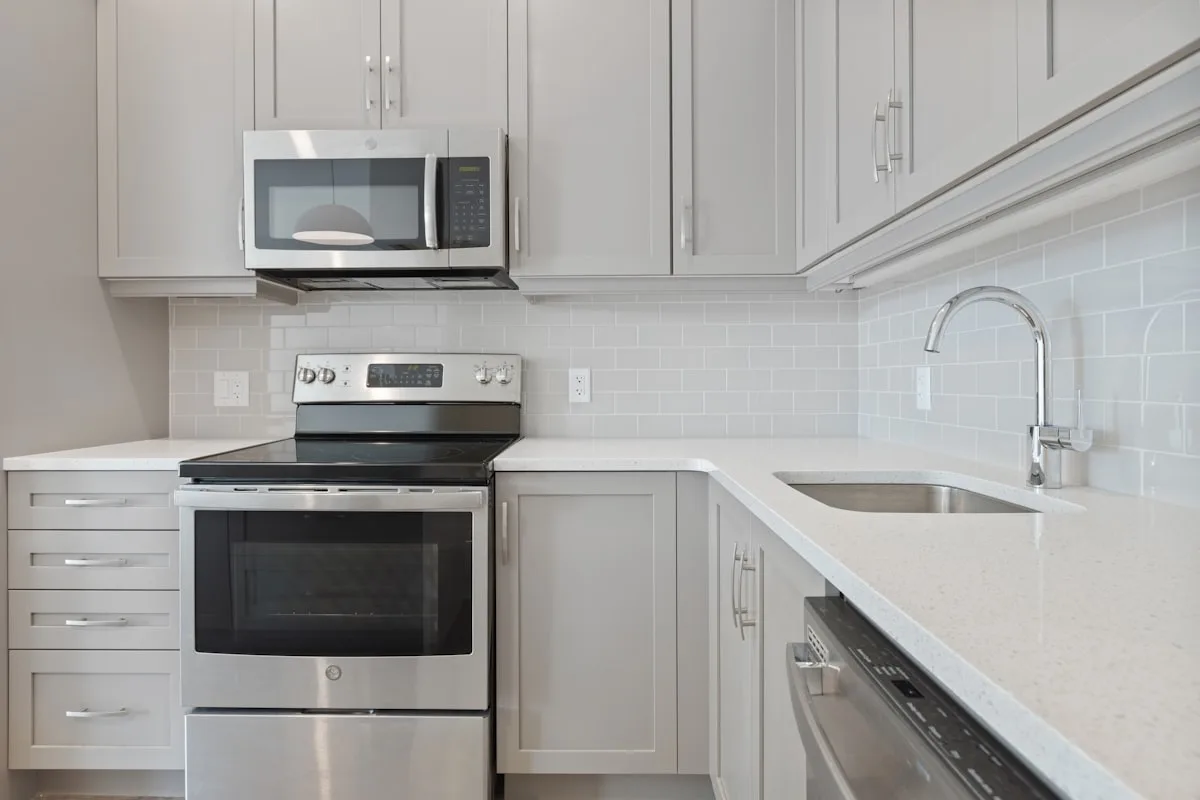
Universal Appliances Repair services all major microwave brands in Costa Mesa, GE, Whirlpool, Samsung, LG, KitchenAid, Bosch, Sharp, Panasonic, and Frigidaire. We work on countertop, over-the-range, built-in, and drawer microwaves.