Protect the Food First
Put an appliance thermometer in the refrigerator section before you do anything else. The control setting only shows what the unit is trying to hold, not what your food is sitting in. Refrigerated food should stay at 40°F or below, so move anything perishable to a working refrigerator or a cooler with ice while you sort this out.
The FDA's food-storage guidance and USDA's emergency food chart explain what to keep and what to discard when a refrigerator has been running warm. Perishables such as meat, milk and leftovers are the first to go; when in doubt, throw it out, and do not taste food to decide.
Why a Sub-Zero Behaves Differently From a Regular Refrigerator
Three things make a Sub-Zero trickier to troubleshoot than the freestanding refrigerator you may have owned before.
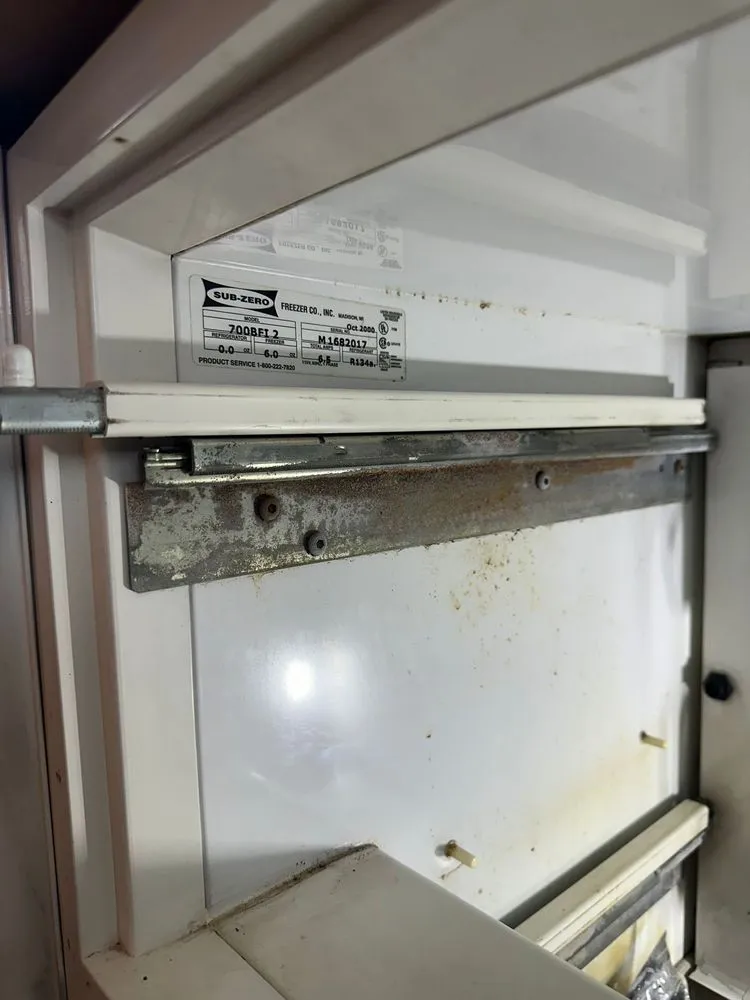
Some models have two separate cooling systems. Sub-Zero's 200 and 300 series page explains that the number of “1”s in the model number tells you how many compressors and temperature controls the unit has (model 211 is the one exception to that rule), and that some models have two of each, one for the refrigerator and one for the freezer. Its compressor run-time page adds that on models with two compressors, both may run at once, which can make the unit seem to run constantly. The practical upshot: a cold freezer does not prove the refrigerator side is healthy, and the reverse is true too. Your use-and-care guide and model number tell you which layout you have, and our Sub-Zero repair team can confirm it from the model number when you book.
The condenser is tucked behind a grille, and the location varies. On the 201, 501 and 601 models, for example, Sub-Zero places it behind the kickplate grille at the bottom front. Other lines differ, and Sub-Zero's condenser page deliberately gives separate instructions by product line instead of one universal procedure. A built-in sits inside cabinetry, so you cannot slide it out and look at the back the way you could with a freestanding unit.
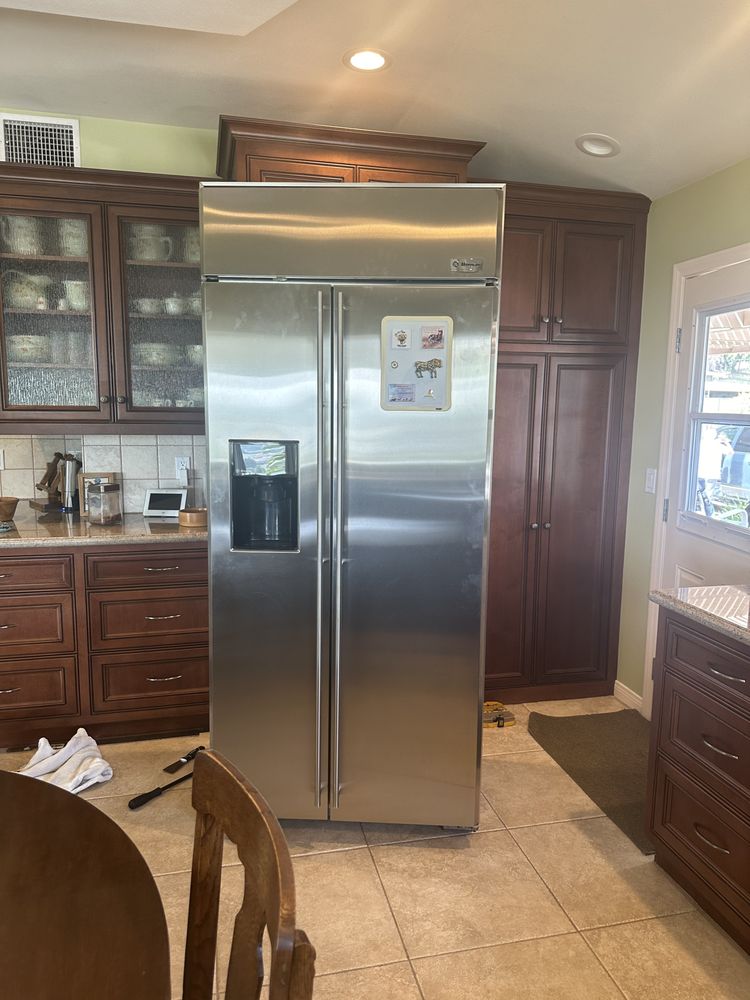
Built-ins leave little room for mistakes. Most are fitted tightly to the cabinets around them, and many have a custom panel on the door. That is why the safest early checks are the ones that never involve a tool. If you have a built-in, the general layout questions are covered in our built-in refrigerator repair guide.
Causes, in the Order to Check Them
This is not a statistical ranking. It is the order we would work through them on a visit, easiest and cheapest to confirm first. Each one lists what you would notice, why it happens, and what to check.
Controls, modes and settings
What you notice: one section is warm after a power blip, a cleaning, a service visit or a family member pressing buttons.
Why it happens: Sub-Zero lists several settings that can leave a unit looking broken when it is not. On electronic controls it recommends 38°F for the refrigerator; dial models are meant to sit between 4 and 6, where 1 is warmest and 10 is coldest. A dial number is a position, not a temperature. Showroom mode and Sabbath mode can also hold temperatures in unexpected ways, and a refrigerator section that has been switched off shows double dashes on the display.
What to check: confirm the section is on, the setting matches the manual, and no special mode is active. Write down any message before you change anything, then wait the full 24 hours Sub-Zero allows before judging the result.
Door closure and the gasket
What you notice: the cabinet warms after groceries were loaded or a door was left open, you see condensation or frost near the door, or the gasket looks torn, stiff or rippled.
Why it happens: a door that does not seat lets warm room air in continuously. Sub-Zero's warm-refrigerator and warm-freezer pages both start here: make sure the door was not left ajar, clear anything blocking it, switch on the door alarm if your model has one, and inspect the gasket for damage. A torn gasket needs replacing; it does not repair.
What to check: look at the whole seal with the door open, then close it gently on a loose item and make sure nothing is wedged behind a tray or bin. Fresh groceries also raise temperatures for a few hours, which is normal.
A condenser overdue for cleaning
What you notice: both sections trend warm over weeks, the compressor seems to run a lot, or the display shows a “Service” or “Vacuum Condenser” message.
Why it happens: the condenser is how the system dumps the heat it pulled out of your food. Dust and pet hair on its fins make that harder, and Sub-Zero warns that skipping cleaning can lead to temperature loss or mechanical failure. A built-in with a tight enclosure and no airflow to spare feels it first.
What to check: use the cleaning instructions for your exact model from Sub-Zero's condenser-care page. A newer unit under six months old does not need this step. If it is the freezer that is warm, Sub-Zero's freezer guide asks whether the condenser was cleaned in the last three months. The sequence is straightforward on models like the 201, 501 and 601: power the unit off as directed, remove the grille, and clean with a soft-bristle vacuum attachment. If you are unsure of the procedure for your series, stop and let a technician do it.
Blocked vents and an overpacked cabinet
What you notice: the back of a shelf is cold while the front is warm, or temperatures vary from one shelf to the next.
Why it happens: cold air has to circulate. Sub-Zero's warm-freezer guidance specifically tells owners to avoid overpacking and to allow air to circulate. Large containers pushed against a vent, or a cabinet crammed after a party, can look like a mechanical fault.
What to check: pull items away from visible vents, thin out the shelves, and leave the door closed for a few hours. Keep to visible storage areas; do not remove interior panels or fan guards.
Frost or ice buildup and the defrost system
What you notice: frost or ice on the back wall, ice around the drain, standing water at the bottom, or a section that cools for a few days after a manual thaw and then declines again.
Why it happens: Sub-Zero says ice on the back wall can come from a faulty door gasket, air leaking into the unit, a clogged drain tube, or problems with air circulation or the sealed system. Independent repair references such as Sears PartsDirect's airflow guide add the defrost system itself, including the defrost heater, as a common culprit: when it stops working, frost and ice build up on the evaporator coils until they block airflow and the section warms.
What to check: fix the door seal and condenser items above first, since air leaks and heat load both feed frost. If ice returns, Sub-Zero's guidance is that service is necessary to diagnose and repair it. Do not chip ice with tools; the coils behind it are delicate.
Evaporator fan, condenser fan or air damper
What you notice: the freezer holds temperature while the refrigerator section warms, or the whole unit warms and the area around the compressor feels hot. You may hear buzzing, rattling or nothing at all where there used to be a fan.
Why it happens: an evaporator fan moves cold air into the compartment, and a condenser fan moves air across the condenser. If either stops, one side or the whole cabinet drifts warm. A stuck air damper can block cold air from entering a section even when the fan runs; the same Sears PartsDirect guide lists blocked or frosted vents, a stuck damper (diffuser), the evaporator fan, defrost problems and a misreading temperature sensor as the usual suspects for that pattern.
What to check: note exactly which section is warm and what you hear, and photograph any display message. Testing a fan means opening interior or lower panels on a built-in, which is the point where we suggest you stop and call.
Temperature sensor, control board or sealed system
What you notice: no cooling at all in one section, repeated error messages, a compressor that never seems to run, or one that runs constantly while temperatures climb.
Why it happens: Sub-Zero names a malfunctioning temperature sensor or thermostat and a compressor, evaporator or condenser issue among the causes of a warm unit. A sensor that misreads, or a board that never calls for cooling, can leave healthy mechanical parts idle. The sealed system, which holds the refrigerant, is the least common culprit and the most expensive.
What to check: Sub-Zero's compressor run-time page says there is no set time a compressor should run, and treats long run time as a concern when it comes with spoiled food, elevated temperatures or condensation. If you see those signs together, clean the condenser if it is due, then book a diagnosis. Refrigerant work is governed by Section 608 of the Clean Air Act, which restricts releasing refrigerant, so it is not a do-it-yourself job.
Safe Checks You Can Do Today
This is the short version, in the order that saves the most time. None of it needs a tool.
- Read the display and the controls. Confirm each section is on, set per your manual, and not in showroom or Sabbath mode. Write down any message.
- Check the actual temperature. Use a thermometer in the refrigerator and freezer and note the time. Sub-Zero treats a refrigerator above 48°F (set at 38°F) as unlikely to recover from a condenser cleaning alone, and a freezer above 10°F (set at 0°F) the same way. Those are your signs to skip ahead to a service call.
- Close the door properly. Remove anything blocking it, make sure it latches, and check the gasket for tears.
- Open up the airflow. Thin out overfull shelves and pull items away from visible vents.
- Clean the condenser if it is due, but only by your model's published procedure. If the grille, power-off step or access point is unclear, leave it.
- Wait up to 24 hours, as Sub-Zero allows, and keep food somewhere safe in the meantime.
Sub-Zero publishes its own steps in its warm refrigerator or freezer troubleshooting guide; keep it open next to your manual as you work through the list.
When It Needs a Technician
Book a diagnosis when any of the following is true:
- the refrigerator is above 48°F, or the freezer is well above setpoint, after the basic checks;
- temperatures are still rising after 24 hours, or the Vacuum Condenser message returns after cleaning;
- ice or frost keeps coming back, or you see water pooling inside;
- one section has no cooling at all, or you hear clicking, buzzing or no sound where you expect a running fan;
- the condenser location is unclear, or you cannot reach it without moving the unit.
Sub-Zero's own freezer guidance says the exact cause of a cooling problem can only be determined by a service technician. A good diagnosis follows the symptoms, not a parts list, so tell us which section is warm, when it started and what changed. Our Sub-Zero repair service handles these visits across Newport Beach, Laguna Beach, Irvine and the rest of the county. For other brands and sizes, our refrigerator repair page covers the full range.
Sub-Zero Cooling Repair Costs in Orange County
Estimates vary by brand, part availability, and diagnosis. Final quote is provided before repair.
These figures match the ranges in our Sub-Zero repair cost guide, which breaks down what drives them. They are ranges, not flat rates; your model, access and parts decide where in the range a job lands.
| Repair | Typical Cost Range | When It Applies |
|---|---|---|
| Service call / diagnostic: Orange County market average | $95 – $150 | Any cooling problem |
| Condenser coil cleaning (by technician) | $95 – $175 | Both sections drifting warm, cleaning overdue |
| Door gasket replacement | $250 – $450 | Torn or loose seal, frost near the door |
| Air damper replacement | $250 – $450 | Cold air not reaching one section |
| Condenser fan motor | $350 – $650 | Whole unit warm, compressor area hot |
| Evaporator fan motor | $400 – $750 | One section warm, the other cold |
| Defrost heater / thermostat | $400 – $900 | Frost or ice blocking airflow |
| Control board replacement | $600 – $1,400 | No call for cooling, repeated errors |
| Refrigerant recharge | $400 – $900 | Only after leak detection |
| Sealed-system / compressor replacement | $1,200 – $2,400 | No cooling and no other cause found |
Our own diagnostic fee is a flat $99, applied toward the repair if you proceed. The first row is the Orange County market range across shops, not our fee. If the number worries you, compare any quote against what a replacement would take, including cabinetry work: our Sub-Zero repair-or-replace guide walks through that decision.
Frequently Asked Questions
Why is my Sub-Zero refrigerator warm when the freezer is still cold?
The freezer and refrigerator sections can fail separately, so a cold freezer only tells you the freezer side is working. Check that the refrigerator control is on and not showing double dashes, confirm the door closes fully, and look at the gasket. If those are fine, the usual suspects are airflow, a fan, the defrost system or a damper, and a technician has to test which one.
Why is my Sub-Zero freezer not cold when the refrigerator is fine?
Start with the freezer control, the door and the gasket, since a door left ajar can warm a freezer for hours. Sub-Zero notes that if the freezer reads above 10°F when set at 0°F, a condenser cleaning alone is unlikely to fix it and the unit needs professional diagnosis. Keep frozen food packed together and avoid opening the door while you arrange service.
How often should I clean the condenser on a Sub-Zero?
Sub-Zero recommends every six to twelve months, and more often if you have pets. The condenser location and procedure depend on the model, so use the instructions for your series, turn the unit off as directed, use a soft brush or vacuum attachment, and never bend the fins or use chemical cleaners.
How long should I wait for a Sub-Zero to cool down after I fix something?
Sub-Zero says to allow up to 24 hours after a setting change or a condenser cleaning. That is a recovery window for the unit, not for your food. Keep perishables in a working refrigerator or a cooler meanwhile, and call for service if temperatures are still climbing or the Vacuum Condenser message comes back.
Does a Sub-Zero that is not cooling mean the compressor failed?
Not usually. A failed compressor is one of the rarer causes, and a dirty condenser, a door seal problem, a fan or a defrost fault can all produce the same warm cabinet. A technician measures the system before anyone orders a compressor, which is the most expensive repair on the list.
How much does it cost to fix a Sub-Zero that is not cooling in Orange County?
Our diagnostic fee is $99, applied toward the repair if you proceed. Typical Orange County ranges run from $95 to $175 for a condenser coil cleaning and $250 to $450 for a door gasket, up to $1,200 to $2,400 for a compressor or sealed-system job. Estimates vary by brand, part availability, and diagnosis. Final quote is provided before repair.
What should I have ready when I book Sub-Zero service?
Share the model number, any message on the display, when the cooling changed, and which sections are warm. Add thermometer readings if you have them, plus your city and any access restrictions with the cabinetry, so we can discuss the visit and confirm availability.