The 50% Rule, Applied to Sub-Zero
The appliance industry's go-to guidance is the 50% rule: if a repair costs more than half the current replacement value, replace instead of repair. For most commodity appliances, that math gets tight quickly. A 12-year-old chest freezer where the compressor quote runs more than half the replacement cost? Replace. A countertop microwave with a magnetron quote in the same range as a new unit? Replace. The replacement value sets the ceiling, and modest repairs blow through it.
Sub-Zero is different because the replacement number is unusually high. A current Sub-Zero Designer Series column starts around $8,000. A flagship Pro 48 with dual compressors and integrated panels reaches $18,000 once installation and panel work are included. That puts the 50% threshold somewhere between $4,000 and $9,000, a number that almost no single Sub-Zero repair touches.
For a sealed-system repair, compare the written estimate with a current replacement-and-installation quote for a comparable model. The 50% rule is a useful prompt for that comparison, but it does not decide every case: structural condition, repeat failures, age, cabinet fit, and the exact diagnosis can change the outcome.
For the full price breakdown by repair type, see our Sub-Zero repair cost guide for Orange County. The short version: most jobs land between $250 and $900, with control board and compressor work the two categories that approach four figures.
When Repair Is the Clear Winner
The list of "repair, don't even hesitate" Sub-Zero failures is long. These are common repair scenarios our technicians see in Newport Beach, Laguna Beach, and across Orange County.
| Failure | Typical Repair Range | Verdict |
|---|---|---|
| Door gasket worn or cracked | $250–$450 | Repair |
| Condenser fan motor failure | $350–$650 | Repair |
| Evaporator fan motor failure | $400–$750 | Repair |
| Defrost heater or thermostat | $400–$900 | Repair |
| Air damper stuck or failed | $250–$450 | Repair |
| Control board replacement | $600–$1,400 | Repair |
| Single compressor failure (one side of dual system) | $1,200–$2,000 | Repair |
| Refrigerant leak (small, isolated, first occurrence) | $400–$900 | Repair |
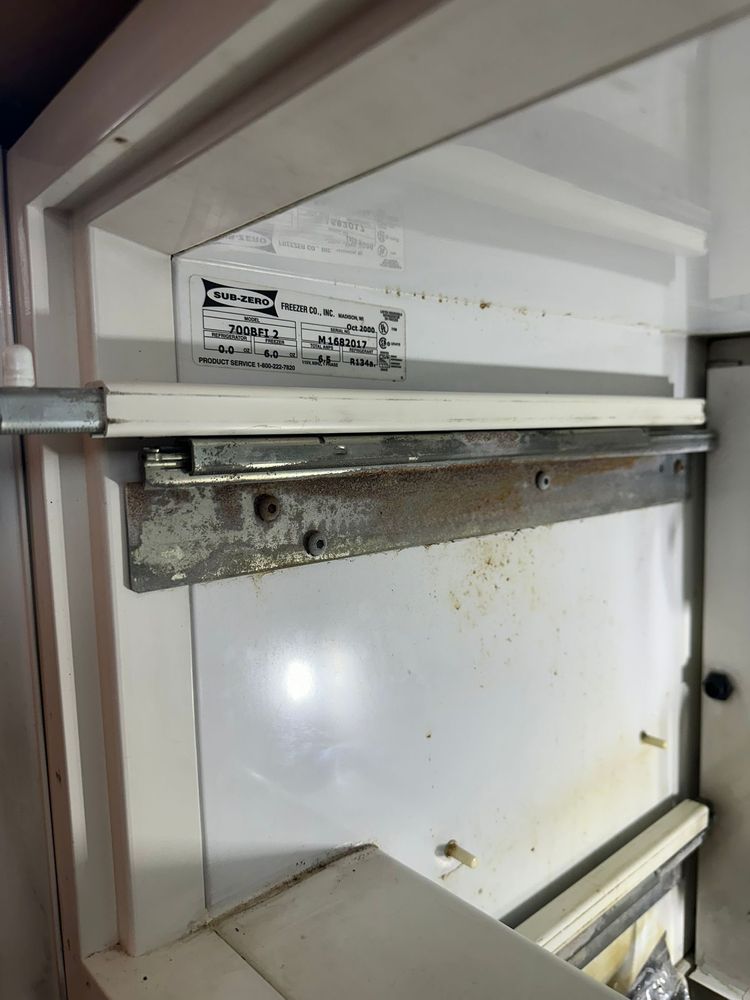
What ties this group together: each is a single, identifiable component that, once replaced, restores the unit to full operation. Sub-Zero engineers parts for serviceability, so a fan motor swap in a 15-year-old 700 Series uses the same physical procedure as on a current-production unit. The unit doesn't suddenly become more fragile after a single repair.
If the failure on your unit is an isolated, repairable problem and the cabinet is structurally sound, request a written estimate and compare it with a current replacement-and-installation quote. Our Sub-Zero appliance repair team in Orange County can assess the diagnosis and parts availability.
When Replacement Is the Clear Winner
Three scenarios genuinely favor replacement over repair. They're rare. Most homeowners who think they're in one of them actually aren't, which is why getting a diagnostic visit before deciding matters.
1. Structural frame or cabinet rust. Sub-Zero cabinets are built to outlast just about everything else in the kitchen, but coastal Orange County humidity does eventually catch up to a 25-plus-year-old unit, especially one installed in a poorly ventilated cabinet run. Once rust reaches the refrigerant lines, the back of the cabinet, or the structural frame, a repair only buys you time. The next failure point is already corroding. Surface rust on the front grille or kick plate doesn't qualify; those parts are replaceable. We're talking about rust that has gone through the metal in places that bear load or carry refrigerant.
2. Two or more sealed-system failures within five years. A single sealed-system event (a compressor failure, a refrigerant leak, an evaporator coil problem) is something Sub-Zero units occasionally have. It happens, you fix it, the unit runs for another decade. But two events in five years signals something different: refrigerant contamination from the first repair, a poor install with vibration issues, or a unit that's been run consistently above its thermal envelope (often because of restricted ventilation). The third sealed-system failure is usually six to eighteen months behind the second, and the cumulative cost has now crossed the 50% threshold.
3. A 25-plus-year-old unit with three or more active failures at once. Sub-Zero's 20–25 year design life isn't a hard cliff; plenty of units run 30 years with minor service. But when a 27-year-old unit simultaneously presents a failing compressor, a defrost system that needs replacement, and a cracked door gasket, you're effectively rebuilding the cooling and sealing systems at once. At that point, the labor savings of doing everything in one new-unit install start to compete with the repair total. The decision tightens. The replacement model also gives you a fresh 20-year envelope ahead, which has real value if you plan to stay in the home.
Outside these three patterns, replacement rarely makes economic sense. If a contractor or sales rep tells you a 14-year-old Sub-Zero with a single failing component should be replaced, that's a sales recommendation, not a repair recommendation. Get a second opinion before signing anything.
Sub-Zero Lifespan in Real-World Orange County Homes
We service Sub-Zero units across Orange County that span four decades of production. Here's the rough breakdown of what we typically see by age, drawn from the calls our technicians dispatch each week.
- 0–10 years: rare to need anything beyond minor service (gasket, condenser cleaning, occasional control board). Single-repair calls.
- 10–20 years: fan motors, defrost components, ice maker assemblies, and compressors may need diagnosis. The repair decision depends on the specific fault, condition, repair history, and current replacement quote.
- 20–25 years: the prime age for one major investment (typically a compressor or sealed-system repair) that buys another decade. Still squarely in repair territory.
- 25+ years: the decision becomes case-by-case. A well-maintained 28-year-old Built-In unit with a single failing fan motor is a repair, no question. A 27-year-old unit with three active failures and rust on the back of the cabinet is the rare replacement candidate.
Service experience varies by model, installation, maintenance, and diagnosis. A model's age alone cannot determine its remaining life or whether repair is the better option.
The same quote comparison applies to Sub-Zero wine storage columns and premium wine coolers: compare the diagnosed repair with a current replacement-and-installation quote for a comparable model. Our Orange County wine cooler repair service covers those units by cooling type.
If your unit is exhibiting symptoms that haven't been diagnosed yet, our guide on why a Sub-Zero refrigerator stops cooling walks through the five most common failure points and how each is typically diagnosed.
What an Honest Diagnostic Visit Looks Like
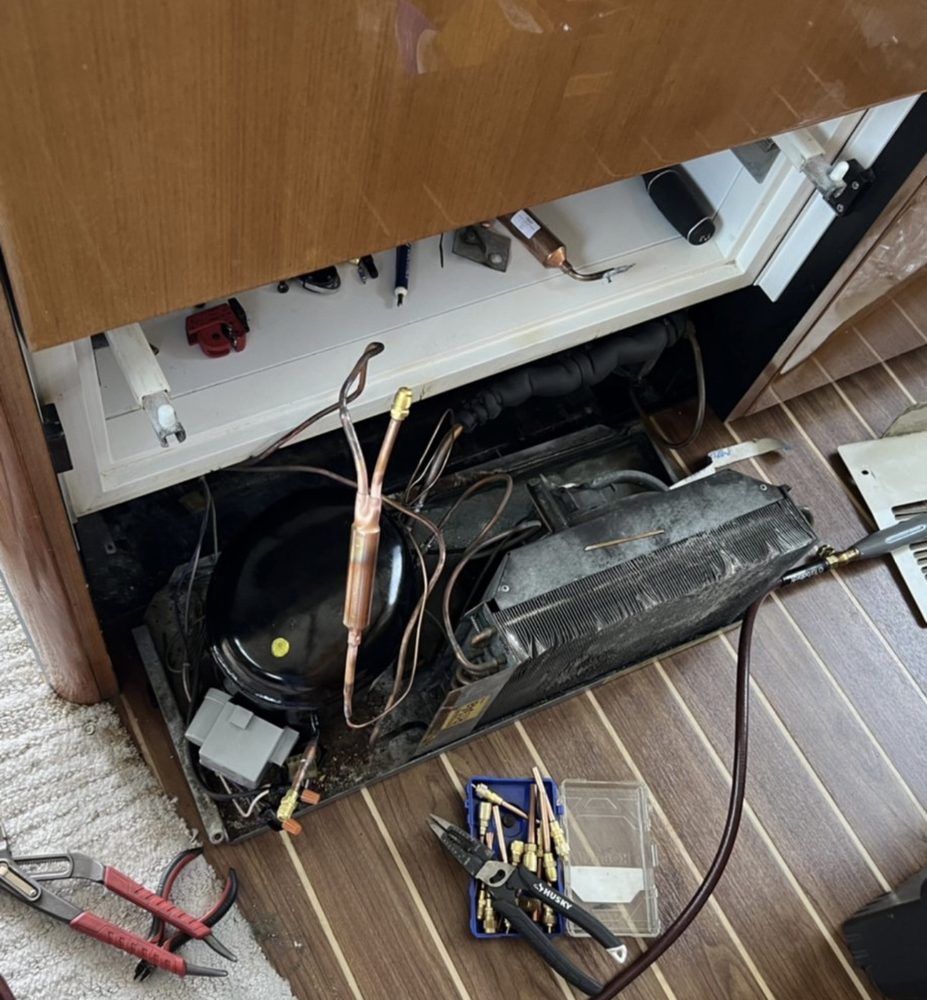
A useful repair-or-replace conversation starts with an accurate diagnosis, not a guess. When our technician arrives, the sequence is consistent: pull the grille, check sealed-system pressures with a manifold gauge set, inspect the evaporator and condenser, test fan motors and the defrost system, read any stored error codes, and physically inspect the cabinet and refrigerant lines for corrosion. The whole assessment takes 20–40 minutes.
At the end, you should get three things in plain language: what failed, what it will cost to fix, and whether the technician sees secondary issues that affect the comparison. Use that information with a current replacement-and-installation quote to make the decision.
Our diagnostic fee is $99. It applies toward the repair if you proceed, and it's the same flat fee whether you ultimately repair, get a second opinion, or decide to replace. There is no incentive on our end to push you toward one outcome or the other. A repair is straightforward work. A replacement is somebody else's sale.
Frequently Asked Questions
Is it worth repairing a Sub-Zero refrigerator?
In many cases, repairing a Sub-Zero refrigerator can be practical, especially when the rest of the unit is in good condition. Compare the written repair estimate with a current replacement-and-installation quote for a comparable model. Structural condition, repeat failures, age, and cabinet fit all matter.
How long do Sub-Zero refrigerators last?
A well-maintained Sub-Zero typically lasts 20–25 years, with many Built-In and Pro Series units in Orange County still running well past 25 with periodic professional service. Compare that to the 10–13 year average for premium freestanding refrigerators, and the case for repair almost always works out: you're protecting a decade or more of remaining life that's already been paid for in the original purchase.
What is the 50% rule for appliance repair?
The 50% rule is a useful rule of thumb: when a repair approaches half the current replacement-and-installation cost of a comparable model, it may be time to compare options. It is not a guarantee; the appliance condition, warranty, cabinet fit, and repeat failures also matter.
When should you replace a Sub-Zero instead of repairing it?
Three patterns clearly favor replacement: (1) frame or cabinet rust that has reached load-bearing structure or refrigerant lines; (2) two or more sealed-system failures within the past five years, which suggests refrigerant contamination or installation problems rather than a one-time event; (3) a unit over 25 years old presenting three or more simultaneous active failures. Outside these scenarios, almost every Sub-Zero failure is worth repairing on cost alone.
Does a Sub-Zero compressor replacement justify replacing the whole refrigerator?
Almost never. A Sub-Zero compressor replacement in Orange County runs $1,200–$2,400, while a replacement Sub-Zero costs $8,000–$18,000. That puts the repair at 7–25% of replacement, far below the 50% threshold. Most built-in Sub-Zero models use dual compressors (one for the refrigerator section, one for the freezer); if only one has failed, you're effectively replacing half the cooling system, which keeps the cost toward the lower end of the range.