Luxury Appliance Repair in Santa Monica
Sub-Zero, Miele, Wolf, Viking, Thermador, Dacor, DCS, and Bosch premium lines, in ocean-block condominiums and Sunset Park bungalows alike. Premium brands only here, on a flat $99 diagnostic that is credited toward the repair. Our Los Angeles technician can often be out the same day.
Universal Appliances Repair Group Inc. provides luxury appliance repair in Santa Monica, California, across ZIP codes 90401, 90402, 90403, 90404, and 90405, covering North of Montana, Wilshire-Montana, Downtown, Mid-City, Pico, Sunset Park, Ocean Park, and the Northeast. Santa Monica is a premium-brand service area: Sub-Zero, Viking, Wolf, Miele, Thermador, Dacor, DCS, and the Bosch premium lines. We repair built-in refrigeration, professional ranges, wall ovens, cooktops, panel-ready dishwashers, wine storage, and freezers, including compact and 24-inch formats. We have a technician based in Los Angeles, so same-day appointments are available when that schedule is open, with next-available usually within a day or two. The diagnostic fee is a flat $99, credited toward the repair. Call (949) 629-5365 or book online at fixappliancesfast.com.
Built-In and Professional Work We Have Completed
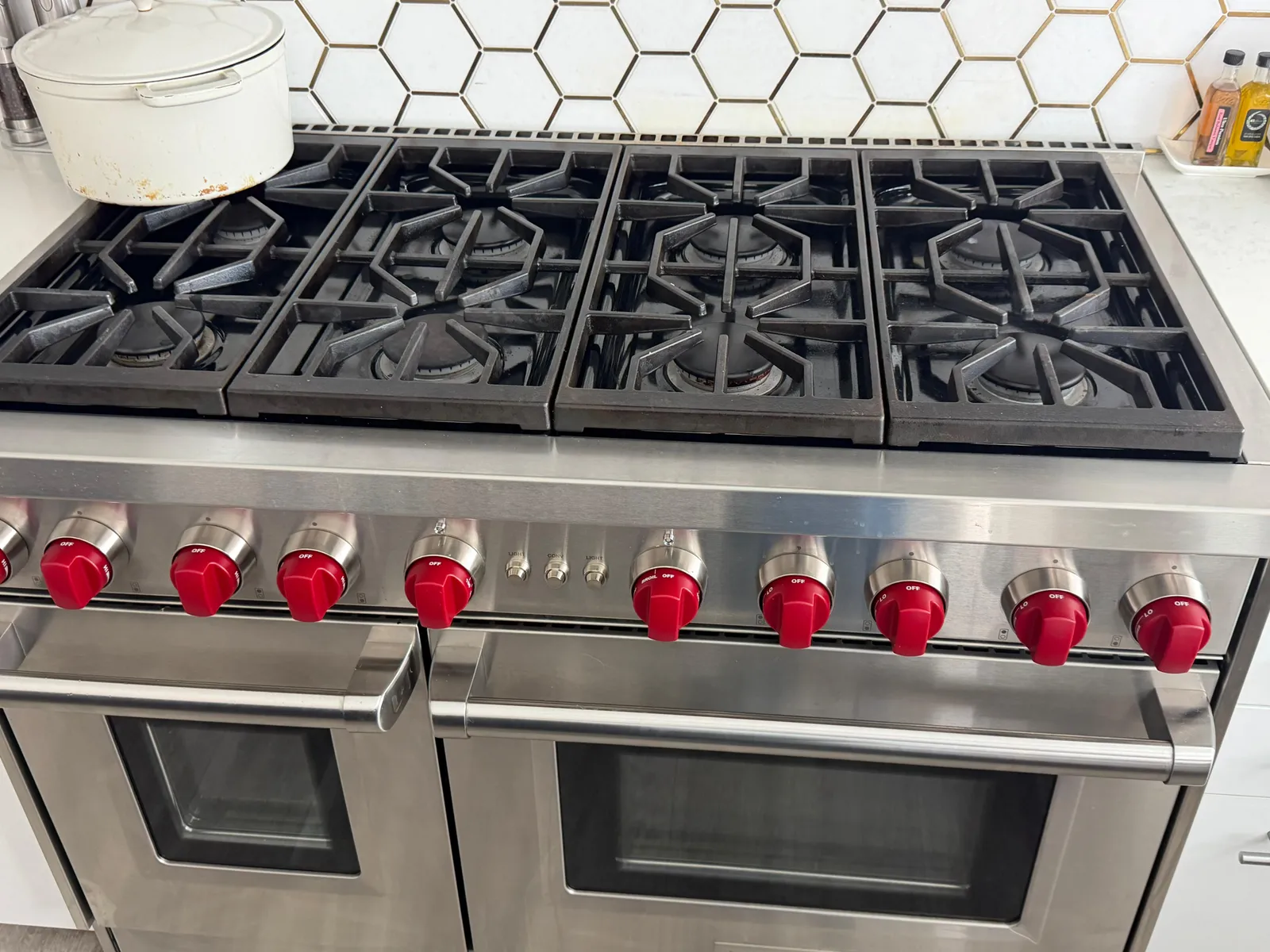
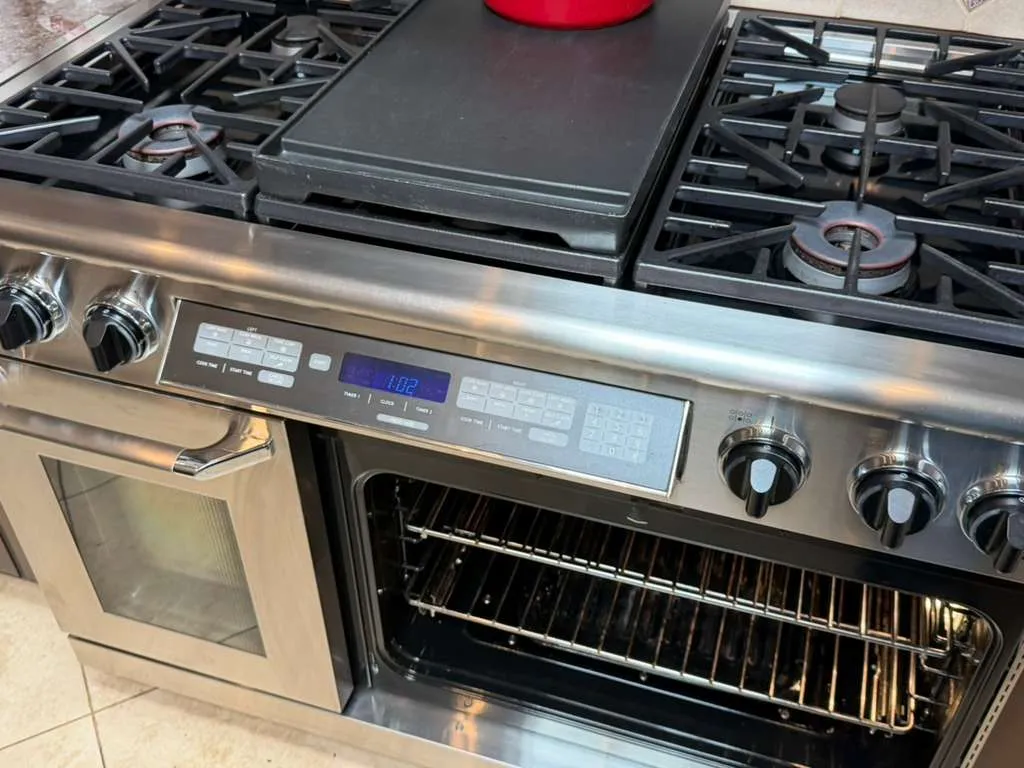
Viking, Wolf and Dacor jobs from our own service calls. These are our photos, each labeled with the city where it was actually taken. Santa Monica is a newer market for us, so you will see local jobs appear here as we complete them.

Premium Brands We Service in Santa Monica
Eight brands, and that is the whole list for Santa Monica. Open any of them for the failures we see most, the parts involved, and how the repair usually goes.
Santa Monica is premium-brand only. Anything on that list gets the flat $99 diagnostic, credited toward the repair, and same-day is often open. Bosch is the one that needs a model number: we take the premium built-in lines, Benchmark included, so read us the number off the door frame and we'll confirm it in a minute. A Whirlpool, LG or Samsung is a no from us, and you'll hear that on the phone rather than after a technician has parked.
No factory authorization is claimed here; we service these brands independently. Still inside the manufacturer's warranty? Call the brand first, because authorized warranty work should not cost you anything.
What We Repair
The equipment we actually get called out for in Santa Monica kitchens. Each link opens the brands covered, the faults behind those calls, and what the repair typically costs.
Santa Monica Repair Pricing
Every Santa Monica appointment carries the same flat $99 diagnostic we charge in Orange County and everywhere else in Los Angeles County, credited toward your repair if you go ahead. The ocean does not change it and neither does the badge on the door. Most premium-brand repairs land between $250 and $900. Thermador and Wolf igniter or burner work usually runs $200 to $600, while sealed-system refrigeration work on a Sub-Zero built-in runs $1,200 to $2,500.
How It Works
What actually happens between your call and a working appliance.
Santa Monica Neighborhoods We Serve
Five ZIP codes carry residential delivery here: 90401, 90402, 90403, 90404, and 90405. One thing to settle before you book, though. Only about 73% of 90402's land area is actually inside the city; the balance is Santa Monica Canyon and Rustic Canyon, which use Santa Monica mailing addresses but sit in the City of Los Angeles. Venice, Brentwood, Mar Vista and Pacific Palisades are neighbors, not neighborhoods, and this page does not cover them. The eight below follow the city's own Land Use and Circulation Element, and what changes between them is usually the building rather than the brand. See every city we serve →
What Salt Air Does to a Built-In Kitchen
Salt does not attack an appliance the way people picture it. The process is slow, it starts on the outside, and it concentrates in the places a cloth never reaches.
Start with what the metal actually is. Sub-Zero publishes that most Sub-Zero, Wolf and Cove products are built from 304 or 201 stainless with a #4 brushed finish, uncoated and not fingerprint-free. Neither alloy contains molybdenum, which is the element that makes 316 a marine grade, so nothing in a premium built-in kitchen is a marine alloy no matter what it cost. Sub-Zero puts it bluntly: for units exposed to salt water, especially in coastal or tropical areas, rust on parts over time may not be preventable. The company also says stainless is not stain-proof, naming low oxygen, high salinity and poor circulation as the conditions that beat it. The city's entire western edge is Pacific shoreline, and 90401, 90402 and 90403 all front the coast, extending from the beach to between one and two and a half miles inland, so that is the environment these appliances live in.
The mechanism itself is unglamorous. Chloride-bearing droplets land on a door, the water evaporates, and the salt left behind pulls moisture back out of the air, forming a thin electrolytic film that destabilizes the passive oxide layer stainless relies on. What shows up first is tea staining, a light brown discoloration that is a cosmetic problem before it is anything else. Neglected for years it can progress to pitting that does matter, but a stained door panel is not a failing appliance and nobody should be selling you a replacement over one. What you clean it with matters more than the marks do. Thermador and Bosch tell owners not to use cleaners that are abrasive or contain chlorine, since both are corrosive to stainless steel, and Sub-Zero says never to put bleach on its stainless. Scrubbing salt spots with a chlorinated cleaner is adding chloride to a chloride problem.
Where salt does real damage is the hardware. Tight, oxygen-starved joints hold chlorides against the metal and turn acidic, and that is where corrosion stops being cosmetic: fastener heads, hinge assemblies, handle standoffs, door seams. A premium built-in has far more of those joints than a freestanding unit, because it is assembled from panels, trim and mounting brackets rather than pressed from one shell. Wolf makes the same point from the other side in its grill-module cleaning guidance, noting that salt and some cooking liquids may pit and stain the surface and that spatters should come off immediately. A rusted hinge bracket is a repair. A discolored door is a cleaning. Telling you which one you have is most of what the first visit is for.
Condensation gets blamed on salt far too often, and it is a separate story with a separate cause. Santa Monica sits in the coastal marine layer, and plenty of the older housing here has no air conditioning, so indoor humidity runs high through a gray morning. Sub-Zero's own position is that some sweating may occur on a Sub-Zero product in hot or humid climates, especially in non-air-conditioned homes, but that there should be no dripping. That line is the whole test, and it is a good one. A film of moisture on a door is the weather. Water running down and pooling is a seal, a gasket or a defrost fault, and it is worth a call.
Servicing a Building, Not Just a Unit
Two thirds of the homes here sit in buildings of five units or more, and only about one in five is a detached house. That reorders the job: access first, appliance second.
The numbers set the scene. Per the City's 2021-2029 Housing Element, of roughly 52,600 homes in Santa Monica, about two thirds are in buildings of five units or more, and roughly three quarters of the stock predates 1980, with the City's own reading that almost 85% of it is more than thirty years old. Per the 2020-2024 American Community Survey (U.S. Census Bureau), 72.1% of households rent. Rent control covered 27,668 units at the end of 2024 and generally exempts anything built after April 10, 1979, which puts more than half of all homes, and roughly two thirds of the multi-unit housing, inside pre-1979 buildings. Behind that sit older cabinet cutouts, older 30-inch openings and older wiring. The unit mix is small as well: 10% studios, 33% one-bedroom, 36% two-bedroom. Compact and 24-inch appliances are the norm in this city, not the exception, and we book with that assumption already made.
Then there is reaching the kitchen at all. The residential grid was laid out around its alleys, and in Ocean Park, Sunset Park and much of Wilshire-Montana the garage faces a narrow rear alley rather than the street. Downtown and the mixed-use corridors send parking underground instead, so the approach is a ramp, a gate and a garage level. Neither is difficult when we know in advance. Both go badly when a technician turns up with a hand truck to move a built-in refrigerator and finds the only way in is a service corridor nobody mentioned.
Building rules are private association rules rather than city rules, and they differ from address to address. Many buildings want a certificate of insurance from a vendor before admitting them, many require the service elevator to be reserved, and many set their own hours for work inside units. We are licensed, bonded and insured, and we will send paperwork ahead if your association asks for it, as long as you tell us at booking. Separately, the city's noise ordinance limits building construction and repair work to 8am to 6pm on weekdays and 9am to 5pm on Saturday, with none on Sunday or listed holidays. Whether an in-home appliance repair falls inside that is genuinely unsettled, so we schedule within those hours as a matter of course rather than test it. The county-level page covers the same premium service in the other Los Angeles cities we take: luxury appliance repair in Los Angeles.
FAQ: Appliance Repair in Santa Monica
Premium Appliance Down in Santa Monica?
Sub-Zero, Miele, Wolf, Viking, Thermador, Dacor, DCS, and Bosch premium lines, from Ocean Park up to North of Montana. Same-day when our Los Angeles technician has an opening. Flat $99 diagnostic credited toward your repair, 90-day warranty on every job.