We see this pattern all over La Habra, from the 1960s tract homes near La Habra Boulevard to the newer hillside kitchens up in Westridge and Country Hills. The reassuring part: when the freezer still freezes, the sealed cooling system, the compressor and refrigerant, is doing its job. The trouble is in getting that cold from the freezer into the fresh-food side, or in a control telling the fridge the wrong temperature. Let's walk through the six reasons this happens, roughly in the order we find them.
Dirty condenser coils
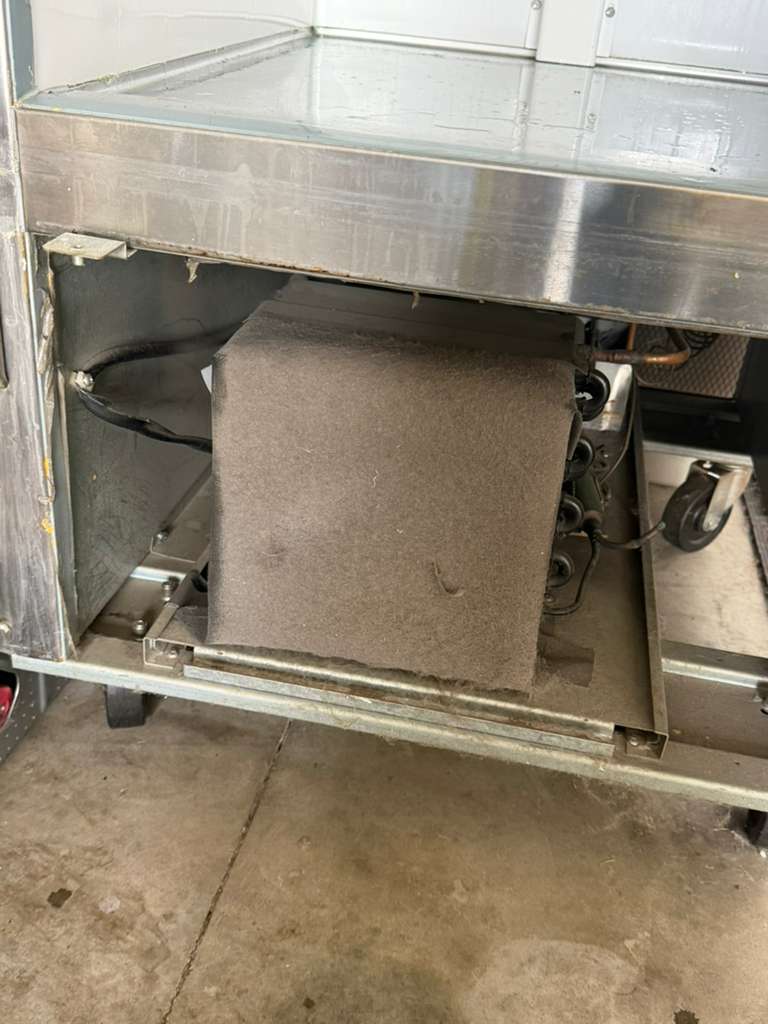
The coils that shed heat, usually underneath the fridge or behind a rear panel, get coated in dust, pet hair, and kitchen grease. Caked coils cannot release heat, so the whole unit struggles to stay cold, and the fresh-food side is the first to go warm. This is the single most common cause and the easiest to rule out. Unplug the fridge, find the coils, and vacuum them clean with a brush attachment. Do this twice a year and it prevents a lot of service calls.
Most commonA stopped evaporator fan
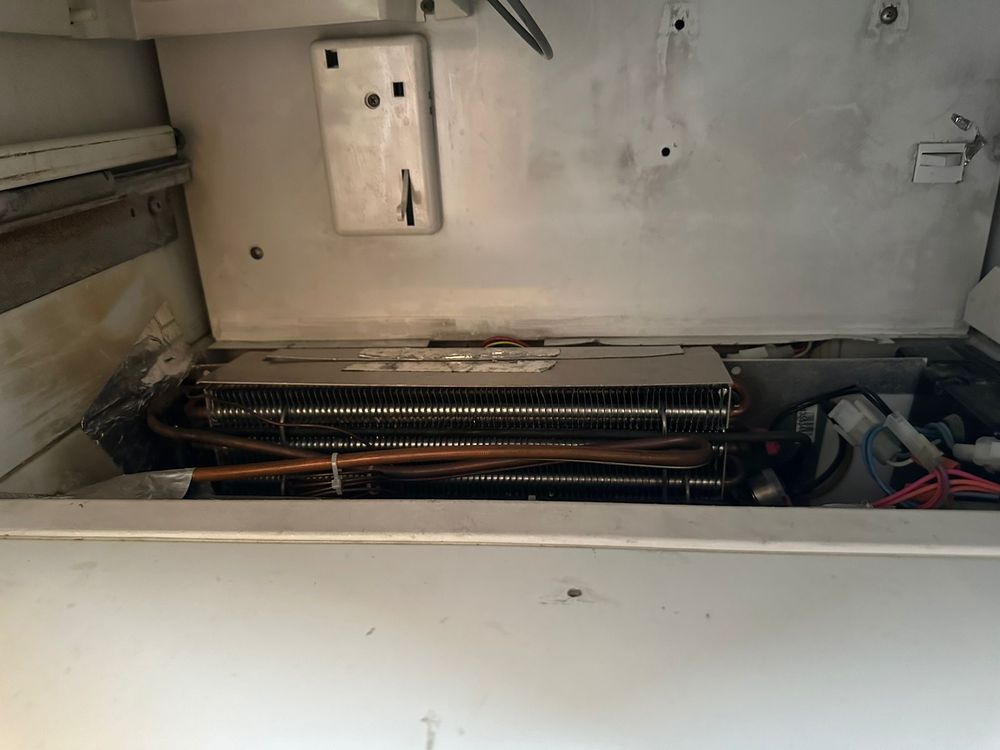
Behind the freezer's back panel sits the evaporator fan, and its whole job is to blow cold air up into the refrigerator compartment. When the motor seizes or wears out, the freezer stays cold because the cold is made right there, but no air reaches the fridge, so it warms up. A telltale sign: open the freezer and you hear nothing, or open the fridge and there is no airflow from the vents. A worn fan motor is a common replacement and needs a technician.
Very commonFrost buildup from a defrost failure
Refrigerators run a defrost cycle a few times a day to melt frost off the evaporator coils. When the defrost heater, thermostat, or timer fails, frost keeps building until it forms a block of ice over the coils. Air can no longer pass through, and the fridge goes warm even though the freezer feels fine at first. If you pull the freezer's back panel and see a solid sheet of frost on the coils, this is your cause. Testing the defrost parts is a service call.
Needs a proBlocked vents or a stuck air damper
Cold air travels from the freezer into the fridge through vents, and on many models a flap called the air damper controls how much gets through. Pack groceries against those vents, or let the damper stick shut, and the fresh-food side is starved of cold air. Check the vents inside both compartments and pull food a few inches clear of them. If they are open and clear but the fridge still runs warm, the damper may be stuck and needs to be freed or replaced.
Sometimes DIYA failing thermistor (temperature sensor)
The thermistor is a small sensor that tells the control board how cold the fridge actually is. When it drifts or fails, it can report that the fridge is already cold enough, so the board never calls for the cooling the compartment needs. The setting looks right, but the fridge stays warm. A bad thermistor looks identical to a good one, so a technician confirms it with a meter before replacing it. On KitchenAid built-ins, our temperature sensor guide covers this part in more detail.
Needs a proWorn door gaskets letting warm air in
The rubber seal around the fresh-food door keeps cold in and warm out. When it hardens, tears, or stops sealing, warm room air leaks in and the compartment cannot hold temperature no matter how hard it runs. Close the door on a dollar bill; if it slides out with no drag, the gasket is worn. A new gasket is a straightforward fix and worth doing before it drives the compressor to run nonstop.
DIY-friendlyWhich causes you can fix yourself
Two of the six are genuinely do-it-yourself: cleaning the condenser coils and checking a worn door gasket. Clearing blocked vents is a third quick win. Those alone solve a good share of cases, so always start there before spending anything. If you have cleaned the coils, cleared the vents, and confirmed the gasket seals, and the fridge in your La Habra kitchen is still warm while the freezer freezes, the problem has moved past the easy fixes.
The other causes, a dead evaporator fan, a failed defrost heater or thermostat, and a bad thermistor, sit behind panels and test the same to the eye whether they are good or bad. Replacing parts by guesswork gets expensive fast, and the wrong part does not fix the warming. That is where a meter and some experience pay off. Our refrigerator repair service in Orange County handles exactly this kind of diagnosis on every major brand.
Fridge warm but freezer cold in La Habra?
If the coils are clean and the fridge still will not cool, we will find the part at fault and fix it in one visit. Call or book online and tell us what is happening.
Book a Refrigerator RepairWhat a repair visit looks like in La Habra
Knowing the steps takes the mystery out of it. Here is how a typical call runs when a fridge is not cooling but the freezer works:
- Schedule. Book online or by phone. We offer same-day and next-day windows across La Habra and reach every neighborhood by way of Imperial Highway, Harbor Boulevard, and Whittier Boulevard. You get a two-hour arrival window, not an all-day wait.
- Diagnose. The technician measures the actual temperature in both compartments, then checks the evaporator fan, the defrost system, the airflow, and the thermistor. This usually takes 20 to 40 minutes and tells us exactly which part is at fault.
- Quote. You get a written estimate before any work begins. Nothing gets added at the end.
- Repair. Common parts like fan motors, defrost heaters, and thermistors ride in the van, so most repairs finish on the spot. A less common control board is scheduled within one to three business days.
- Test. We let the fridge cycle and confirm the fresh-food side holds a safe 37 degrees before we leave, so your food is not spoiling the next morning.
Why it matters more than you think
A fridge that will not cool is not just inconvenient. Food in the fresh-food compartment climbs past the safe 40-degree line within a few hours, and once it does, the perishables are a health risk, not just a loss. The underlying causes also tend to snowball: a defrost part that fails a little today ices over completely later, and a compressor forced to run nonstop against warm air wears out sooner. Catching it early, while it is still just a warm shelf and not a full spoil, keeps a small repair small. La Habra residents can reach us through our appliance repair in La Habra, CA page for same-day help.
We service every refrigerator brand
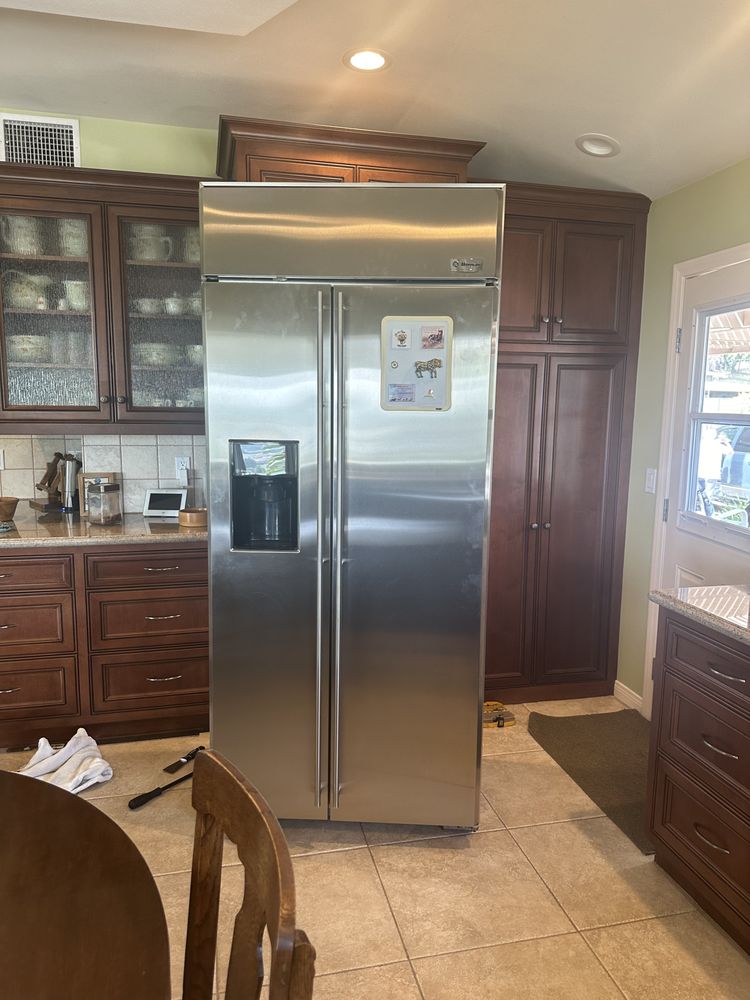
The not-cooling problem shows up on every make, and the diagnosis is the same across all of them. We repair Whirlpool, GE, Samsung, LG, Sub-Zero, Bosch, KitchenAid, Maytag, Frigidaire, Kenmore, and Thermador refrigerators throughout La Habra and the surrounding northeast Orange County cities. Whether it is a basic top-freezer in a Vineyards condo or a built-in in a Westridge kitchen, the fix starts with reading the real temperature and finding what is keeping the cold from reaching the fridge. Kenmore owners can start with our Kenmore appliance repair service in Orange County, which explains how to trace a Kenmore model number back to the appliance's actual manufacturer.
Frequently Asked Questions: Refrigerator Not Cooling
Why is my refrigerator not cooling but the freezer is still cold?
On most refrigerators, cold is made in the freezer and a fan pushes some of it up into the fresh-food side. When the freezer stays cold but the fridge turns warm, the problem is almost always in that transfer: a stopped evaporator fan, frost built up over the evaporator coils after a defrost failure, or a blocked vent or stuck air damper between the two compartments. The sealed cooling system itself is fine, which is why the freezer still freezes.
Can I fix a refrigerator that is not cooling myself?
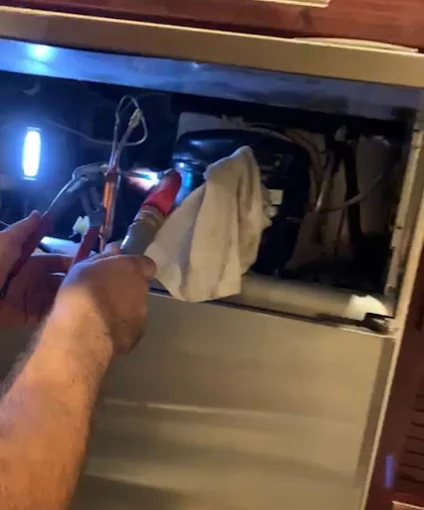
A few causes are do-it-yourself. Vacuuming the dust off the condenser coils underneath or behind the fridge, clearing food away from the interior vents, and pulling the unit out so air can reach the back are all safe to do yourself and fix a fair number of cases. But a dead evaporator fan, a failed defrost heater or thermostat, a bad thermistor, or a sealed-system leak all need a technician with a meter and the right part. Guessing at those parts is expensive, because they look identical whether they are good or bad.
How long will food stay safe if my fridge stops cooling?
Keep the door closed and food in the fresh-food compartment stays safe for about four hours. After that, anything perishable that has risen above 40 degrees Fahrenheit for more than two hours should be thrown out. A full freezer holds a safe temperature for roughly 48 hours if you leave it shut. If the fridge has been warm overnight, treat the perishables as unsafe rather than risk it.
What part fails most often when a refrigerator stops cooling?
The two we replace most often are the evaporator fan motor and the defrost components. When the freezer is cold but the fridge is warm, a stalled evaporator fan or a frost-covered coil from a failed defrost heater or thermostat is the usual cause. Dirty condenser coils run a close second, especially in homes with pets. A technician confirms which one with a meter before replacing anything, so you are not paying for parts the fridge did not need.
Is it worth repairing a refrigerator that is not cooling?
Usually yes. Fans, defrost heaters, thermostats, and thermistors are common parts, so on a refrigerator under about 11 years old the repair is well worth it. Replacement only makes real sense when the cause is a failing compressor or a refrigerant leak in a sealed system that is already near the end of its life. A technician can tell you which situation you are in before you spend anything, so you are not replacing a whole fridge over a part. See our full appliance repair in La Habra, CA page for the services and neighborhoods we cover.