How Gas Stove Igniters Work
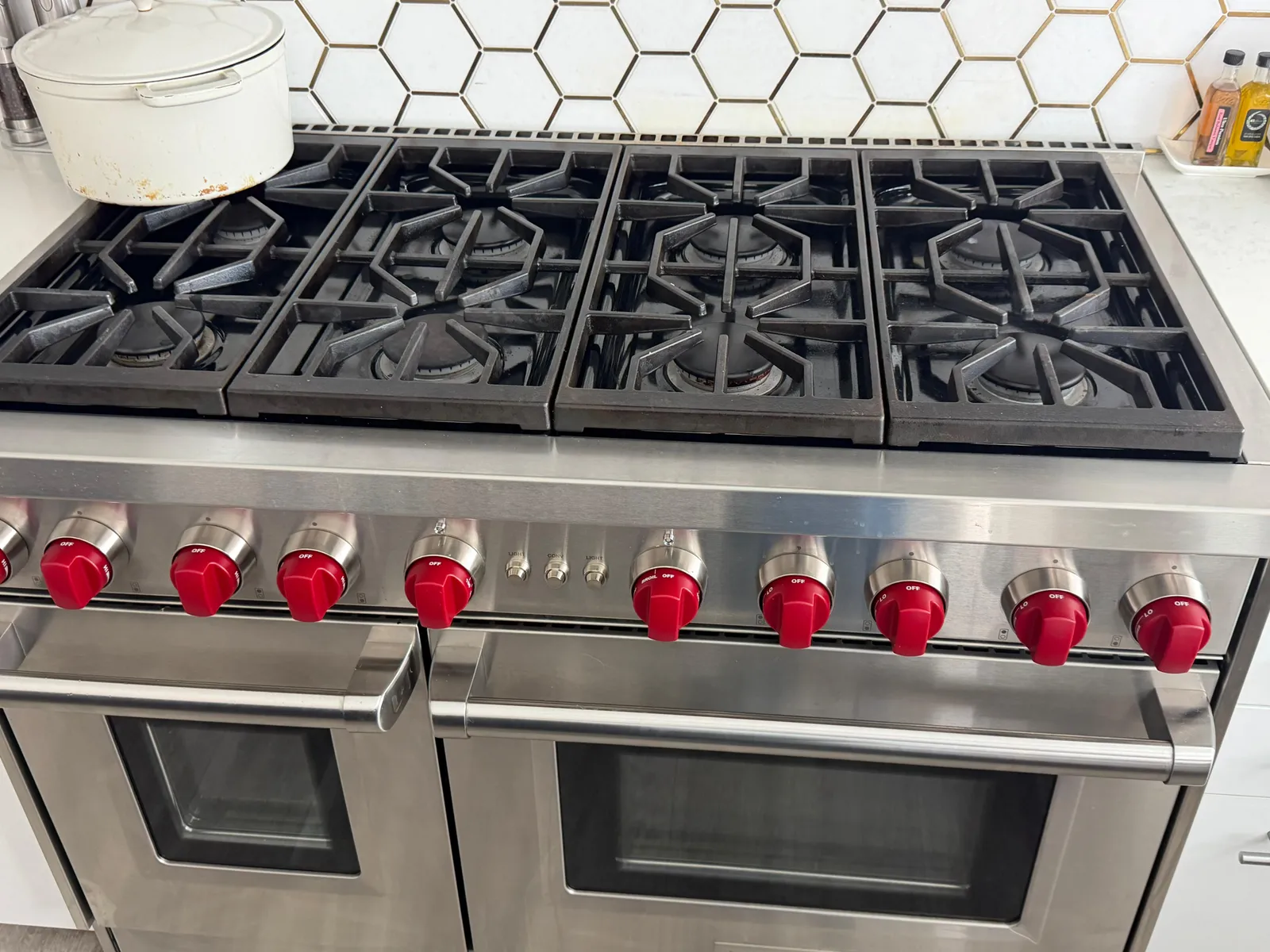
Gas stove igniters use a ceramic electrode near each burner head. Turning a burner to the lighting position activates the ignition circuit, which should create a spark at the electrode and light gas at the burner ports. Exact parts and operating details vary by model, so use the owner's manual for model-specific instructions.
These two symptoms help describe the problem to a technician:
- Clicking but not lighting: check for moisture, debris, or a cap or burner head that is not seated correctly. A component fault is also possible.
- Completely silent (no click): check the selected burner and power only if safe. The switch, wiring, electrode, or ignition control may need technician diagnosis.
Record which burners are affected without opening the appliance.
The 5 Causes: Diagnosis by Symptom
Food Debris on the Igniter Tip
Symptom: one or more burners click audibly but the flame never catches, often after a boil-over or cleaning.
Food residue, cooking grease, or water around the burner head and ceramic electrode can interrupt ignition. GE's burner guidance lists wet or dirty burners, a mis-seated electrode, and mismatched caps as common checks.
Fix: Turn the range off, disconnect power if the owner's manual permits, and wait until the parts are cool. Remove the grate and burner cap, clean away debris with a dry toothbrush, and let the parts air-dry fully. Do not use metal tools or test while moisture remains.
Moisture in the Igniter Assembly
Symptom: all burners click rapidly when you activate one knob, intermittent sparks that die immediately, or unprompted clicking after you cleaned the cooktop.
Water from a boil-over reaching the igniter housing, or water from surface cleaning, creates a conductive path that bleeds the spark away before it can jump to the burner head. When moisture enters an igniter switch housing, the switch can activate continuously even with no knob turned.
Fix: Turn the range off, let it cool, and allow the burner parts to air-dry fully. Do not use the oven as a shortcut for drying the cooktop. If clicking continues after the range is dry, leave electrical and gas diagnosis to a technician.
Misaligned or Off-Center Burner Cap
Symptom: a visible spark appears, but the burner still does not light. This can happen after the cooktop was cleaned and the cap was removed and replaced.
The burner cap must sit flat and centered over the burner head ports. A cap on the wrong burner or a cap that is tilted can keep the spark from reaching the gas stream. GE's cleaning guidance also says to match each cap to its burner head.
Fix: Remove the grate, lift the cap, and reseat it flat and centered. It should drop into position without force. Replace the grate only after the cap is seated and the parts are dry.
Possible Igniter Switch or Wiring Fault
Symptom: exactly one burner produces no sound at all when its knob is turned, while all other burners spark and light normally.
When one burner is silent while others operate, the switch, wiring, electrode, or spark module may need diagnosis. The symptom narrows the search, but it does not identify a failed part by itself.
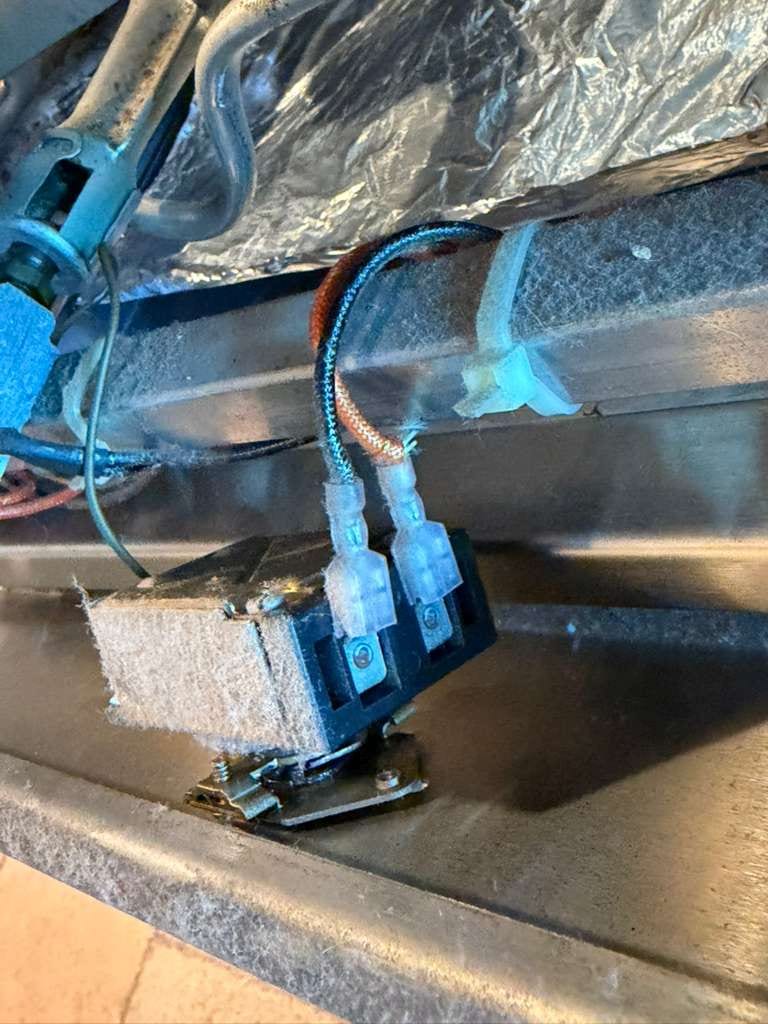
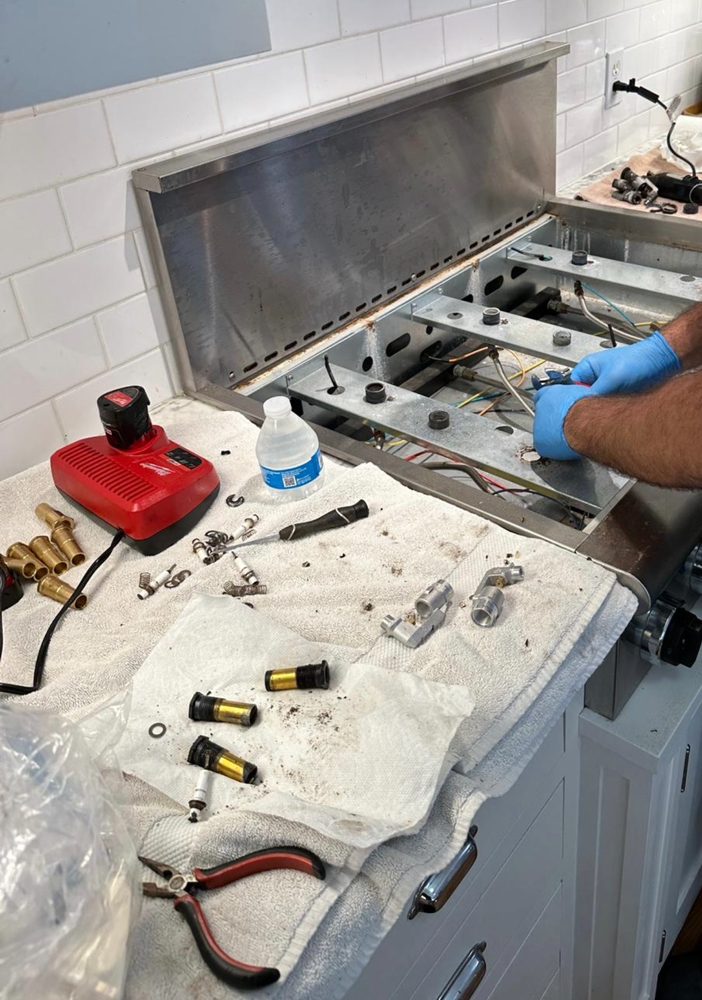
Replacing a switch requires removing the knob and bezel panel to access the switch housing inside the cooktop. This is not user-serviceable on most modern ranges without appliance repair experience.
Possible Ignition Control Fault (Several Burners)
Symptom: all burners are completely silent at once, or all burners click continuously with no knob engaged.
The ignition control or another electrical component may be involved when several burners are silent or click continuously. That pattern can help a technician narrow the diagnosis, but it does not identify a failed module by itself.
If the range clicks continuously, turn it off at the controls. If it can be done safely and the owner's manual allows it, disconnect power and arrange service rather than continuing to test it.
What You Can Safely Check Yourself
Before calling a technician, make only these cool, dry, power-off checks. GE advises disconnecting power before cleaning and checking that the electrode, burner head, and cap are seated correctly; see its cleaning guidance and no-click guidance.
- Clean the igniter tip. Follow the model manual and use a soft, dry brush on accessible residue. Do not use water or metal tools.
- Reseat the burner cap. Remove the grate, lift the cap, and reseat it flat and centered. The cap should drop into position without force.
- Let it dry. Keep the range off and allow recently cleaned parts to air-dry fully. Do not use the oven to dry them.
- Check power without opening the appliance. Look for a tripped breaker or confirm the outlet has power only if you can do so safely. Do not remove panels or test live wiring.
- Stop if gas is suspected. Do not operate the shutoff or keep testing if you smell gas; leave and call the gas supplier or 911 from outside.
When to Call a Technician
If the checks do not restore ignition, stop testing and arrange service. A technician should handle these situations:
- All burners are completely silent after confirming the breaker is on
- Clicking continues on its own with no knob turned
- One burner remains silent after the cap and removable parts are correctly seated and dry
- The igniter sparks visibly but the gas supply is confirmed open and the burner cap is correctly seated
- The stove is clicking on its own and the controls do not stop it
If these checks do not restore ignition, stop testing. A technician can diagnose the electrical and gas components safely in Irvine, Anaheim, Huntington Beach, and throughout Orange County; repair timing depends on the model and parts required.
Repair Costs in Orange County
Estimates vary by brand, part availability, and diagnosis. Final quote is provided before repair.
Our diagnostic fee is $99 and applies toward the repair if you proceed. The final estimate depends on the appliance's brand, model, failed component, access, and parts availability. See the oven and stove repair cost guide for broader context.
If you're weighing a gas versus electric replacement, our gas vs. electric range repair cost breakdown compares the most common failures side by side across both fuel types.
Our oven, stove, and range repair service in Orange County covers all major brands, including Whirlpool, GE, Samsung, LG, Frigidaire, Bosch, and KitchenAid, as well as premium brands like Wolf and Viking. We also service gas cooktops as standalone units.
Frequently Asked Questions
Why is my gas stove clicking but not lighting?
Clicking without ignition can result from a wet or dirty burner head, a mis-seated electrode or cap, or a component that needs service. Turn the range off, let it cool, clean and reseat only the removable parts, and allow them to dry fully before one careful retest.
Why does my gas stove igniter keep clicking on its own?
Continuous clicking can follow moisture or a component fault. Turn the range off, let it cool, and allow it to air-dry. Never use the oven to dry the cooktop. If clicking continues, disconnect power only as directed by the owner's manual and arrange technician service.
Is it safe to use my stove if one burner igniter is not working?
Do not assume the range is safe because you do not smell gas. Turn the appliance off and do not manually light the affected burner. Leave electrical and gas diagnosis to a technician. If you smell gas, leave immediately and call the gas supplier or 911 from outside.
How much does gas stove igniter repair cost in Orange County?
Our diagnostic fee is $99 and applies toward the repair if you proceed. The final estimate depends on the brand, model, failed component, access, and parts availability. A quote is provided before repair.
Can I replace a gas stove igniter myself?
Limit DIY work to turning the range off, letting it cool, cleaning removable burner parts, reseating the cap, and allowing everything to dry. Electrical, gas, switch, spark-module, and igniter diagnosis or replacement should be handled by a qualified appliance technician.