Quick Diagnosis: Electric vs Gas
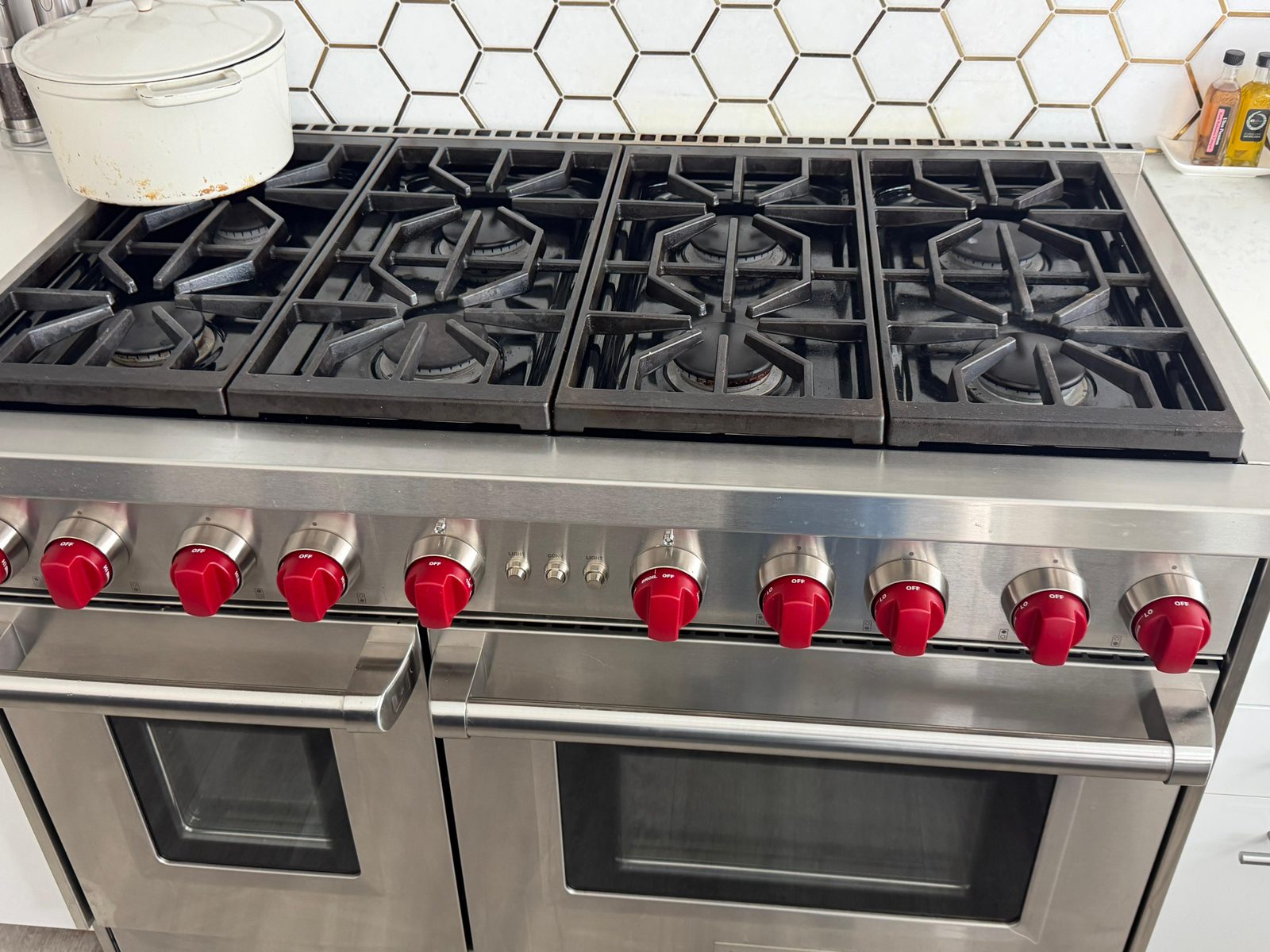
Viking sells electric ovens, gas ranges, and dual-fuel products, and the heating system differs by model. Use the model number to open the matching Viking Use & Care manual before following any troubleshooting step.
Electric Viking ovens use electric heating elements; many current models have a concealed bake element and a broil element. If the manual permits a broil check and broil heats while bake does not, a bake-side fault is possible. If neither function heats, check the breaker and arrange service for the electrical controls and wiring.
Gas Viking ranges use an igniter and gas burner for oven heat. Viking’s gas-range Use & Care manual lists power, gas supply, wet or dirty igniters, and burner ports among possible causes. A glow or clicking sound alone does not identify the failed part, so do not measure or adjust the gas or ignition system yourself. Electric model details also vary, so use the matching Viking electric/induction guide when applicable.
For a full overview of what our team services, see our oven and stove repair page for Orange County.
Common Causes by Model
Bake Element
The bake element is the heating element at or beneath the oven floor on electric models. Some Viking designs conceal it, so a failed element may not be visible. A bake-only heating problem with normal broil operation is a useful clue, but the manual and a technician should confirm the diagnosis.
Symptoms: Oven does not heat from below; food cooks unevenly with no browning on the bottom; broil mode works normally; element is visibly damaged when you look inside the oven.
Safe check: With the oven off and cool, look for damage only where the element is visible. Do not remove panels, disconnect wires, or test a high-voltage circuit. Those checks belong to a qualified technician.
Gas Igniter (VGIC / VGSC / VGRC Series)
The igniter starts the bake burner on gas models. Viking’s manual also identifies gas-supply problems and wet or dirty igniters as possible causes, so a glowing igniter does not by itself prove that the igniter is weak or that the valve is at fault.
Symptoms: The oven stays cold even though ignition is attempted, or the igniter glows without the burner lighting. These signs have multiple possible causes and require model-specific diagnosis.
Do not remove the burner cover or work on gas connections. If the oven does not ignite after the manual’s basic checks, stop using that function and schedule service.
Convection Fan Motor
Viking Pro ovens are convection-first designs: the rear fan circulates heated air to distribute temperature evenly. A failed convection fan motor does not always prevent the oven from producing heat, but it prevents heat from reaching the food evenly. On some Viking models with a convection-only bake mode, a dead fan motor will prevent the oven from completing a preheat cycle entirely.
Symptoms: Oven heats slowly or unevenly; food in the back of the oven burns while the front is underdone; no audible fan noise during bake mode; oven never reaches set temperature or takes twice the normal preheat time.
Note: The convection fan motor sits behind a cover panel in the back wall of the oven cavity. On Viking ranges this assembly is more complex to access than on residential ovens and typically requires a technician for safe replacement.
Service note: Fan access and replacement vary by model. A technician should diagnose the fan and related controls.
Temperature Sensor (Oven Probe)
On models equipped with one, the temperature sensor is a thin probe mounted inside the oven cavity, usually near the back wall. It reports oven temperature to the control system. If it drifts or fails, the oven may undershoot, overshoot, or fail to complete preheat.
Symptoms: Oven runs significantly hotter or cooler than the set temperature; preheat takes much longer than usual; oven control displays a temperature-related error code; food consistently overcooks or undercooks at the same settings that worked before.
Safe check: Note persistent temperature errors or unusual temperature behavior for the technician. Sensor testing and replacement require model-specific instructions and electrical work.
Control Board
On models equipped with electronic controls, the control board (sometimes called an electronic range control or ERC) coordinates the functions documented in that model’s manual. A fault can cause no heat, erratic temperature behavior, or an unresponsive panel.
Symptoms: Control panel does not respond; oven shows error codes that persist after reset; oven shuts off randomly mid-cycle; display is partially or completely blank; multiple functions fail simultaneously.
Important: A control-board symptom can overlap with a sensor, igniter, power, or wiring fault. Diagnosis should happen before any part is ordered. Electrical testing and board replacement are technician work.
DIY Checks You Can Do Today
Before scheduling a service visit, run through these checks. Several Viking oven heating problems can be identified (and sometimes resolved) without tools.
- Confirm the mode and model. Check that the oven is set to the intended bake mode and consult the exact Viking manual for normal operation.
- Check power safely. Look at the household breaker for a trip. Do not remove covers or test voltage.
- Observe only. On an electric model, look for visible element damage where accessible. On a gas model, note whether ignition is attempted, but do not open the burner assembly.
- Record messages. Note any displayed error or Sabbath-mode indicator and share it with the technician.
Pro Repair Scope
Homeowner checks should stop at settings, the breaker, and visual observations. The work below can expose you to high voltage, heat, or gas.
Electrical work: Element, sensor, fan, wiring, and control-board diagnosis or replacement should follow the exact Viking manual and be handled by a qualified appliance technician.
Gas work: Igniter, burner, valve, and gas-connection work requires technician service. Do not remove the burner cover, adjust gas components, or relight an appliance after a suspected gas leak.
Other components: The convection fan, temperature sensor, and control board vary by model and require disassembly. A qualified technician should diagnose and replace them.
Universal Appliances Repair services Viking appliances in Orange County. Availability and parts depend on the model and diagnosis.
We also service Viking wall ovens, dual-fuel ranges, and gas cooktops.
Repair Costs in Orange County
Estimates vary by brand, part availability, and diagnosis. Final quote is provided before repair.
The repair decision depends on the exact model, failed component, parts availability, appliance age and condition, and whether the oven is electric, gas, or dual-fuel. A technician should identify the fault and provide a quote before work begins. Our gas versus electric range repair guide explains broader cost factors.
Frequently Asked Questions
Why is my Viking oven not heating up?
The cause depends on the exact model. Electric ovens may have a bake-element, power, sensor, fan, or control fault; gas ranges may have an ignition, gas-supply, or burner fault. Check the mode, breaker, and manual first. If you smell gas, leave immediately and call 911 or the utility from outside.
How do I know if my Viking oven bake element is bad?
With the oven off and cool, inspect any accessible element for an obvious break or burn mark. Some Viking elements are concealed, so no visible damage does not rule out failure. A technician should perform electrical testing with the model manual.
Can I replace a Viking oven bake element myself?
Do not replace an element yourself unless the exact Viking manual explicitly supports the work and you are qualified for appliance electrical repair. Never test live voltage. A technician should handle wiring, high-voltage components, and any gas assembly.
How much does Viking oven repair cost in Orange County?
Cost depends on the exact model, component, parts availability, appliance condition, and whether the oven is electric, gas, or dual-fuel. Our diagnostic fee is $99 and applies toward the repair if you proceed. Estimates vary by brand, part availability, and diagnosis. Final quote is provided before repair.
How long do Viking ovens last?
There is no single service life that applies to every Viking model. Consider the appliance’s age and condition, the diagnosed fault, parts availability, and the cost of a suitable replacement. A technician can provide a repair-versus-replace assessment.