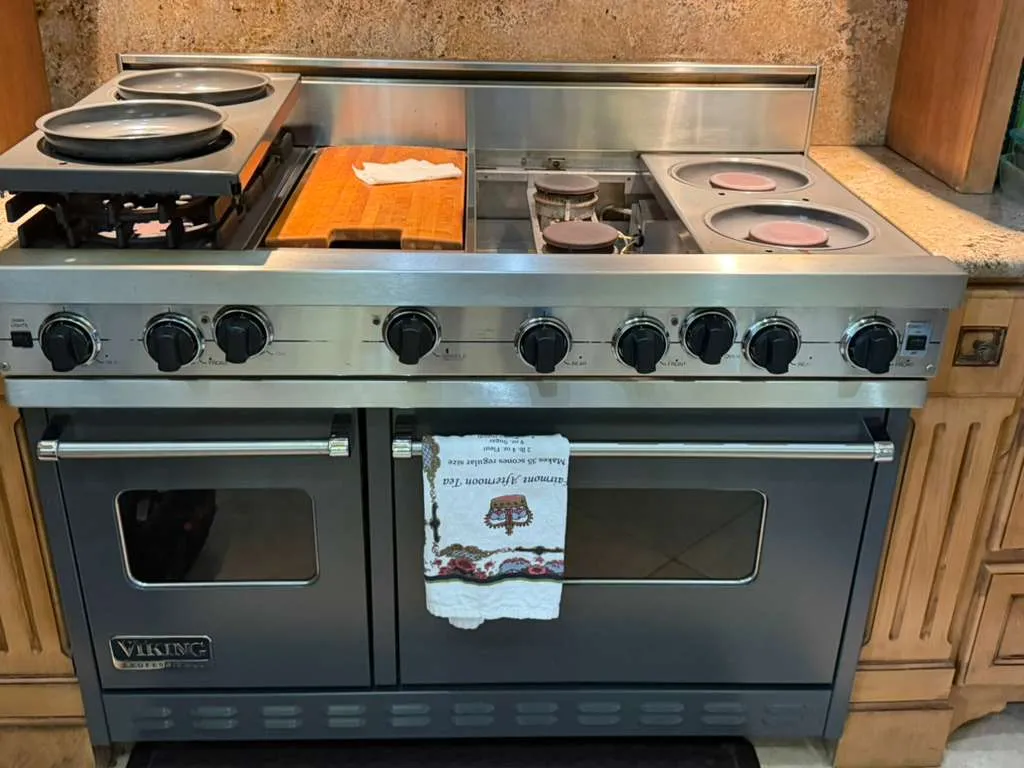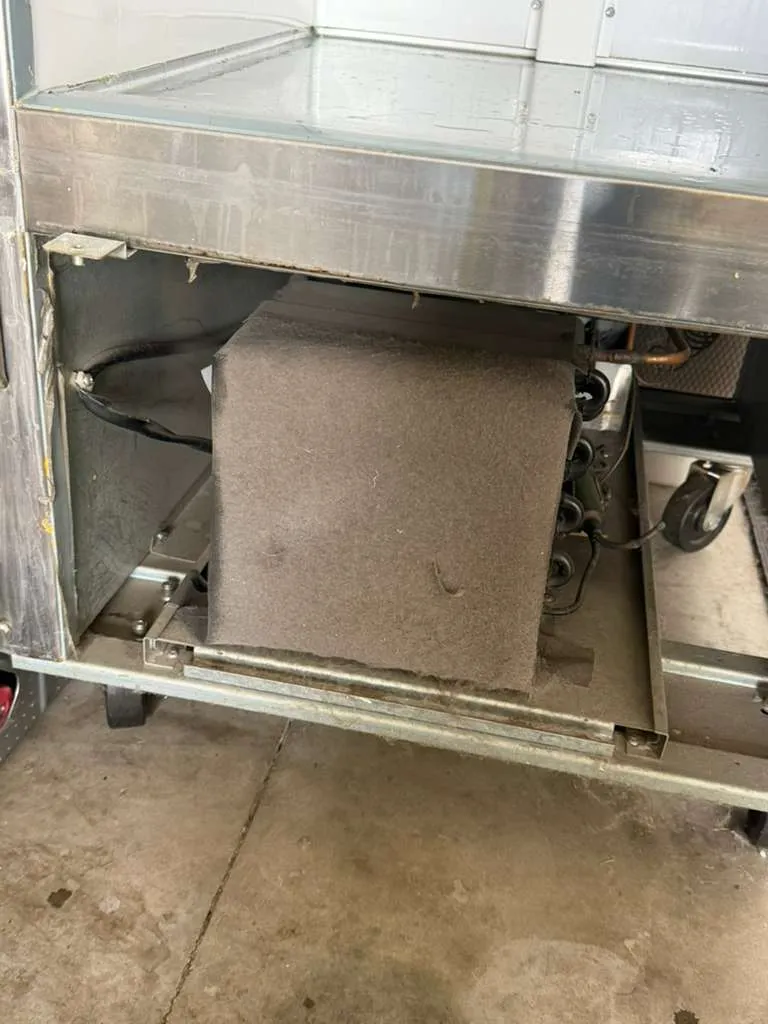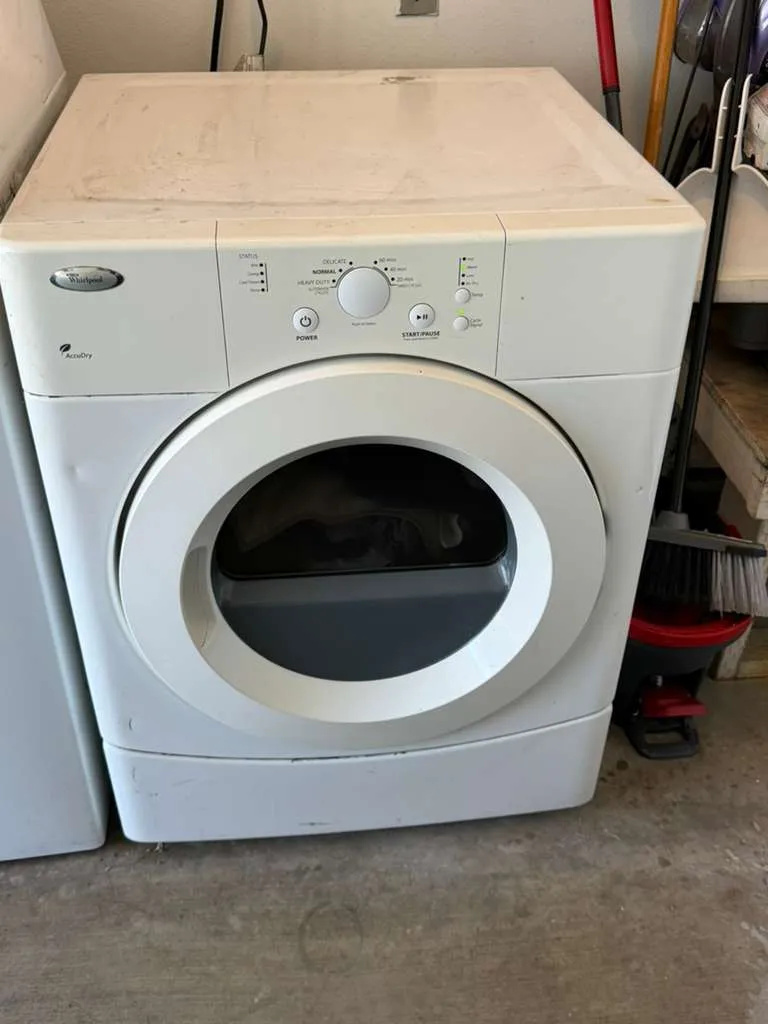
What AB 628 Changes About Skipping Maintenance
We covered the mechanics of California's AB 628 in detail in our companion piece on LA County's new rental appliance law, so we won't repeat the statute language here. The short version: for a lease entered into, amended, or extended on or after January 1, 2026, Civil Code Section 1941.1 now requires a landlord to keep the stove and refrigerator in good working order, and a manufacturer or public-entity recall on either one starts a 30-day repair-or-replace clock.
What that means for maintenance is simple, but worth spelling out plainly. A stove or fridge that's been neglected for years is more likely to fail outright, and on a covered lease that failure isn't just an inconvenience to get to on the landlord's own schedule anymore; it's the exact condition the statute now targets. Routine maintenance doesn't guarantee a landlord never trips that wire. A compressor can fail on a well-maintained unit just as easily as a neglected one, sometimes. But skipping the basic upkeep that's cheap and well understood, coil cleaning, vent clearing, a working door seal, stacks the odds toward exactly the kind of breakdown AB 628 was written to address.
Who Actually Pays When Maintenance Gets Skipped
Maintenance costs money either way. Someone has to pay for the coil brush, the vent cleaning, the fill-hose swap, whether that's the person living in the unit or the person who owns it. In an owner-occupied home, that's the same person, so the incentive to stay ahead of it is straightforward. In a rental, it usually isn't.
Los Angeles County has a lot more renters than the county just south of it. The Census Bureau's American Community Survey (2020-2024 five-year estimates) puts 54.1% of LA County households in renter-occupied housing, against 43.6% in Orange County, a gap we cover in more depth alongside the county's older housing stock in our LA County appliance lifespan article.
In our experience, that split changes who notices a maintenance gap first and how fast anything gets done about it. A homeowner who lets refrigerator coils go a couple of years without cleaning is really only costing themselves a few dollars a month on the electric bill. A landlord who skips the same task on a rental unit is looking at the same slow wear, except it plays out differently for each side.
The tenant is the one paying the higher electric bill in the meantime. The landlord is the one who eventually pays for the early compressor call once the unit gives out. Neither side has full visibility into what the other is dealing with day to day, which is part of why a law like AB 628 exists in the first place.
Appliance overdue for a checkup in LA County?
We service every city in Los Angeles County, from the Gateway Cities to the coast. Flat $99 diagnostic fee, credited toward the repair if you move forward. Call or book online.
Book an LA County RepairThe Best-Documented Preventable Failure: Dryer Fires
Of everything we checked for this article, the dryer-fire numbers are the best documented, and it isn't close. The National Fire Protection Association tracked an estimated 13,820 home structure fires a year involving clothes dryers, a 2014-2018 average, with 7 civilian deaths, 344 injuries, and $233 million in direct property damage annually. Failure to clean was the single leading factor, responsible for 32% of those fires, and dust, fiber, or lint was the first item ignited in 27% of them. The U.S. Fire Administration's own topical reporting on residential dryer fires, built from a separate federal dataset, backs up the same failure-to-clean pattern independently of NFPA's numbers.
That risk doesn't sit evenly across LA County's housing stock, either. A single-family home usually has a short, straight vent run to an exterior wall. A dryer in one of the county's many multi-unit buildings, 36.0% of LA County housing sits in buildings with five or more units per that same Census data, often vents through a longer run that's harder to inspect and shared with the building's structure.
What PNNL Actually Recommends for Refrigerator Coils
Refrigerator coils are a smaller-stakes problem, but a real one. Pacific Northwest National Laboratory's Building America Solution Center recommends cleaning a refrigerator's condenser coils every 6 to 12 months, and says doing so regularly improves the refrigerator's efficiency, performance, and lifespan. We went looking for a second, independently collected source to put a specific percentage on how much that actually raises an energy bill, and couldn't find one we'd stand behind, so we're not going to repeat a number here we can't back up.
The advice itself doesn't need a second source to be worth following. Cleaning coils costs nothing beyond a vacuum and a coil brush, takes about fifteen minutes, and is PNNL's own stated guidance rather than a marketing claim from us or anyone else. On a rental where AB 628 now applies, it's also one of the cheapest things a landlord can do to keep a refrigerator from being the appliance that fails first.
What Consumer Reports' Data Says About Refrigerator Reliability
How often does a refrigerator actually need service in the first place, maintained or not? Consumer Reports' 2026 survey update, based on 71,534 refrigerators purchased since 2015, found that 49% had experienced some kind of problem within the first five years. That's a Consumer Reports member-reported figure, and we didn't find it independently corroborated by a second source this time around, so we're presenting it as Consumer Reports' own finding rather than a settled industry consensus.
It's still the largest sample size of any refrigerator reliability data we could locate, and it's a useful gut check against the "ten years and done" assumption a lot of homeowners carry into a repair-or-replace decision. Half of that 49% traces to icemaker and dispenser issues rather than the sealed system itself, which is one more reason coil cleaning and basic upkeep matter: the compressor is the expensive part to replace, and it's also the part that benefits most from not being run harder than it has to be.
What Maintenance Can't Prevent
Maintenance shifts odds; it doesn't rewrite them. A control board fails on its own schedule regardless of how clean the coils are. A compressor that's near the end of its expected service life, which the U.S. Department of Energy put at roughly 14.3 years for a standard refrigerator in its 2024 efficiency-standards rulemaking, will eventually go even on a unit that's been maintained perfectly. A manufacturer defect shows up in year one no matter what anyone does afterward, and no amount of coil cleaning changes that.
- Control board failures. These fail at rates largely uncorrelated with cleaning or upkeep, and rise with age regardless of maintenance history.
- Manufacturer defects. A year-one failure is almost always a factory defect, not a maintenance gap; that's what the warranty is for.
- Compressor failure at end of expected life. Maintenance can push the expected failure year out, but it doesn't make a refrigerator immortal.
What routine maintenance actually buys is a lower chance of the preventable failures: the dryer-vent fire, the compressor that burns out early because it's been fighting dirty coils for years, the fill hose that finally bursts because nobody replaced it on schedule. On a rental where AB 628 now applies, it also buys the landlord a cleaner record if a habitability question ever comes up, though maintenance alone isn't a substitute for actually fixing something once it breaks.
What Repairs Actually Cost, By Appliance
We keep detailed, per-appliance cost breakdowns on our Orange County repair-cost guides, since that is where our published pricing pages live; we do not yet have a separate Los Angeles County cost page. The ranges below, including the service call/diagnostic row, are pulled straight from those Orange County guides as a general market reference, not adjusted or averaged.
The table below sets each appliance's basic preventive task alongside the kind of major repair that appliance most commonly needs. For dryers and refrigerators, the causal link between the two is documented above. For the rest, read it as routine care set against typical repair cost, not as a claim that the one task prevents that specific failure: a fresh set of fill hoses will not save a washer's drum bearing. Dryer vent clearing and refrigerator coil cleaning are covered in detail above; the other two are just as unremarkable. Clearing a dishwasher's filter basket and spray-arm holes is a rinse under the tap, a couple of minutes. Wiping down an oven or range's door gasket and glancing at the igniter or element takes about the same. None of it needs a technician; it only needs remembering to do it.
| Appliance | Preventive Task | Common Major Repair | Typical Cost Range |
|---|---|---|---|
| Dryer | Lint trap & vent clearing (about fifteen minutes to half an hour) | Heating element (electric) | $150–$350 |
| Washer | Rubber fill-hose inspection & swap | Drum bearing (grinding noise) | $150–$350 |
| Dishwasher | Filter & spray-arm clearing (a rinse, a couple of minutes) | Drain pump | $130–$280 |
| Oven / range | Door-gasket & igniter check (visual, a couple of minutes) | Bake element (electric oven) | $150–$320 |
| Refrigerator | Condenser-coil cleaning (vacuum + coil brush, about fifteen minutes, twice a year) | Compressor / sealed system | $350–$650 |
| Service call / diagnostic | n/a | n/a | $75–$100 |
Estimates vary by brand, part availability, and diagnosis. Final quote is provided before repair.
Line the preventive and cost columns up and the asymmetry is the whole point. Every task on the preventive side costs minutes of your own time and something already in a hall closet, a vacuum, a coil brush, a wrench for a hose clamp. Every repair on the cost side starts at $130 and runs to $650. We're not going to invent a dollar figure for what the preventive side saves, because doing it yourself usually means there isn't one to report, but the shape of that comparison, minutes and a tool versus a repair bill, is the argument for doing it anyway.
All six of these rows, including the service call/diagnostic line, come from ranges published on our Orange County cost guides for dryers, washers, dishwashers, ovens and ranges, and refrigerators. Those are Orange County guides, not an LA County-specific price list; we're citing them here because that is where our real, published repair numbers live. Our own diagnostic visit fee specific to Los Angeles County works differently: it's a flat $99 regardless of appliance or city, credited toward the repair if you proceed, covered in full in the next section.
Getting a Maintenance-Related Repair Done in LA County
If something's already gone wrong, on either side of a lease, our diagnostic fee across Los Angeles County is a flat $99: every city we serve, every brand, credited toward the repair if you move forward. That includes the Gateway Cities, Downey, Norwalk, Santa Fe Springs, Montebello, Whittier, Long Beach, and Pico Rivera, alongside the rest of the county. A technician based in LA offers same-day appointments when the schedule allows, with next-available, usually within a day or two, as the honest fallback.
For a rental where AB 628's recall clock or general habitability timeline is running, what we hand back is a written record either side can point to: what we found, what we did about it, and when. For dollar figures on what specific repairs cost once something does break, see our Orange County repair cost guide, which covers pricing across the same appliance categories.
Frequently Asked Questions
Landlord or tenant, get an honest read
We'll check the appliance and give you a documented diagnosis either side can rely on. $99 diagnostic fee, credited toward the repair if you proceed. Serving all of Los Angeles County.
Book a DiagnosisReferences
- National Fire Protection Association (NFPA). "Home Fires Involving Clothes Dryers and Washing Machines" (Marty Ahrens, June 2020; 2014-2018 NFIRS data). Source for the dryer-fire figures and the 32% failure-to-clean leading factor. nfpa.org.
- U.S. Fire Administration / FEMA. Topical fire report on residential clothes dryer fires (NFIRS-based reporting, independent of NFPA's survey-blended methodology). Confirms the failure-to-clean leading factor from a separate federal dataset. usfa.fema.gov.
- Pacific Northwest National Laboratory (PNNL), Building America Solution Center. "Clean Refrigerator Condenser Coils" (updated 4 August 2025). Primary source for the coil-cleaning mechanism and the 6-12 month cleaning interval. basc.pnnl.gov.
- Consumer Reports. Most and Least Reliable Refrigerator Brands (2026 update; n=71,534 refrigerators bought 2015-2025). Source for the 49% five-year problem rate, presented here as a Consumer Reports finding only. consumerreports.org (brand-level scores paywalled).
- U.S. Department of Energy. Energy Conservation Standards for Refrigerators, Refrigerator-Freezers and Freezers, Direct Final Rule, 89 FR 3026 (17 January 2024). Source for the 14.3-year standard-refrigerator mean service life referenced above; see our appliance lifespan article for the full DOE table across all appliance types.
- California Legislature. California Civil Code Section 1941.1, as amended by Assembly Bill 628 (Stats. 2025, ch. 342). See our full breakdown in the LA County rental appliance law article for the statutory text and citation.
- U.S. Census Bureau. American Community Survey 2020-2024 5-Year Estimates, Los Angeles County and Orange County renter-occupied and multi-unit housing shares (Table DP04). See our LA County appliance lifespan article for the full housing-stock table and citation.