This is the third article in our statistics cluster, following our appliance reliability and lifespan guide and lifespan data by brand tier. Where the first article explains what appliance age can and cannot tell you about a repair decision, this one measures what happens when basic upkeep gets skipped, and what the published evidence says it actually costs.
The Three Headline Numbers
Three statistics from named, public sources frame this article. Every other claim below traces back to one of them or to a published cost benchmark.
The NFPA dryer-fire statistic is the most consequential single number in residential appliance safety: NFPA's home-dryer-fires report estimates 13,820 home structure fires per year from clothes dryers, with 7 civilian deaths, 344 civilian injuries, and $233 million in direct property damage. The Consumer Reports icemaker-problem rate is the most consequential single number for how often a refrigerator's moving parts, not just its sealed system, actually fail. That same survey of 71,534 refrigerators is the most defensible "how often do appliances actually need service" benchmark for a single appliance category.
Preventable-Cause Breakdown by Appliance
The data on "what percentage of failures are preventable" is uneven across appliance categories. Dryer fires are the best-documented case, with NFPA tracking specific failure factors. For other appliances, the data is published as broad failure incidence (Consumer Reports member surveys, Yale Appliance service-call rates) rather than preventability percentages. The table below pairs each appliance with the strongest preventability evidence currently published.
| Appliance | Preventability evidence | Source |
|---|---|---|
| Dryer | 32% of dryer fires caused by failure to clean; 27% of first-ignited items were dust, fiber, or lint | NFPA, 2014-2018 |
| Refrigerator | 31% of refrigerators with icemakers have a problem by year 5; 49% of all refrigerators bought since 2015 have had any problem. | Consumer Reports (n=71,534) |
| Washer | No federal preventability percentage published. Most catastrophic failure mode is a burst rubber fill hose, addressable by 5-year hose replacement. | Industry consensus |
| Dishwasher | No federal preventability percentage published. Yale Appliance flags that many dishwasher service calls trace to installation, not product failure. | Yale Appliance, 2026 |
| Range / oven | Few maintenance-driven failures published. Mechanical simplicity (cast-iron burners, sealed gas valves) limits preventability scope. | No published source found |
Where percentages are not published by a primary source, we cite the closest defensible evidence rather than estimating. This is consistent with the cluster's binding rule that every numeric claim is attributable.
Cost Comparison: Maintenance vs Major Repair
There is no reliable national average that can price a particular repair. The diagnosis, model, parts availability, and labor access determine the quote. For a local decision, compare the written repair estimate with a current replacement-and-installation quote for a comparable model.
Routine maintenance still has practical value where the evidence supports it. Clean the lint screen after every dryer load, address restricted dryer ventilation, and follow the owner's manual for accessible condenser coils, filters, seals, and visible wear. For current Orange County pricing on a diagnosed repair, see our repair cost guide. Our $99 diagnostic fee is applied toward the repair if you proceed. For Los Angeles County homes and rentals, see what skipping appliance maintenance costs in LA County.
Per-Appliance Maintenance Reality Check
Dryers: the strongest case for maintenance
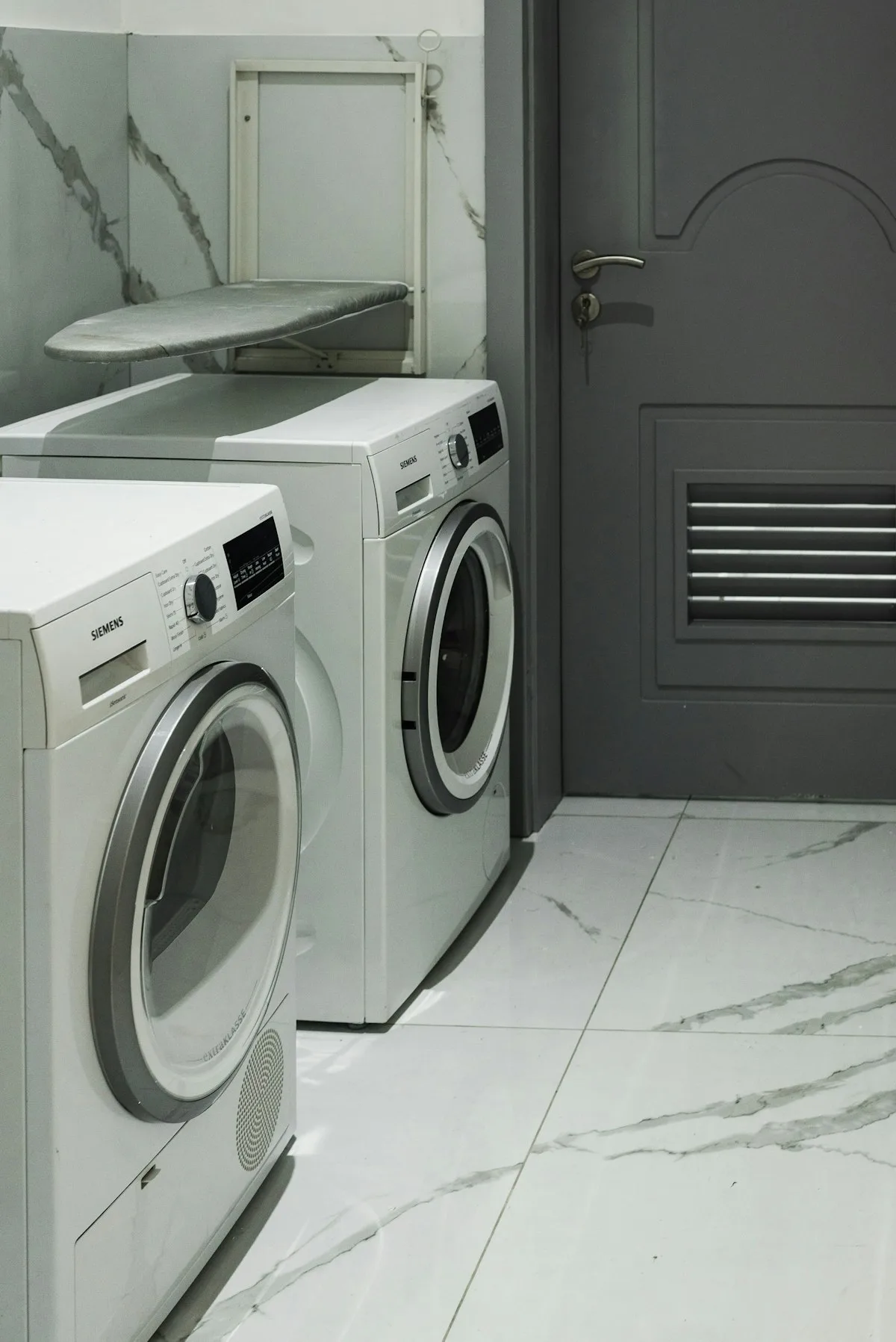
The case for dryer-vent maintenance is one of the clearest documented safety cases for a household appliance. NFPA's 2014-2018 analysis estimates 13,820 home structure fires per year involving clothes dryers, with failure to clean identified in 32% of those fires. Dust, fiber, and lint were the first item ignited in 27% of cases. Clean the lint screen after every load and arrange inspection or cleaning of the vent path when lint buildup, restricted airflow, or the appliance manual indicates it is needed.
Cleaning the lint trap after every load is the homeowner's job. Cleaning the duct between the dryer and the exterior wall, and the exterior vent itself, is the annual professional task. Households doing laundry daily, or with long duct runs with multiple elbows, should clean more frequently. Our dryer repair cost guide covers what specific dryer failures actually cost in Orange County.
Refrigerators: the strongest case for compressor longevity
Pacific Northwest National Laboratory's Building America Solution Center is direct about the mechanism, even without a specific dollar figure: dirty condenser coils make the compressor work harder than it needs to, and cleaning them regularly improves a refrigerator's efficiency, performance, and lifespan. The mechanism is unambiguous, a compressor working against a hotter sealed system runs longer and wears out faster, and sealed-system failures are the most expensive thing that goes wrong on a refrigerator. Consumer Reports' 2026 reliability survey of 71,534 refrigerators found that 49% had had a problem by year 5, with icemaker and dispenser issues leading the failure types.
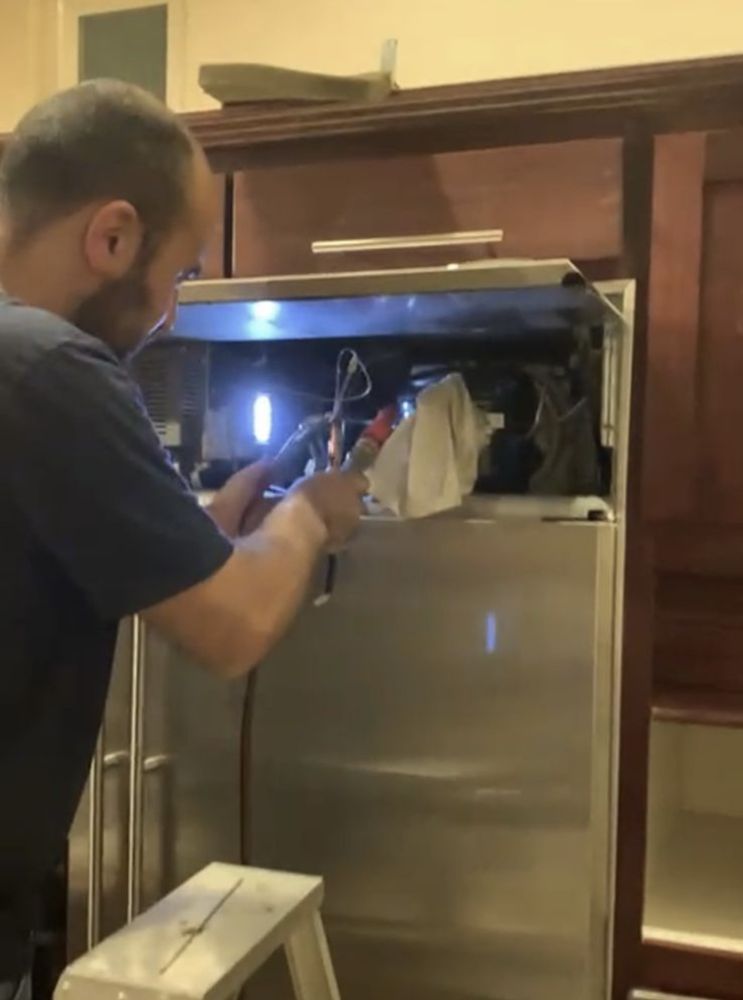
Cleaning condenser coils is a 15-minute task with a coil brush and a vacuum. PNNL recommends doing it every 6 to 12 months. For a premium built-in like a Sub-Zero refrigerator, where compressor replacement runs $1,000+ and unit replacement runs $8,000+, this is the highest-ROI maintenance task in the kitchen. Our refrigerator maintenance guide covers the full annual routine.
Washers: modest preventability, one critical failure mode
No federal agency publishes a "% of washer failures attributable to preventable causes" statistic. The strongest single recommendation is the one with the highest catastrophic-failure prevention value: replace rubber fill hoses every five years. A burst hose flooding the laundry room is the single most expensive way a washing machine fails, and the only failure mode where the cause is unambiguous (rubber aging predictably). The hoses themselves cost $20-$60 from a hardware store.
Beyond hose replacement, the honest case for washer maintenance is monthly tub-clean cycles to limit biofilm in front-loaders and avoiding overloads. None of these steps has the same documented safety link as dryer-vent maintenance, so a diagnosis is still needed when a pump, motor, or other component fails.
Dishwashers: preventability case is thin
Yale Appliance's 2026 service-call analysis flags that many dishwasher service calls trace to poor installation rather than maintenance gaps, water-supply pressure issues, drain-line configuration problems, leveling. Among preventable-by-the-owner failures, hard-water scale buildup on the heating element is the most-cited mechanism, addressable by quarterly descaling cycles ($5-$15 in product cost). Our dishwasher maintenance guide covers the descaling routine for Orange County water hardness, which averages 10-15 grains across most cities.
What Maintenance Can't Prevent
This section is the honesty test for the article. Maintenance is a probability shift, not insurance. The following failures are essentially independent of maintenance and will happen regardless of how diligent you are:
- Control board failures. Electronic boards fail at rates uncorrelated with cleaning or upkeep. Their failure rate rises with age, consistent with the service-life context covered in our reliability and lifespan guide, and is the dominant late-life failure mode for dishwashers and microwaves.
- Manufacturer defects. Year-1 failures are almost always factory defects (the "infant mortality" phase of the bathtub curve). No amount of homeowner maintenance addresses these, that's what the warranty is for.
- Compressor failure at end of expected life. An aging refrigerator will lose its compressor eventually, even with twice-yearly coil cleaning. Maintenance shifts the expected failure year, but doesn't make the appliance immortal.
- Door boot seal failure on front-load washers. Some degradation is mechanical and unavoidable; tub-clean cycles slow biofilm but don't prevent rubber aging.
The corollary: maintenance is most defensible on dryers (fire prevention) and refrigerators (energy efficiency and compressor longevity). On washers and dishwashers, the case is real but more modest. On microwaves, garbage disposals, and ranges, the case is thinner still, these appliances either fail or they don't, and maintenance does little to shift the probability.
For the decision framework when an appliance does fail, repair vs replace, see our repair or replace guide. For service area coverage, we serve all of Orange County including Irvine, Anaheim, Santa Ana, and Huntington Beach.
Frequently Asked Questions
Need a diagnostic before something gets worse?
Our technicians can spot a maintenance gap before it becomes a major repair. $99 diagnostic fee, applied toward the repair if you proceed. Final quote provided before any work begins. Serving all of Orange County.
Book a DiagnosticReferences
- National Fire Protection Association (NFPA). "Home Fires Involving Clothes Dryers and Washing Machines" (Marty Ahrens, June 2020; 2014-2018 NFIRS data). Primary source for dryer-fire statistics including the 32% failure-to-clean leading factor. nfpa.org.
- U.S. Fire Administration / FEMA. "Clothes Dryer Fires in Residential Buildings" (2008-2010 NFIRS data; updated 2018-2020 reporting). Confirms the failure-to-clean leading factor and the dust/fiber/lint first-ignited share. usfa.fema.gov.
- Pacific Northwest National Laboratory (PNNL), Building America Solution Center. "Clean Refrigerator Condenser Coils" (updated 4 August 2025). Primary source for the coil-cleaning mechanism and the 6-12 month cleaning interval. basc.pnnl.gov.
- Consumer Reports. Most and Least Reliable Refrigerator Brands (2026 update; n=71,534 refrigerators bought 2015-2025). Source for the 31% icemaker problem rate at year 5 and the 49% all-cause problem rate at year 5. consumerreports.org (brand-level scores paywalled).
- Yale Appliance Annual Reliability Report 2026. Service-call data across 33,190 first-year calls. Source for the dishwasher installation-vs-product-failure observation and brand-tier service rate context. Yale Appliance Blog.
- U.S. Department of Energy. Energy Conservation Standards for Refrigerators, Refrigerator-Freezers and Freezers, Direct Final Rule, 89 FR 3026 (17 January 2024). Source for the expected-service-life figures behind the wear-out vs preventable-failure framing.