That's why this guide is focused. Instead of ranking twelve fridges with affiliate-friendly photos, we picked the five we'd actually buy for a college student in 2026, covering different budgets, space constraints, and freezer needs. Each one is ENERGY STAR certified (or explicitly noted where it isn't), fits under 4.5 cubic feet (the most common dorm size limit), and comes from a brand we don't see fail at unusual rates.
Heading to college? Here's what to buy, what to skip, and how to make whatever you choose last four years instead of two.
How to Choose a Dorm Fridge
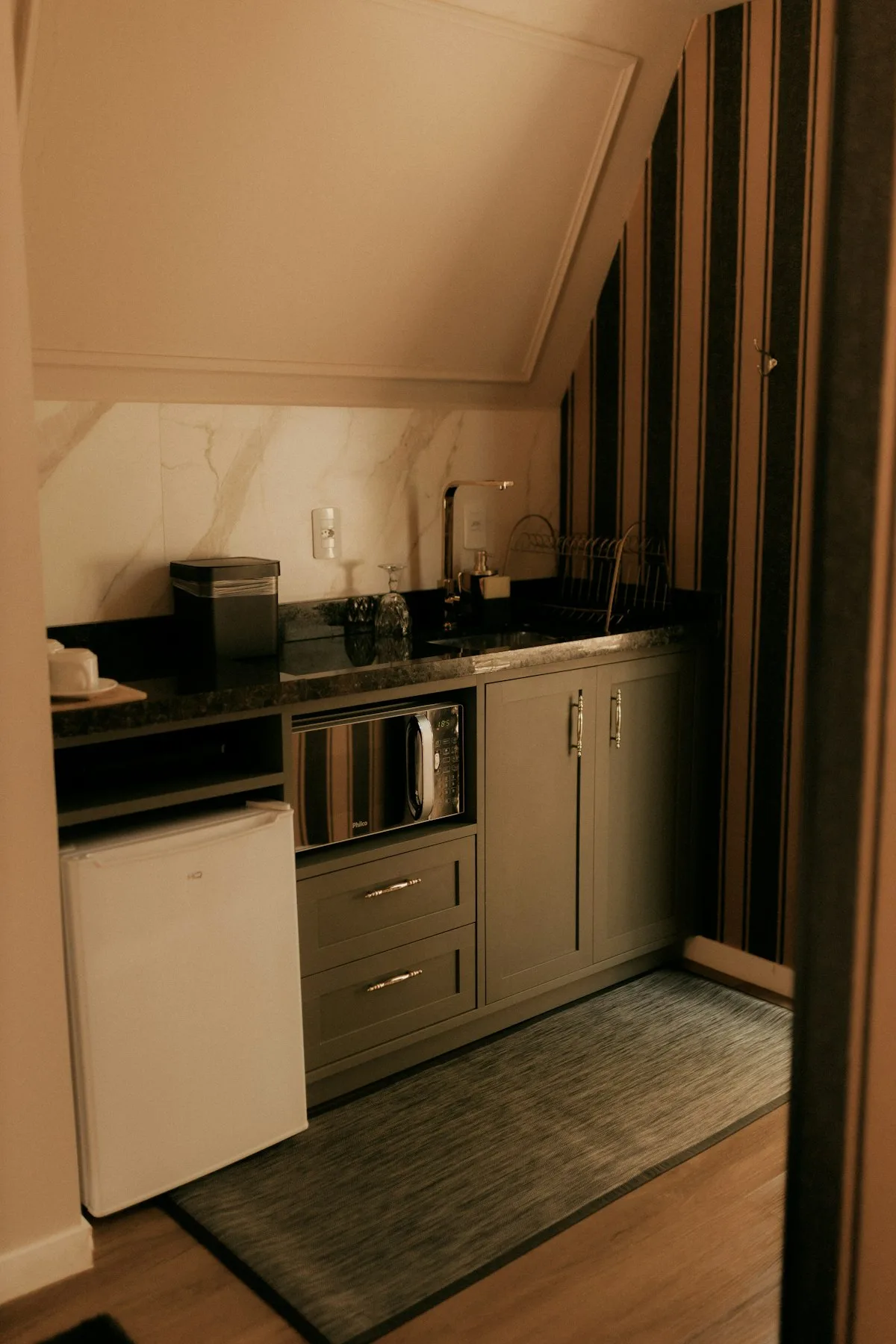
Size: stay under 4.5 cu ft, and measure your space first
Most colleges cap dorm refrigerators at 3.1 to 4.5 cubic feet. Some are more generous (the University of Michigan allows up to 5.5 cu ft), but 4.5 is the safe bet. Check your school's specific housing page before you buy. RAs do enforce this.
Beyond capacity, measure the physical space:
- Under-desk clearance: typically 24 to 30 inches of height
- Lofted-bed clearance: can be 36+ inches, but verify
- Width and depth: most dorm desks have roughly 22 inches of horizontal space
A 3.1 cu ft fridge is the sweet spot for most students. It holds a week of groceries, fits under nearly every dorm desk, and uses less power than a larger model.
ENERGY STAR: non-negotiable
Most schools require ENERGY STAR certification, and even where it is not required, it is a useful filter. Under ENERGY STAR criteria effective August 5, 2021, compact refrigerators under 7.75 cubic feet must use 10% less measured energy than models that only meet the federal minimum efficiency standard. On a mini fridge that is a modest dollar saving, so treat the label as a quality signal rather than a big money saver.
Freezer or no freezer? Be honest with yourself
This is the question students get wrong most often. A 3.1 cu ft fridge with a tiny separate freezer sounds great until you realize:
- The "freezer" is often a 0.3 cu ft chest section that fits one ice tray and one frozen burrito
- Two-door units have more seals and more failure points than single-door units
- If the freezer is just a cold compartment inside the fridge (no separate door), it ices up frequently and forces manual defrosting
Get a freezer only if you actually plan to use it. If you just need cold drinks and overnight leftovers, skip it.
Noise: the spec to read before you buy
In a shared dorm room, a noisy compressor cycle becomes a major irritant by week three. Look for models rated under 40 decibels during operation. Anything above 45 dB will keep a light sleeper awake.
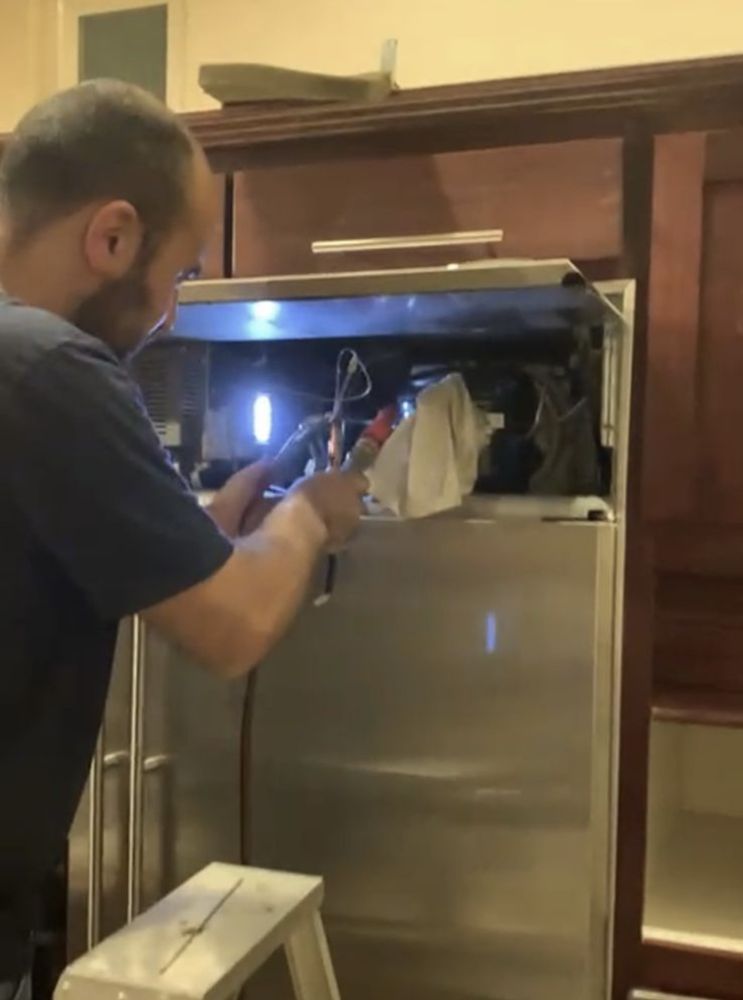
Pro tip from our techs: noise that increases over time is the number one early-warning sign of compressor failure. If your fridge gets noticeably louder than it was when new, it's likely a failing start relay or worn compressor bearings. Catch it early and the relay swap is cheap ($30 to $60 part). Wait until the compressor seizes and you're buying a new fridge.
Quick Comparison: All 5 Picks at a Glance
Not sure which section to jump to? Here's the short version.
Our 5 Picks for 2026
The Whirlpool 3.1 is the model we'd hand a student today if they asked for one recommendation. It consistently earns 8.5 out of 10 or higher among student reviewers across major retail platforms, with more recommendations than any other 3.1 cu ft model in its price range.
- Capacity: 3.1 cu ft holds a week of groceries plus drinks
- Small dedicated freezer with a separate inner compartment (useful for ice and a few frozen items)
- Reversible door (open it whichever way works in your dorm layout)
- Quiet operation: Whirlpool's compressor packages are among the better consumer-grade units; we rarely see them fail under 5 years
- ENERGY STAR certified
- Dimensions: approximately 19.1 x 20.6 x 32.8 inches
- Warranty: 1-year full warranty
- Typical price: $200 to $260
If your priority is "I want this thing to still be working when I graduate," the Midea is our pick. Midea has built a reputation for compressor longevity that even Consumer Reports has called out. In long-term user data, Midea minis routinely run 6 to 8 years with no service calls, well above the 3 to 5 year average for the category (consistent with what we see in our own appliance lifespan data).
- Compressor quality: Midea manufactures their own compressors, including for other brands' OEM contracts. The engineering is consistent.
- Manual defrost: fewer moving parts means fewer things to fail. This is a feature, not a downside, for longevity.
- ENERGY STAR certified across most of the line
- Dimensions: approximately 18.9 x 20.5 x 33.1 inches
- Warranty: 1-year full warranty
- Typical price: $160 to $210
Upstreman is a newer brand that's earned a solid track record in the last few years. Their 3.2 cu ft single-door unit is consistently the cheapest of our three picks and has noticeably better customer support than the bargain-bin alternatives.
- Smallest footprint of the three picks (18.7 x 17.4 x 33 inches)
- Quiet (generally under 38 dB, the quietest of the three picks)
- Reversible door
- Solid 1-year warranty plus actually-responsive customer service (important for a budget brand)
- Typical price: $130 to $170
If you want the assurance of a major appliance brand with a single-door layout and no freezer compartment, the Frigidaire FFPE3322UM is the pick. Frigidaire has decades of refrigeration reliability data behind them, and this model consistently earns 4.3 stars or above across major retail platforms with a particularly strong track record for temperature stability.
- Capacity: 3.2 cu ft with full-width glass shelves for flexible storage
- LED interior light: runs cooler and uses less power than incandescent
- Reversible door: opens left or right to fit your dorm layout
- ENERGY STAR certified
- Dimensions: approximately 19.3 x 20.6 x 33.6 inches
- Warranty: 1-year full + 5-year sealed-system coverage on compressor and refrigerant circuit
- Typical price: $170 to $220
Most dorm fridges are sized for one student. If you're in a suite-style room sharing a common area, or if you know you'll be keeping food for two people, the hOmelabs 4.0 is the step up that still fits under the 4.5 cu ft limit most schools enforce. The separate bottom freezer drawer holds a real week's worth of frozen items, not just an ice tray.
- Capacity: 4.0 cu ft total (3.1 cu ft fridge + 0.9 cu ft freezer drawer)
- Separate freezer: bottom-drawer design keeps cold zones independent, reducing frost creep into the fridge section
- ENERGY STAR certified
- Independent temperature controls for fridge and freezer sections
- Dimensions: approximately 19.4 x 20.5 x 43.3 inches (taller than single-door models)
- Warranty: 1-year full
- Typical price: $220 to $280
Brands and Models We Avoid (the Technician's View)
This is the section every other "best of" guide won't write, because it has nothing to sell.
Avoid bargain-bin off-brand fridges under $90. The compressors in these units are designed for a 2-year design life. We service the same three or four obscure brands repeatedly in the first 18 months of college students' use cycles. The savings vanish when you're buying a replacement before sophomore year.
Avoid retro-style designs from off-brand manufacturers. The look is great. The construction is often hollow plastic over a substandard compressor package. Frigidaire and Galanz retros are exceptions: well-made and reliable. The cheap clones are not.
Be cautious about 2-door units under $200. Two-door designs require two sets of door seals and often a divided cooling system. At the budget tier, manufacturers cut corners on both. Single-door units in the same price range are typically more reliable.
How to Make Your Fridge Last 4+ Years (Technician Tips)
These are the maintenance habits we wish every customer knew before they bought, because they extend mini-fridge life by years.
- Leave 2+ inches of clearance behind and on both sides. Mini fridges dump heat from the back coils. No clearance means the compressor runs hot, which kills it early. This is the single most common cause of premature failure we see.
- Vacuum the condenser coils every 6 months. Dust on the coils is the second most common cause of premature compressor failure. Unplug the fridge, pull it out, vacuum the black coil grid on the back. Takes 5 minutes.
- Don't overload it. A packed fridge can't circulate cold air. Items at the back freeze, items at the front spoil, the compressor runs constantly trying to compensate.
- Defrost when frost reaches 1/4 inch. If you've got a manual defrost model, ice buildup beyond a quarter inch insulates the cooling coil and forces the compressor to overwork.
- Don't unplug it for short breaks (weekend trips). Modern mini fridges use the same energy whether they're 1/4 full or full. Unplugging and re-plugging stresses the compressor far more than letting it run.
- Listen for compressor sound changes. A new fridge should be near-silent. A 2-year-old fridge should sound exactly the same. If it doesn't, the start relay or compressor is starting to fail; the relay is a $30 fix vs. $300 fridge replacement.
Final Tips Before You Buy
- Confirm your school's policy: capacity limit, ENERGY STAR requirement, amp draw. Most schools' housing pages have a dedicated appliance section.
- Buy in July or August to get the best pricing. Retailers clear mini-fridge inventory before the back-to-school rush; clearance pricing typically runs 4 to 8 weeks before fall semester. If you're shopping in June, wait. If it's September, you missed it.
- Keep the receipt and box for the warranty period (usually 1 year). If a brand-new unit makes unusual noises or fails to maintain temperature in the first 30 days, return it; don't try to live with it.
- A mini fridge will outlast college. A reliable model becomes the garage backup, the apartment beer fridge, the office snack drawer. Spending an extra $40 on a more reliable unit is almost always worth it.
Frequently Asked Questions
References
- ENERGY STAR. Refrigerators. energystar.gov/products/refrigerators (accessed September 2026).
- ENERGY STAR. Refrigerators and Freezers Key Product Criteria. energystar.gov (accessed September 2026).
- U.S. Department of Energy, Federal Energy Management Program. Purchasing Energy-Efficient Residential Refrigerators. energy.gov (accessed September 2026).