Short answer. In a side-by-side, the freezer makes the cold and a damper, a small air door, meters how much of it reaches the refrigerator side. If the damper is stuck closed or its control has failed, the refrigerator side warms while the freezer stays cold. A failed evaporator fan, frost on the cooling coil and blocked vents look the same, so clear the vents and check the settings first. If the refrigerator side is still above 40°F after a day, call a technician.
Our diagnostic fee is a flat $99, applied toward the repair if you proceed.
How Cold Air Gets From the Freezer to the Refrigerator Side
On the refrigerators these repair guides cover, the cold is made in the freezer section, and the refrigerator side borrows it. A fan pushes air through supply vents into the fresh-food compartment, and return vents carry it back to be cooled again. Maytag Product Help describes the vents exactly that way: they move cold air from the freezer into the refrigerator and return it to be cooled again.
Between the two compartments sits the damper. Think of it as a door in the air path. PartSelect describes it as opening on a signal from the temperature control to let more cold air in, then closing to restrict the airflow once the target temperature is reached, AppliancePartsPros lists damper parts as controlling airflow between the freezer and refrigerator compartments, and iFixit describes it as a device that controls the flow of cold air from the freezer to the fresh food compartment on single-evaporator refrigerators. Where it sits and how it is driven vary by model, so your owner's manual is the place to look.
That is why the symptom splits the way it does. The freezer is where the cold is made, so it keeps working with the damper shut. The refrigerator side depends on air arriving through the damper. iFixit says that a damper that fails in the shut position makes the fresh food compartment warm up, and Maytag lists a damper stuck in the closed position among the causes when the freezer works but the fridge does not.
A Recent Frigidaire Job in Chino Hills
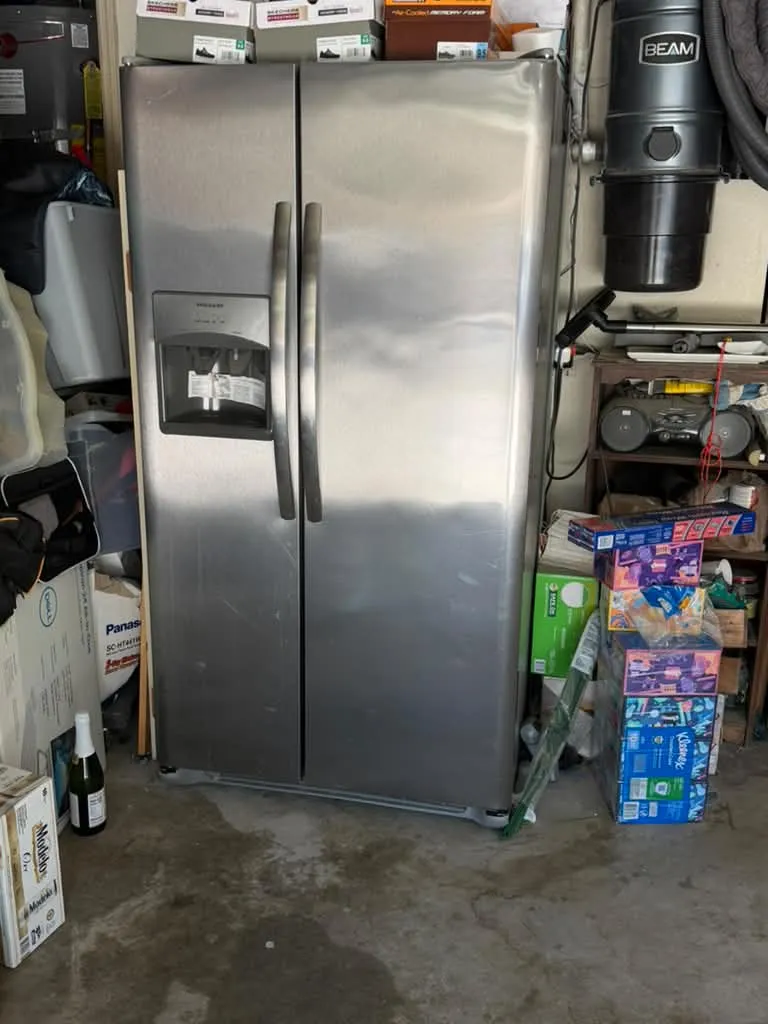
The refrigerator side of a Frigidaire side-by-side in Chino Hills was not cooling. We replaced the damper control. The customer left a five-star Google review after the repair, and the job is in our recent repairs gallery.
One job is not a statistic. It shows the damper control is a real cause and not just a theory.
Causes of a Warm Refrigerator Side, in a Sensible Checking Order
This is a checking order, not a ranking by how often each one happens. The guides we read disagree on which cause is most common, and the answer changes with the model.
1. Blocked or frosted vents
Cheapest to rule out, so it goes first. Maytag's product help is direct about it: if vents are blocked, airflow will decrease, and containers or bags placed directly in front of a vent can disrupt performance (vent guidance; too-warm guidance). Frigidaire's own support pages also say food should not block the air flow vents and that over-frosting can decrease airflow (Frigidaire support). Pull food a few inches back and look for frost on the vent openings.
2. Air damper control stuck closed or failed
If the vents are clear and the freezer is cold, the damper is the next stop. The clue is that cold air simply is not arriving: the refrigerator vents deliver little or none, with no frost to explain it. Replacing the damper control is a model-specific job. AppliancePartsPros lists Frigidaire damper parts under several different part numbers, so the model number decides which one fits. That is one reason to confirm the cause before ordering a part.
3. A failed evaporator fan
The damper only opens a door; the fan is what pushes air through it. When the fan motor fails, air stops moving even though the freezer is making cold. iFixit advises checking the blade for obstructions, turning it by hand and replacing the motor if it does not spin freely, and Sears PartsDirect explains how to tell a fan blocked by frost from a failed motor. Both are technician-level checks on most models, since the fan sits behind a panel.
4. Frost from a defrost fault
Refrigerators periodically melt frost off the cooling coil. When the automatic defrost system fails to do that, frost builds until it can block the fan blades, and the refrigerator side warms. A loud buzzing noise from the freezer can mean the fan blades are hitting that frost. Thawing the unit buys a temporary reprieve only; Sears PartsDirect says the frost typically builds back within a day or two, and that a broken defrost system needs a permanent fix (Sears PartsDirect; iFixit).
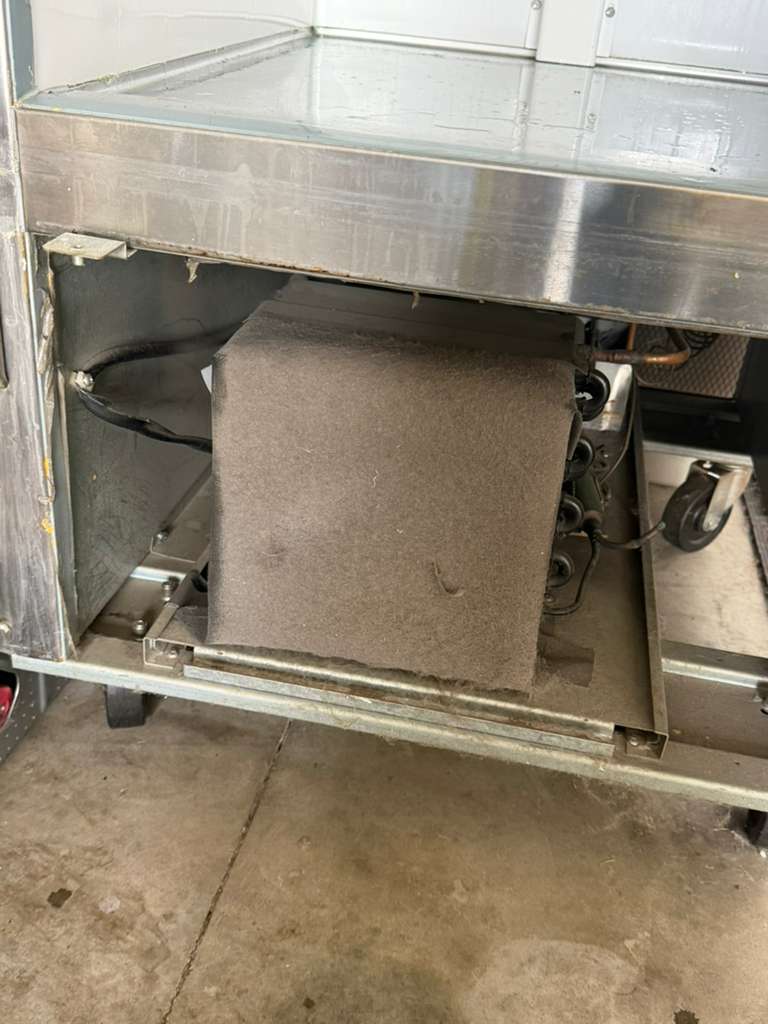
5. Dirty condenser coils
Condenser coils shed the heat the system removes, and Maytag and iFixit both list dirty coils as a reason a refrigerator stops cooling well. Check your manual before pulling the unit out: GE says to follow the owner's manual directions if your model has coils that need cleaning, and to unplug the appliance before any cleaning. If yours are accessible, unplug the unit first.
6. A temperature sensor or the control board
The thermistor is a sensor that monitors the air temperature and reports to the control board, and iFixit says a defective one can keep the refrigerator from cooling. Maytag lists a faulty thermistor alongside the evaporator fan and a stuck damper for the warm-refrigerator, cold-freezer pattern. The control board comes last on purpose: iFixit says a sensor is usually more likely the problem than the temperature control board, and Maytag points to the circuit board once the other components check out.
Safe Checks Before You Call
- Read the real temperatures. Put an appliance thermometer in each compartment. The USDA's targets are 40°F or below for the refrigerator and 0°F or lower for the freezer (USDA), and Frigidaire support lists 0°F as the factory-suggested freezer setting.
- Change a setting only one step at a time. Maytag's guidance is to wait at least 24 hours between adjustments, because the temperatures take that long to settle (Maytag).
- Clear the vents. Move food back from every vent in both compartments and look for frost on the openings.
- Check the doors. Make sure a bin or shelf is not holding a door open, and that the gasket seals.
- Stop there. Pulling panels or testing parts on a live unit is a job for a technician. If you do clean accessible coils, unplug the refrigerator first.
What a Repair Visit Covers
A repair visit starts with diagnosis: finding which of the causes above is the real one, so parts are not replaced by guesswork. You get a written quote before any repair work, and the right part depends on your model number.
We are based in Stanton in Orange County and serve Orange County first, plus parts of Los Angeles and Riverside counties and Chino and Chino Hills. Our diagnostic fee is a flat $99 everywhere we serve, applied toward the repair if you proceed. Chino and Chino Hills visits are same-day when the schedule is open, with next-available (usually within a day or two) as the fallback. For the full list of what we handle, see our refrigerator repair service page and our Frigidaire appliance repair page.
Repair or Replace?
A damper control, a fan motor or a defrost part is a repair of one component, and it is the kind of problem that is usually worth comparing against the price of a new refrigerator before deciding. Sealed-system problems are a different conversation, and a technician has to confirm one before it is on the table. Ask for the quote in writing, and use our guide to repairing versus replacing an appliance to weigh it. We do not publish a price for a damper control replacement here, because it depends on the model and the diagnosis.
Frequently Asked Questions
Frigidaire refrigerator side not cooling?
Serving Orange County, plus Chino and Chino Hills and parts of Los Angeles and Riverside counties. See how another brand shows the same pattern in our freezer-works, fridge-warm guide, or check the full service areas list.
Book a Refrigerator RepairSources
Maytag and GE are separate brands from Frigidaire, so these describe how side-by-sides work in general, not your exact model.
Manufacturer help
- Maytag Product Help, checking the air vents
- Maytag Product Help, too warm in refrigerator compartment
- Frigidaire owner support, freezer not freezing or not cooling
- GE Appliances support, refrigerator not cooling enough
- Maytag, 10 reasons your refrigerator is not cooling
Parts retailers and repair references
The first three sell the parts they describe.
- Sears PartsDirect, evaporator fan
- PartSelect, Frigidaire damper control assembly
- AppliancePartsPros, damper parts
- iFixit, fridge not cooling but freezer works
Food safety