Advice for appliances that don't fit neatly into one category — microwaves, wine fridges, garbage disposals, buying guides, and general repair decisions.
Need help with an appliance? We service microwaves, garbage disposals, wine coolers, and more across Orange County. Same-day appointments available.
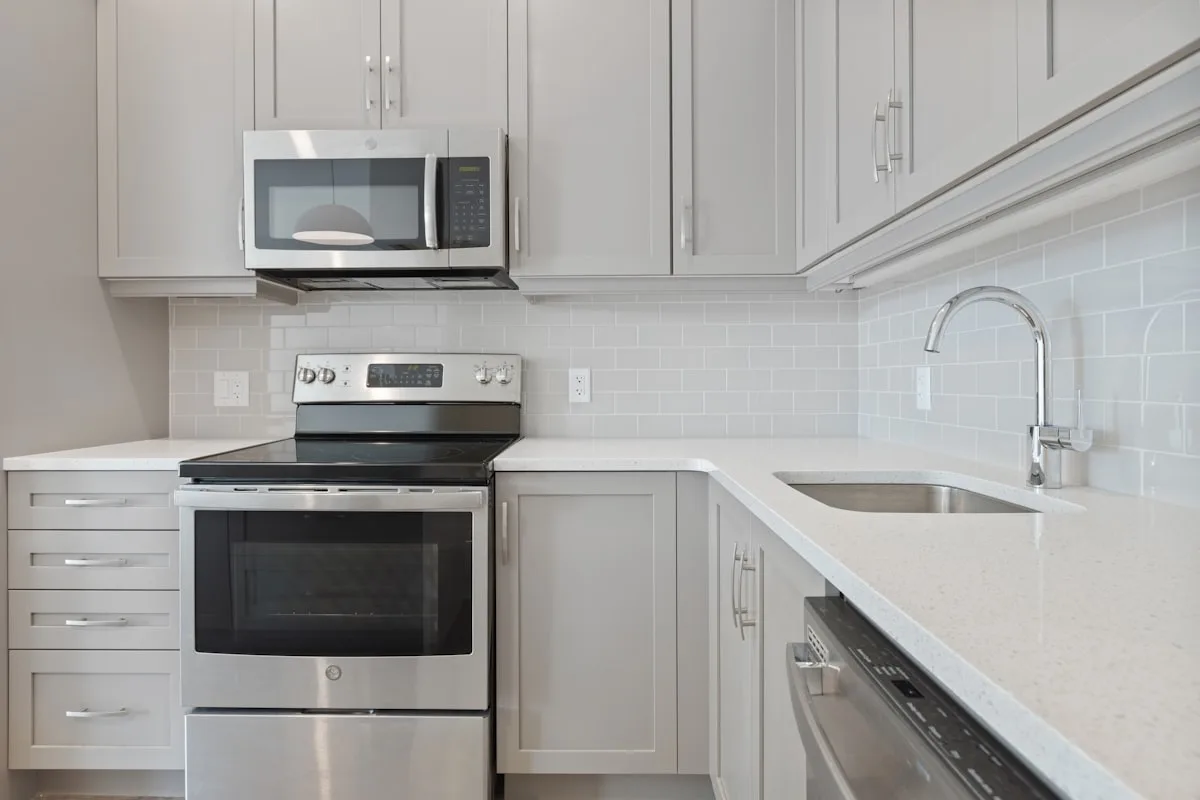
View All Services →The turntable spins, the light comes on, the fan runs — but whatever you put inside comes out exactly as cold as it went in. A microwave that runs without heating has failed in one of a small number of ways, and not all of them are worth repairing.
The most common cause is a failed magnetron — the component that actually generates the microwave energy that heats food. Magnetrons fail after years of use, and their replacement cost on a mid-range microwave often approaches the cost of a new unit. Before writing off the appliance, check the cheaper components first: the door interlock switches. Microwaves have two or three switches that must all signal "door closed" before the magnetron is allowed to operate. When one switch fails, the microwave runs but the magnetron stays off as a safety measure. Switch replacements are inexpensive and worth doing before assuming the magnetron has failed.
The high-voltage diode is another failure point — it converts the transformer's AC output to the DC voltage the magnetron needs. A failed diode often produces a loud humming noise during operation. The capacitor, which stores a large charge to power the magnetron, can also fail silently. Both the diode and capacitor store dangerous voltage even when the microwave is unplugged — these repairs should only be done by a trained technician.
Push the button and nothing happens. Or it hums without spinning. Or it spins but drains slowly. Each symptom points to a different problem.
A disposal that does nothing at all — completely silent — has usually tripped its internal overload protector. There's a small red reset button on the bottom of most disposals. Press it, then try the switch again. If the disposal hums but doesn't spin, the grinding plate is jammed. Look down into the drain opening with a flashlight, find the obstruction, and remove it with tongs. Never put your hand in. Most disposals come with a hex wrench that fits a socket in the bottom of the motor housing — insert it and manually turn the plate back and forth to free the jam. Then hit the reset button again.
A disposal that runs fine but drains slowly usually means the drain line downstream is partially blocked, not the disposal itself. Run water with the disposal off — if it drains slowly then too, the clog is in the drain line. If it drains fine without the disposal but slowly with it, the discharge port on the disposal side is partially obstructed. A disposal that leaks from the flange (the top connection to the sink) needs the mounting screws tightened or new plumber's putty — a DIY fix. Leaking from the side or bottom usually means the disposal body has cracked internally, which is typically cause for replacement.
Wine coolers come in two types, and the failure mode is completely different depending on which you have. Compressor-based units cool the same way a refrigerator does — they're more powerful, quieter over time, and better for long-term storage. Thermoelectric units use the Peltier effect to create a temperature difference across a panel — they're quieter initially, vibration-free, and ideal for small collections.
A compressor wine cooler that isn't cooling is diagnosed the same way as a refrigerator: check the condenser coils at the back for dust buildup (they need to breathe), confirm the evaporator fan is running, and check whether the compressor is starting. Dirty coils are the most common cause in wine coolers kept in enclosed cabinetry where airflow is restricted.
A thermoelectric unit that isn't cooling usually means the Peltier module itself has failed or the heat sink on the warm side is clogged with dust. These units need adequate ventilation to work — the warm side must be able to shed heat. If the unit is in an enclosed space or the ambient temperature in the room is over 80°F, thermoelectric coolers struggle to maintain temperature regardless of whether they're functioning properly. Clean the heat sink fins with compressed air, ensure ventilation clearance, and test again before assuming the module has failed.
The general rule across most appliances: if the repair costs less than 50% of the replacement cost and the unit is less than halfway through its expected lifespan, repair is usually the right call. That rule shifts when parts availability is poor (older or discontinued models) or when the failure is a symptom of broader wear.
For microwaves: if the magnetron has failed on a unit that cost less than $200, replacement is almost always cheaper than repair. On a higher-end over-the-range unit, repair makes more sense. For garbage disposals: units older than 12 years with a failed motor are generally worth replacing — newer units are quieter, use less power, and the installation is straightforward. For wine coolers: a compressor failure on a unit over eight years old often isn't worth repairing. A thermoelectric module failure on a newer unit is worth replacing the module.
Microwave Repair
Garbage Disposal
Wine Cooler
Microwave Repair
Wine Cooler Repair
Advice
Buying Guide
Not sure if your appliance is worth fixing? Our technicians diagnose honestly — we'll tell you upfront whether repair or replacement makes more sense. Same-day service across Orange County.
Give us a call and get a straight answer.